Custom Shades Pensacola FL
On a Pensacola balcony at about 4:30 in the afternoon, the problem is rarely just “too much sun.” It is sun coming off the sky and then bouncing off the water, heat collecting under a covered patio, salt hanging in the air, and a view you do not want to lose just to make the space usable. That is the real context for shades Pensacola FL property owners look for: not decorative trim, but a coastal control system that lets a porch, lanai, pool deck, or waterfront patio stay comfortable without surrendering the Gulf-facing scenery that made the property worth it in the first place.
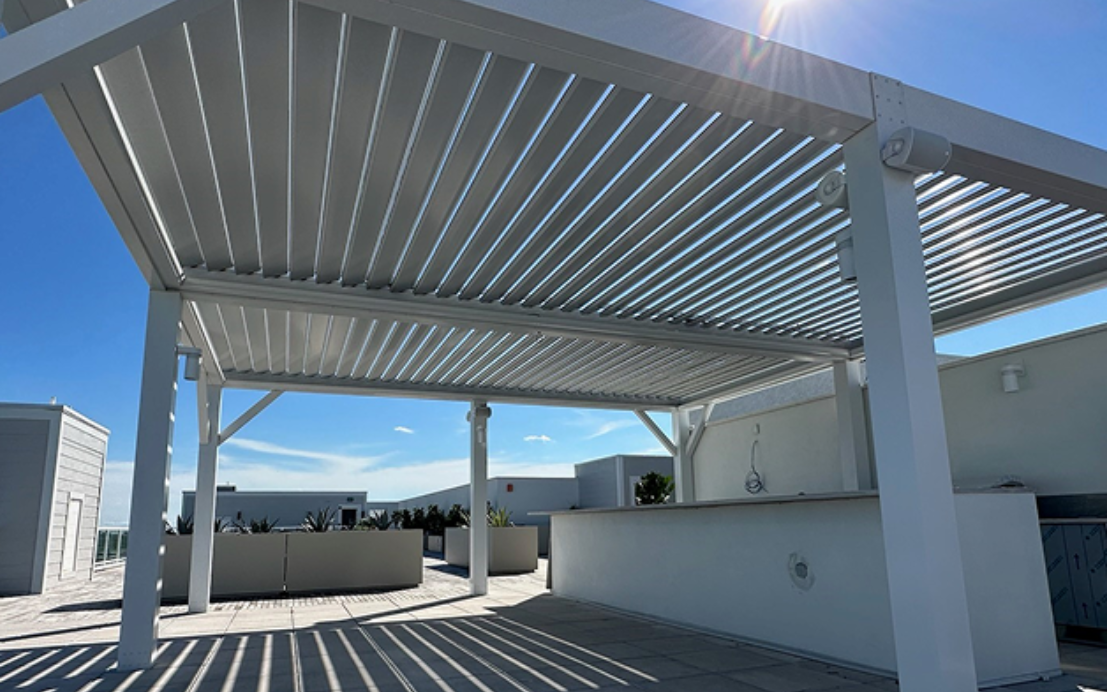
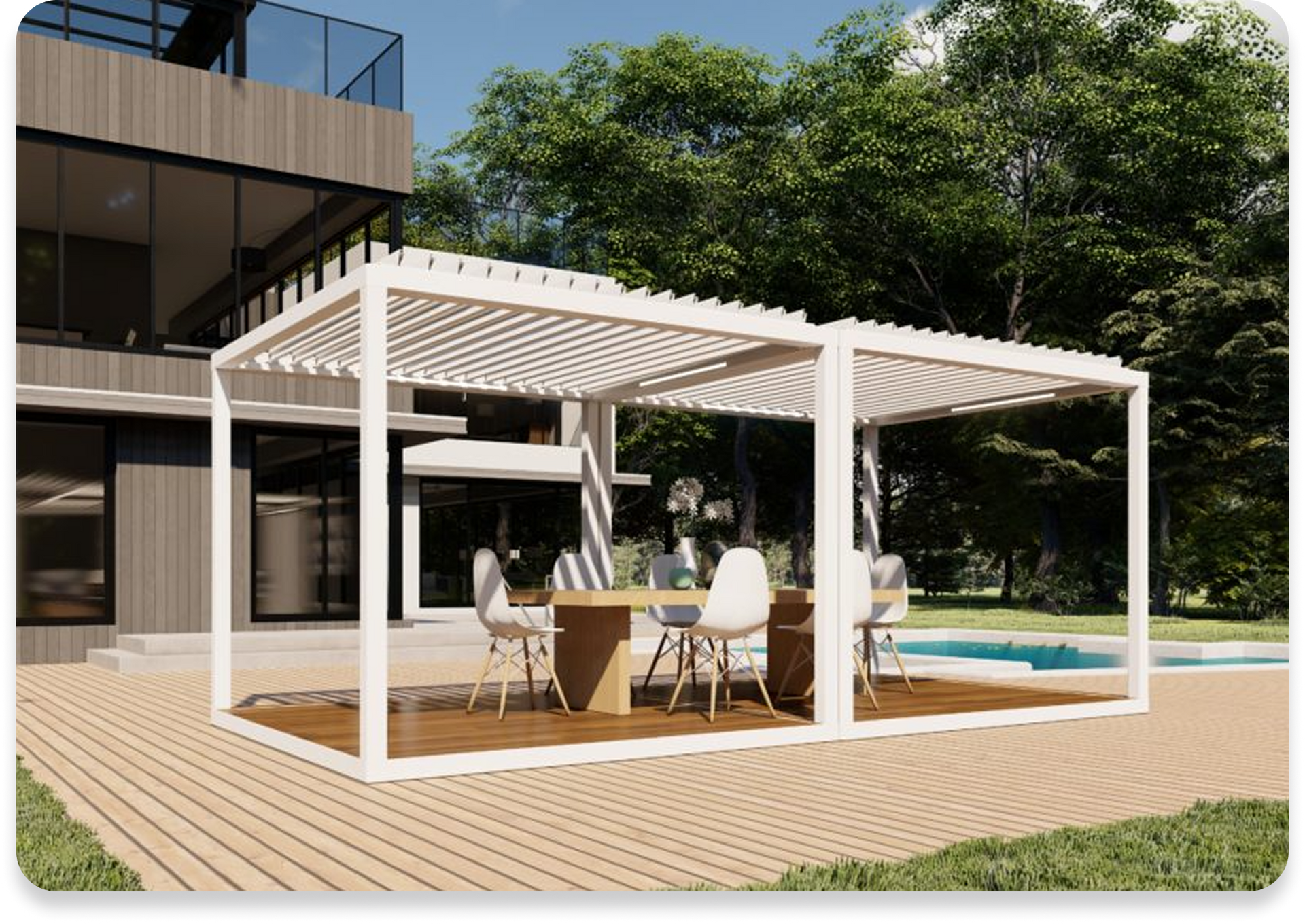
Shade Doctor serves Pensacola, FL with custom exterior shade systems built around how coastal properties are actually used. That includes motorized patio shades, retractable screens, awnings, pergolas, and related solutions for waterfront homes, condos, townhomes, restaurants, rental properties, and semi-enclosed outdoor rooms. The goal is simple: create shade, privacy, glare control, and better day-to-day comfort with materials and installation decisions that make sense near the coast.
A Gulf-facing patio asks for a different kind of shade
A backyard in an inland subdivision and a patio near Pensacola Bay are not working under the same conditions, even if both are technically in FL. On the coast, glare becomes its own weather event. Light reflects off water, white concrete, neighboring windows, and pool surfaces. A shade system has to soften that brightness without making the entire outdoor area feel boxed in or dark.
That is why many Pensacola projects start with a use-case conversation rather than a product-first pitch. A homeowner near Pensacola Beach may want to keep the horizon visible while cutting UV and afternoon heat. A family in Gulf Breeze may need more privacy from nearby homes and dock traffic without losing airflow. A hospitality property may want guest-friendly operation, cleaner sightlines, and a finish that still looks sharp after repeated exposure to coastal moisture. The right answer depends less on catalog language and more on the exact angle of sun, exposure, and how the space gets used between spring and hurricane season.
Coastal performance matters more here than brochure language
Marine air is hard on exterior hardware. That is one of the least glamorous truths in this business, but it is one of the most important. Near the Gulf, components that look fine in a showroom can age fast if the hardware, fasteners, finishes, and fabric system are not chosen with the environment in mind.
For Pensacola properties, Shade Doctor focuses on systems designed for lasting durability, especially where salt air and humidity are constant companions. Corrosion resistance is not a luxury feature here. It is part of whether the installation keeps operating smoothly, keeps looking clean, and keeps earning its place on the property instead of becoming a maintenance headache.
That has practical implications. Powder-coated finishes, marine-aware hardware choices, quality mesh and fabric, and thoughtful mounting details all matter. So does being honest about exposure. A protected lanai and a fully open waterfront patio are two different engineering conversations. This is also where expert guidance matters. A good design does not just look beautiful on day one; it anticipates what the air, sun, and wind are going to do to that system over time.
Wind, storms, and hurricane-season judgment calls
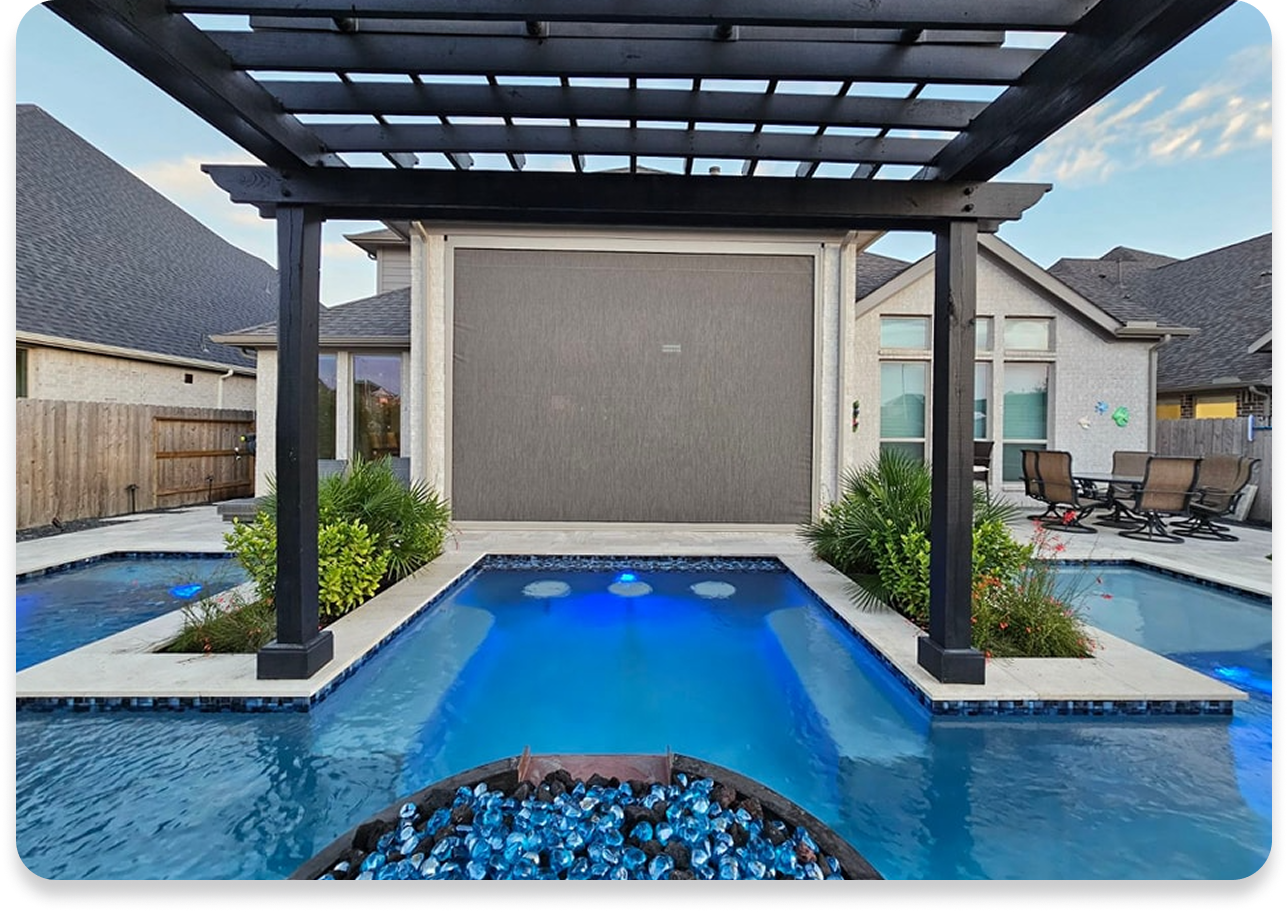
Pensacola property owners do not need a lecture on storm season. They need systems and recommendations that respect it. Exterior shades can absolutely be part of a smart coastal outdoor-living plan, but they should be selected with wind-readiness in mind. Sometimes that means a retractable option. Sometimes it means a removable panel strategy. Sometimes it means acknowledging that a fully exposed opening needs a different approach than a sheltered porch tucked under a deep overhang.
This is also where people often confuse outdoor shades with hurricane shutters. They solve different problems. Hurricane shutters are built for storm protection. Exterior solar shades, roller shades, and retractable screens are built for sun control, privacy, comfort, and day-to-day usability. A responsible service conversation in Pensacola should make that distinction clear while still helping the customer think through how a shade system fits into broader storm-season planning.
For some homes and businesses, the best answer is a motorized system that can retract when conditions call for it. For others, especially highly exposed waterfront areas, the conversation may center on where shade belongs and where a more structural solution makes better sense. The point is not to force every opening into the same product category. The point is to match the installation to the specific situation.
Pensacola homes have reason to invest in outdoor comfort
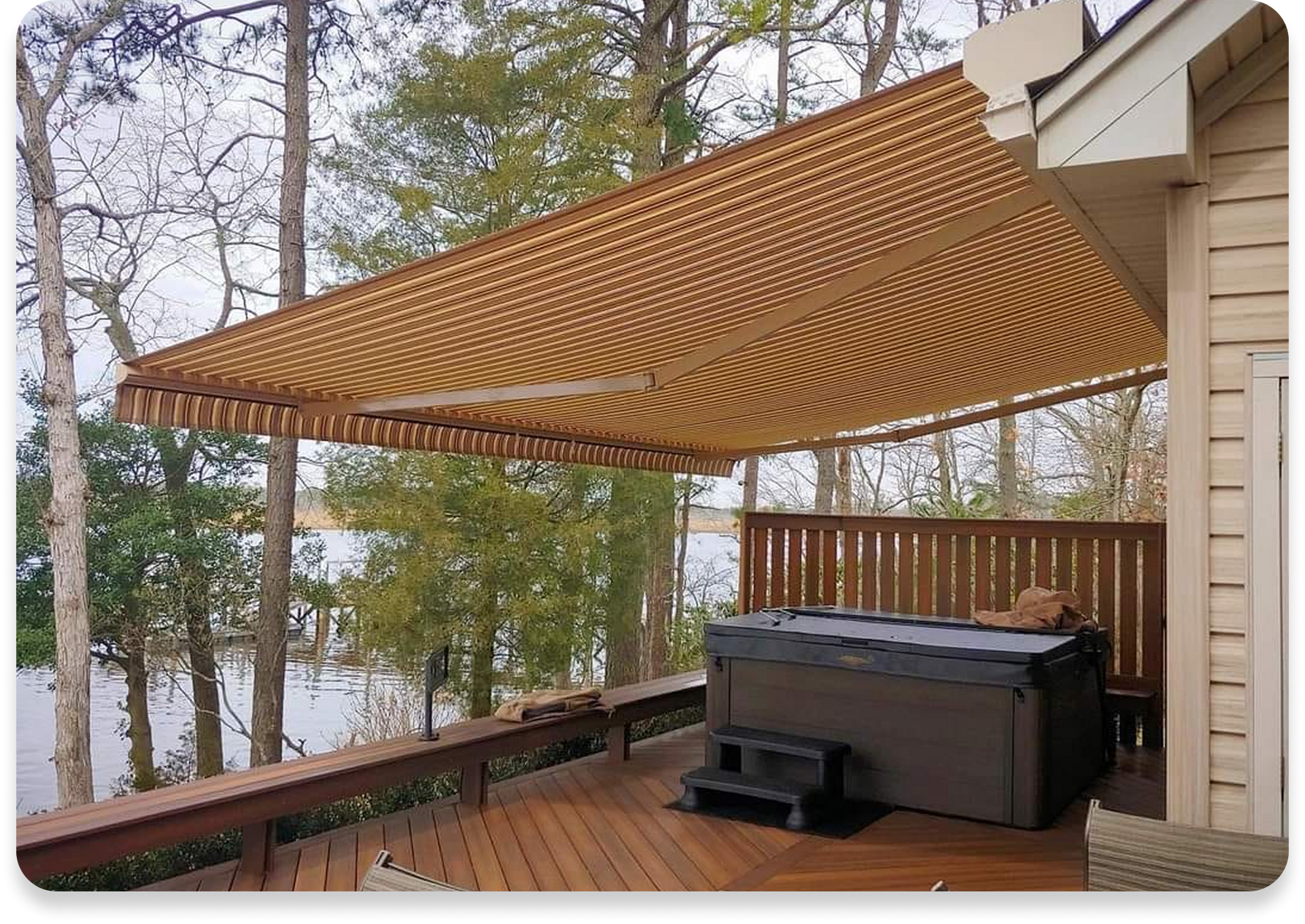
Pensacola is not just a tourist postcard. It has a substantial base of year-round households and owner-occupied homes, which matters because long-term outdoor upgrades tend to follow stable homeownership and steady property investment. In a city where people actually live full-time, outdoor spaces are not just photo backdrops. They become breakfast spots, evening wind-down zones, poolside gathering areas, and shaded transition rooms between indoors and out.
Those numbers help explain why custom window treatments and exterior shades are a real category here rather than an afterthought. Pensacola has enough established households, enough invested owners, and enough outdoor-living potential to support serious shade upgrades. For Shade Doctor, that means serving both residential and commercial clients with custom solutions that improve comfort while respecting the realities of budget, architecture, and exposure.
Waterfront homes need glare control without sacrificing the view
One of the most Pensacola-specific shade requests is also one of the trickiest: “Help with the glare, but do not ruin the water view.” That is not a generic blinds or shutters question. It is a coastal design problem.
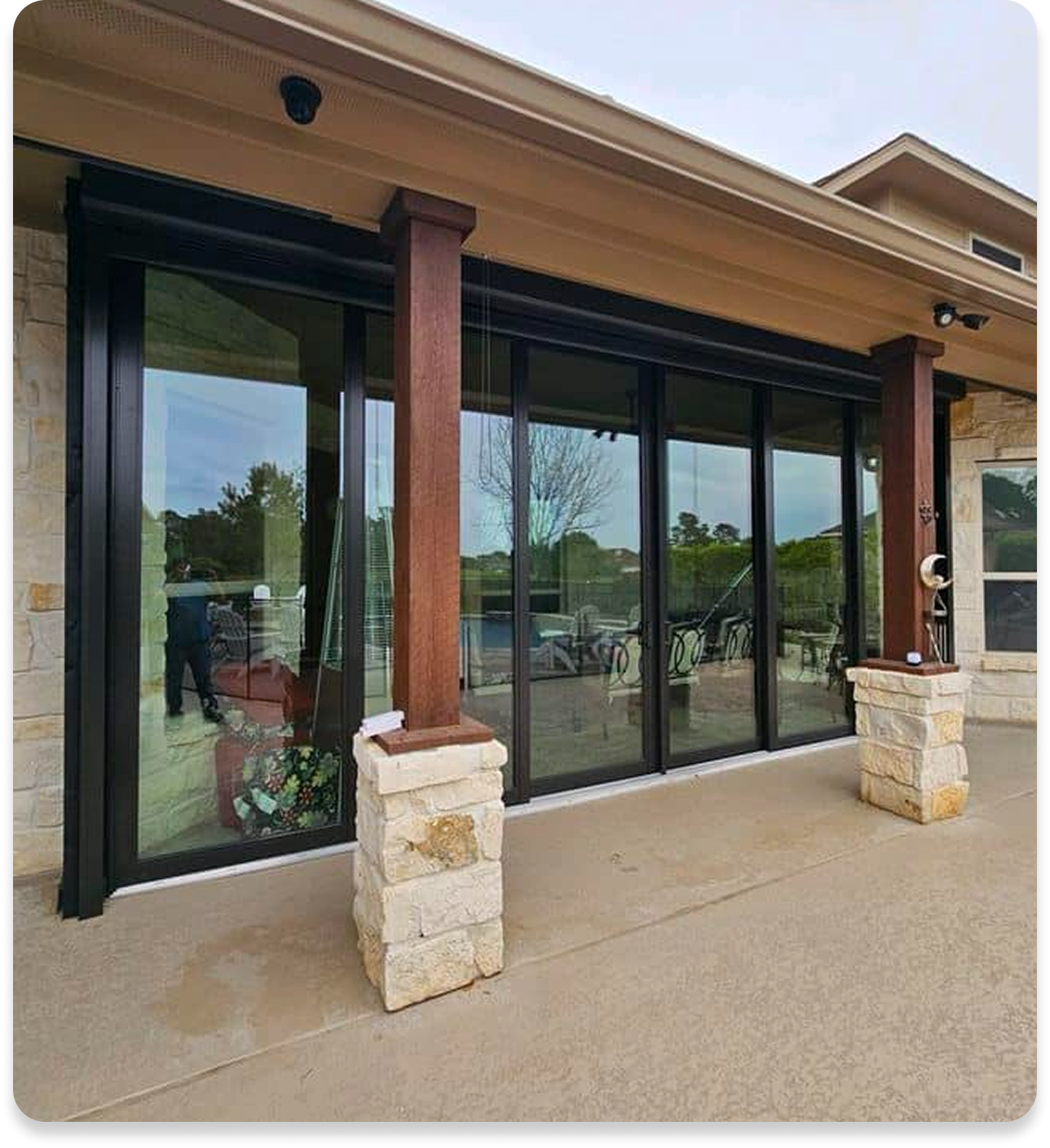
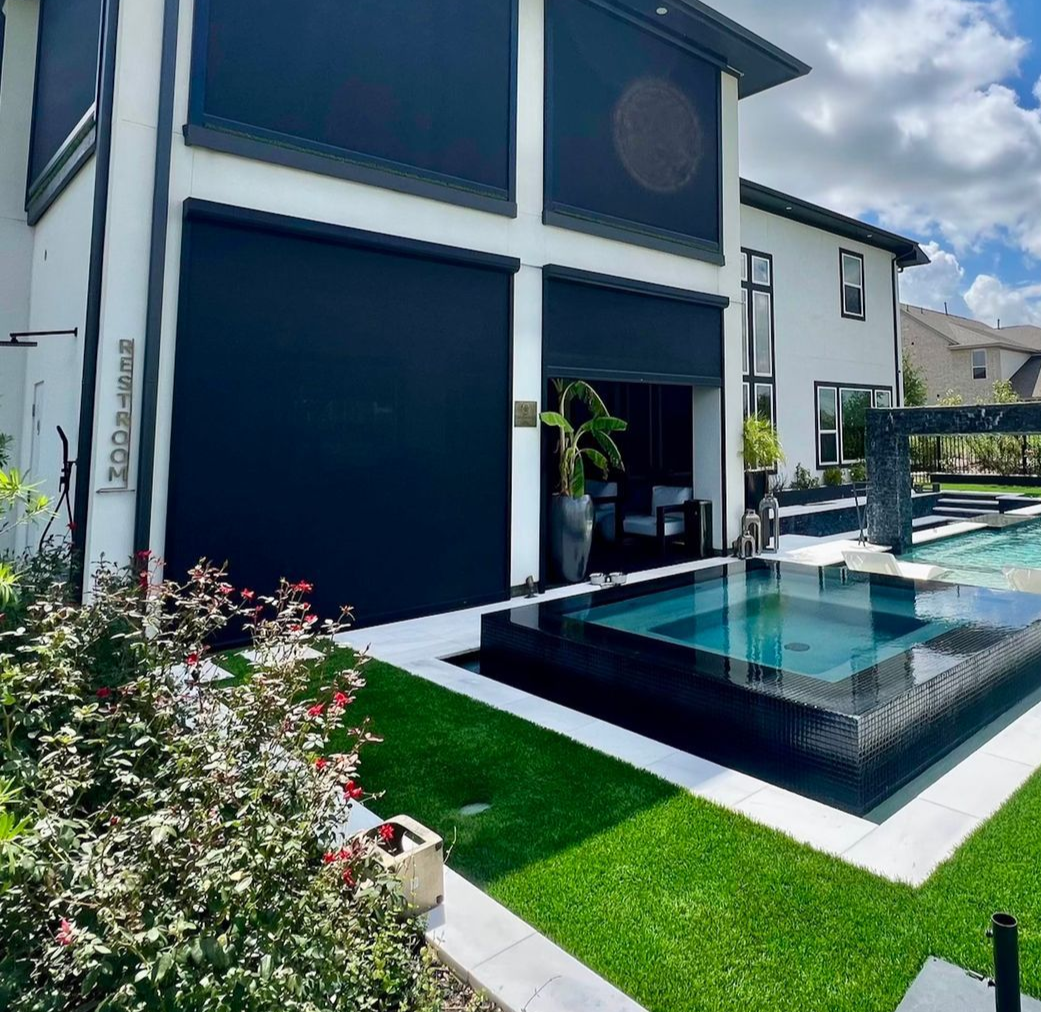
On waterfront patios and covered porches, the right shades can reduce harsh afternoon brightness, improve privacy, and help the space feel cooler while still preserving the visual openness people love about living near the Gulf. This is where exterior roller shades and screen systems often make more sense than heavier visual barriers. They can filter light instead of simply blocking it, which is a meaningful difference on a property where the view is part of daily life.
This same logic applies inside the home as well. In high-sun coastal homes, UV exposure does not stop at the patio line. It reaches flooring, upholstery, draperies, and furniture through large windows and glass doors. Some homeowners pair exterior shades with interior roller shades, shutters, or custom window treatments to create a more complete line of protection. That layered approach can support energy efficiency, reduce fading, and make rooms facing the water more comfortable through the brightest hours of the day.
Privacy looks different near docks, pools, and busy coastal streets
Pensacola privacy is often not suburban privacy. It can mean a pool deck that faces neighbors from three angles, a townhome patio near a shared drive, a beach-adjacent rental with foot traffic nearby, or a balcony visible from the next building over. In other words, privacy is often lateral rather than front-to-back.
That is where well-designed shades earn their keep. They can create a softer boundary without making the outdoor area feel sealed off. For some customers, that means more coverage on one exposure and lighter screening on another. For others, it means coordinating shades with railings, overhangs, and shutters so the result feels intentional rather than patched together. The best privacy work is often subtle. It changes how exposed the space feels without announcing itself from the street.
Condos, townhomes, and HOA rules change the conversation
Detached single-family homes are only part of the Pensacola market. Condos and townhomes near the water bring a different set of constraints, especially around appearance, attachment points, color consistency, and approval processes. The challenge is not only choosing attractive shades. It is choosing options that are approval-friendly and visually coordinated with the building.
That can affect fabric colors, housing styles, mounting methods, and the extent to which a system is visible when retracted. In many HOA-regulated properties, cleaner lines and restrained finishes travel better through review than anything flashy. For condo owners, a shade project can also involve practical questions about shared walls, balcony structure, and what is required before installation moves forward.
Shade Doctor approaches these projects with the understanding that good service includes clear communication and precise measuring. On regulated properties, details matter twice: once for performance and once for approval. That is true whether the property is in Pensacola proper, Gulf Breeze, or another of the surrounding communities where coastal architecture and HOA expectations overlap.
Rentals, restaurants, and guest-facing properties need easy operation
Vacation homes, restaurants, and hospitality spaces near Pensacola Beach and nearby coastal corridors have a different standard to meet. The shade system is not just for an owner who understands its quirks. It has to work for guests, staff, and frequent turnover. That usually means intuitive controls, reliable operation, and finishes that still present well after repeated use.
For rental properties, comfort has direct business value. A shaded patio or lanai is more bookable than one that turns into a glare box by lunch. For restaurants and poolside hospitality spaces, the ability to create a more usable outdoor area can improve guest experience without closing off the atmosphere people came for. In these settings, installation quality is not abstract. A guest-facing system needs to look good, operate predictably, and support the property rather than creating one more thing managers receive calls about.
That is also why many commercial clients and businesses lean toward motorized shades. Simpler operation reduces friction. Staff are more likely to use the system correctly. Guests are more likely to enjoy the space. And ownership is more likely to feel the purchase was worthwhile.
Screened porches and lanais can become real living space
A screened porch in coastal FL often starts as a compromise space. It is not fully indoors, not fully outdoors, and not always comfortable enough to be used all day. Add reflected heat, humidity, and low-angle sun, and that middle zone can become underused.
With the right shades, a lanai or screened porch can behave more like a room. Not a sealed room, but a usable one. One where breakfast is not interrupted by glare, where the furniture does not take the full punishment of UV all season, and where the temperature feels moderated enough to actually spend time there. This is one of the most satisfying kinds of project work because the transformation is easy to feel. A space that was technically available becomes genuinely inviting.
For homes from Pensacola to Destin and even Santa Rosa Beach, these semi-enclosed areas are often where families spend the most flexible time. Kids drift in and out. Pets nap there. Older residents want airflow without the intensity of direct exposure. That local age mix matters too.
Pensacola has a balanced mix of family households and older residents, which helps explain why comfortable, lower-hassle outdoor living spaces appeal across life stages.
For a family, that may mean safer and more comfortable afternoon use. For older homeowners, it may mean easier everyday enjoyment with less heat and less glare. Different households, same basic truth: a coastal porch becomes more valuable when it is easier to live in.
Property value, finishes, and the case for getting it right
Pensacola home values give homeowners another reason to be selective. On a property with real value and strong outdoor potential, a shade project should feel integrated, not improvised. The installation should match the architecture, support the budget, and look like it belongs there.
That is where design discipline matters. Fabric openness, visible hardware, control method, and how the shades relate to existing blinds, shutters, draperies, and windows all shape the result. Some customers want a cleaner, minimal look. Others want something that visually complements wood accents, coastal trim, or interior plantation shutters already in place. Either way, the work should enhance the property rather than reading like an add-on.
How a Pensacola shade project usually moves forward
The process is straightforward, but it should not feel rushed. It begins with a real conversation about exposure, use, and constraints. That includes where the sun hits, how much wind the area sees, whether there are HOA requirements, and what level of privacy or openness the customer wants to keep.
From there, the team can recommend designed solutions, take precise measure details, and help narrow the options to what makes sense for the home or business. Some customers already know they want motorized shades. Others are comparing awnings, pergolas, screens, blinds, shutters, and other window treatments as part of a larger project. In either case, the goal is not to overwhelm people with styles. It is to provide expert guidance so the decision feels grounded.
Once approved, professional installation brings the plan to life. Shade Doctor emphasizes quality craftsmanship, clean installation, and a strong warranty structure. That matters in any market, but especially in a place where sun, moisture, and coastal wear keep testing every exterior product after the truck leaves.
Serving Pensacola, Gulf Breeze, Destin, and nearby coastal communities
Shade Doctor serves Pensacola and surrounding communities across this Gulf Coast stretch, including Gulf Breeze, Pensacola Beach, Milton, Destin, and nearby areas where outdoor living and coastal exposure shape the way properties function. Because this is service-area work, the focus is on bringing the same level of design support, measuring, and installation service to customers throughout the region rather than asking them to settle for one-size-fits-all options.
That regional reach matters because neighboring communities often share the same broad climate while having very different property patterns. A condo near the beach, a primary home in Gulf Breeze, a restaurant patio in Destin, and a residential lanai farther inland can all need shades for different reasons. Good service recognizes those differences instead of flattening them.
A better outdoor room starts with the right coastal plan
In Pensacola, shade is rarely just about blocking sunlight. It is about making the view usable, the patio cooler, the lanai more livable, and the property better prepared for the realities of coastal life. It is about reducing glare without erasing the reason you wanted the outdoor space in the first place.
If you are weighing patio shades, electric shades, retractable screens, awnings, shutters, blinds, draperies, or other custom window treatments in Pensacola, FL, the next step is simply to schedule a conversation around your property’s actual exposure and goals. Submit the form, send a text, or call by phone to set an appointment. After submitting your information, you can move forward with a plan built for the coast, not just a generic product picked from a showroom wall.