Gazebo vs. Pergola: Which is Actually Best for Your Backyard?
Are you planning to upgrade your outdoor space and torn between gazebos vs. pergolas? Both outdoor structures excel at enhancing your backyard oasis, but they serve different purposes and offer distinct features. Understanding the key differences between a gazebo and a pergola is the first step toward creating the ideal outdoor living space for your home.
Let's explore the main differences between gazebos and pergolas, including design, weather protection, cost, and versatility, to help you decide.
What Is a Gazebo?
A gazebo is traditionally a freestanding structure with a full roof, typically round, octagonal, or rectangular. Gazebos feature a solid or fully enclosed roof, offering full protection from the elements, such as rain and harsh sun. Many gazebos are designed with one or more sides enclosed with walls, railings, or screens, making them great for year-round use. In fact, public parks and grand gardens often feature gazebos as focal points for relaxation or gatherings.
Features of a Gazebo:
- Enclosed roof/solid roof/fully enclosed roof providing shelter from rain, sun, and inclement weather
- Often includes built-in seating for convenience and comfort
- Can be larger in scale (think “size gazebo” for bigger gatherings or adding a hot tub underneath)
- More likely to be found as stand-alone structures in gardens and parks
- Offers more protection from the elements, making it suitable as a cost-effective way to extend your living area outdoors during all seasons
- Require permits depending on local building codes and size
What Is a Pergola?
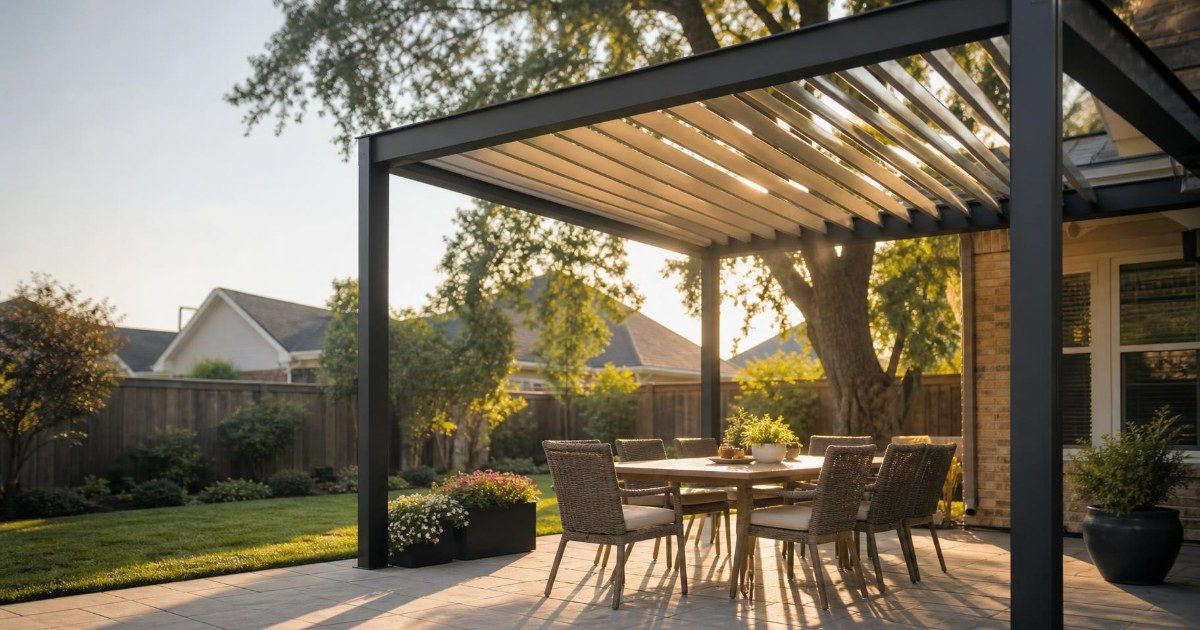
A pergola, on the other hand, is typically built with columns or posts supporting an open slatted roof (sometimes called open roofs). Pergolas feature open slatted roofs offering partial shade and can include retractable canopies, while gazebos have fully enclosed roofs for complete protection. Many pergolas are generally easier to build, can be made of wood or metal, and suit both traditional gardens and modern architecture.
Features of a Pergola:
- Open slatted roof providing partial shade while letting breezes and sunlight filter in
- Can be attached to your house, stand alone on the ground level, or hover above a patio or deck
- Supports climbing plants and vines to naturally increase shade and add beauty over time
- Low maintenance and often considered relatively maintenance-free
- Flexible in shape, scale, and design to fit smaller or larger backyards
What Are The Differences Between a Pergola Vs. Gazebo?
| Feature / Benefit | Gazebo | Pergola |
|---|---|---|
| Roof | Full/solid/fully enclosed roof | EvansOpen/slatted roof, can have canopies |
| Protection | Full protection, weather protection | Partial shade, offering protection |
| Sides/Walls | Enclosed, one or more sides | Fully open; no walls |
| Typical Placement | Freestanding, public parks, gardens | Attached/freestanding, decks, patios, yard |
| Style | Ornate, romantic, traditional | Modern, minimalist, or rustic |
| Sun & Rain | Complete sun/rain shelter | Filter sunlight, some shade, some sun |
| Customizability | Built-in seating, hot tub, and lighting | Climbing plants, retractable canopies |
| Size | The size gazebo can be large | Can be smaller scale or expansive |
| Cost / Ease | Higher investment may need permits/codes review | Cost-effective, generally easier to DIY |
| Use Cases | Events, dining, reading nook, hot tub | Relaxing, gardening, outdoor dining, accents |
How to Choose The Best for Your Backyard Oasis
When deciding between a pergola vs a gazebo for your outdoor space, think about:
- Intended Use. If you want a cozy shelter for dining or relaxing that’s usable in all weather, and perhaps a spot for a hot tub, a gazebo with a fully enclosed roof is ideal.
- Size of Space. For compact backyards, a smaller-scale pergola may be all you need. Large gardens or properties can accommodate both a size gazebo and a pergola as separate destinations.
- Budget. Pergolas are a cost-effective way to extend your outdoor area and are generally easier to install, even as a DIY project.
- Aesthetic Preferences. For elegance and grandeur, gazebos feature ornate designs and serve as stunning focal points, adding visual interest to any garden or backyard. For more contemporary or laid-back settings, a pergola provides clean lines and can be customized with lighting, curtains, or vines to match your style.
- Weather Conditions. If you live in an area with frequent inclement weather or heavy rainfall, a gazebo's fully enclosed roof and possible walls will provide full protection from wind, rain, and intense sun. If your climate is milder and you want to enjoy filtered sun and breezes on a sunny day, the open slatted roof of a pergola is an excellent option.
- Furniture and Activities. Both outdoor structures can house comfortable outdoor furniture or even a hot tub. Keep in mind that gazebos offer year-round dry shelter, while pergolas are best suited for weather-resistant furniture unless equipped with retractable canopies.
Turn Your Outdoor Space into a Sanctuary: Call Shade Doctor Today!
Both pergolas and gazebos enhance your outdoor space with distinct styles and functions. Gazebos offer full protection with their enclosed roofs, while pergolas provide partial shade and a more open, airy feel. Choosing between them depends on your preference for shelter, style, and how you want to enjoy your backyard oasis.
At Shade Doctor, we’re dedicated to transforming your backyard into the perfect retreat, whether you envision a timeless gazebo or a sleek, contemporary pergola. We guide you through every step, from design ideas to expert installation, to deliver a seamless experience and long-lasting results. We pride ourselves on using top-quality materials and delivering personalized service that sets us apart.
Contact us now to schedule your free consultation and discover how we can enhance your home’s comfort, beauty, and value!