How Long Does It Take to Install Pergolas?
If you’re planning an outdoor upgrade, one of the first questions that usually comes up is simple: how long does pergola installation take? The honest answer is that it depends on the type of pergola, the size of the structure, the condition of the site, and whether you’re installing a basic kit or a fully customized system.
For most homeowners, pergola installation can take anywhere from one day to several days, while larger or more customized projects may stretch longer once permitting, fabrication, electrical work, or site prep are factored in. A small, straightforward install moves fast. A custom pergola with motorized features, lighting, or integrated shade systems is a different animal entirely.
At Shade Doctor, outdoor living projects are never treated like one-size-fits-all boxes pulled off a shelf. Homeowners in Texas and across the country want more than a structure in the backyard. They want relief from heat, better usability, stronger curb appeal, and a space that actually gets used instead of avoided for half the year. That means installation timelines matter—but so does getting the job done right.
The Short Answer: Average Pergola Installation Timeline
A standard pergola installation usually takes 1 to 3 days on-site once materials are ready and the project is scheduled. That applies to many aluminum pergolas, modular pergolas, and some prefabricated systems being installed on an existing patio or deck with minimal complications.
Custom pergola projects often take longer when you include the full process from consultation to completion. In those cases, the timeline may look more like 2 to 6 weeks overall, sometimes longer depending on design complexity, custom manufacturing, weather, and permit requirements. The actual physical installation may still be quick, but the entire project timeline includes more moving parts behind the curtain.
Think of it like building a tailored suit versus buying a jacket off the rack. The jacket is faster. The tailored suit fits better, performs better, and looks like it belongs there.
What Affects How Long Pergola Installation Takes?
There’s no universal stopwatch for pergola installation because every backyard writes its own story. A flat concrete slab in a wide-open yard is a much easier setup than an uneven patio, sloped grade, or tight access area where every beam has to be maneuvered like a couch through a narrow stairwell.
The biggest factors that affect pergola installation time include the pergola size, material, customization level, foundation conditions, weather, and whether additional features are being added. Even something that sounds minor—like needing to anchor into a tricky surface—can add time and labor. Below are the major variables that influence the schedule.
Pergola Type Makes a Big Difference
Not all pergolas install at the same speed. A simple freestanding pergola with a clean footprint is usually faster than a pergola attached to the home, especially if the attachment requires extra structural review or flashing details.
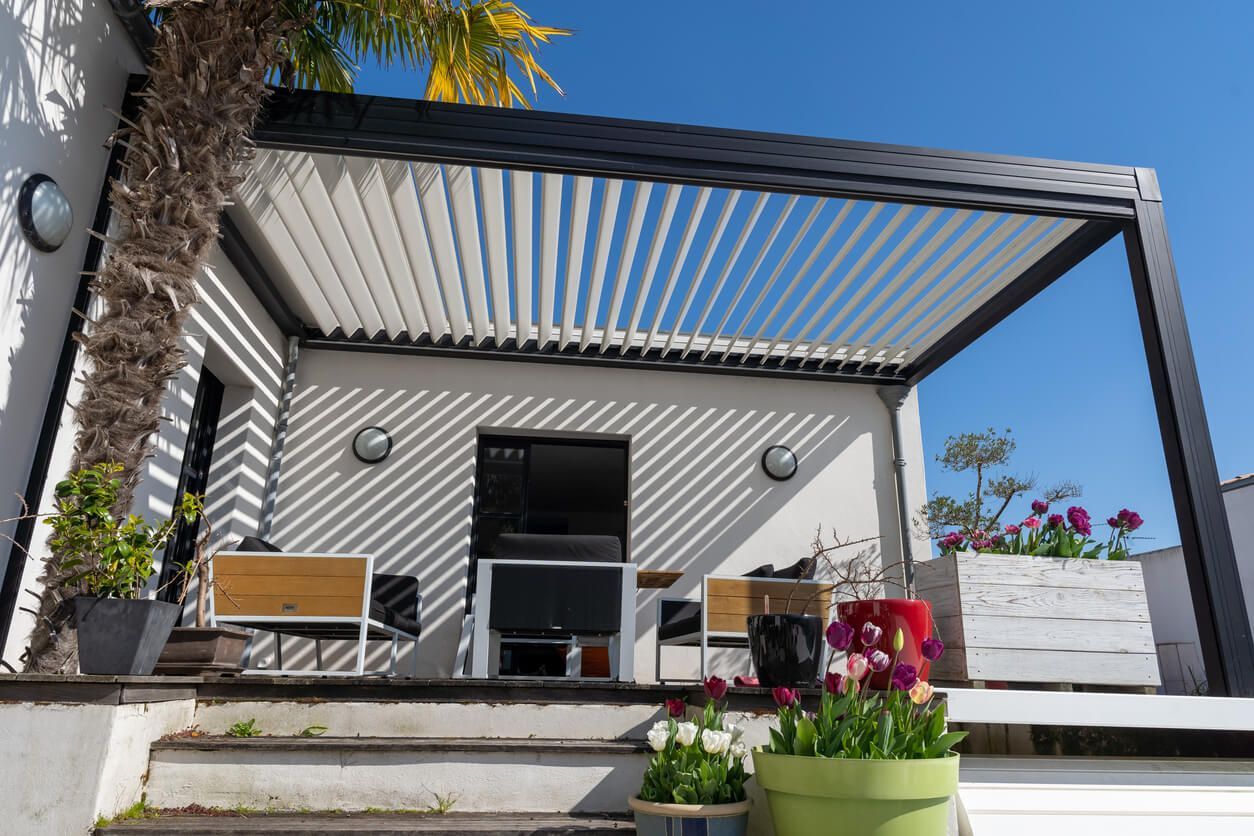
A modular pergola is often quicker to install because the components are engineered to fit together efficiently. A retractable pergola or pergola with motorized roof features may take longer due to more precise assembly, electrical integration, and testing. If your pergola includes adjustable louvers, automation, lighting, fans, or screens, the installation timeline expands because the system has more than one job to do.
That’s why asking “How long does it take to install pergolas?” without defining the pergola type is a little like asking how long it takes to build a car. A golf cart and a pickup truck are both vehicles, but they don’t come together the same way.
Site Preparation Can Add Time Before Installation Starts
Some pergola projects move quickly because the site is already ready. Others need prep work before the first post is ever set. If the patio is cracked, sloped, undersized, or structurally questionable, that has to be addressed first.
Site prep may include leveling the ground, pouring concrete footings, reinforcing an existing slab, removing obstacles, relocating irrigation lines, or adjusting landscaping. In some cases, access is the real issue. If installers can’t easily bring materials into the yard, the project may require more labor and more time simply to stage the build.
This is especially common in older homes and custom backyards where patios weren’t originally designed for a pergola system. What looks simple in a photo can get complicated once measurements hit reality.
Custom Design and Fabrication Extend the Full Timeline
If you’re choosing a custom pergola instead of a stock kit, the design phase matters. Measurements have to be exact. Engineering may be required. Materials may need to be ordered or fabricated to fit the space.
This part doesn’t always show up in homeowners’ mental math because they’re often focused on the day the crew arrives. But from an SEO and buyer-intent standpoint, it’s important to say clearly: the total pergola installation process starts well before installation day. Consultation, design approval, fabrication, and scheduling can take weeks depending on demand and complexity.
The upside is that custom work delivers a pergola that fits the home, the patio, and the way the family actually lives. That’s worth more than rushing a project just to shave off a few calendar days.
Permits and HOA Approval Can Slow Things Down
In many areas, pergola installation may require permits, inspections, or HOA approval. This doesn’t always delay the construction itself, but it can absolutely affect the overall project schedule.
Permit timelines vary by city and county. Some move quickly. Some move at the speed of wet concrete. If you’re in Texas, especially in fast-growing metro areas around Houston and surrounding communities, permit and HOA review times can vary widely depending on the municipality and the scope of the project.
A professional pergola installer helps navigate this process so the project doesn’t get tripped up by paperwork after plans are already in motion. It’s one of the less glamorous parts of outdoor living upgrades, but skipping it can create bigger headaches later.
Weather Can Change the Schedule Fast
Outdoor construction is always at the mercy of the sky. Rain, high winds, lightning, and extreme heat can all affect pergola installation timelines. In places like Texas, weather can change its mind by lunch.
If concrete footings need to be poured, weather becomes even more important because curing conditions matter. Wind can also delay installation of large pergola components, especially on open patios where oversized beams and roof sections need to be lifted and secured safely.
This is one reason experienced installers build flexibility into the schedule. A good company doesn’t force a rushed install through unsafe conditions just to stay on a spreadsheet.
How Long Does It Take to Install a Pergola on an Existing Patio?
Installing a pergola on an existing patio is often one of the faster scenarios, assuming the patio is structurally sound and large enough to support the design. In many cases, this type of pergola installation can be completed in 1 to 2 days for a standard modular system.
That said, existing patios are not automatically easy. The slab has to be inspected for condition, thickness, anchoring capability, and layout compatibility. If the concrete is uneven or the patio has drainage issues, installers may need to make adjustments before the pergola goes up.
This is where professional installation earns its keep. A pergola should feel like it belongs to the home—not like it was awkwardly dropped onto the patio after a weekend impulse buy.
How Long Does It Take to Install a Custom Pergola?
A custom pergola generally takes longer than a standard system because there are more decisions, more measurements, and more coordination. The on-site installation may still take only 2 to 4 days, but the full project timeline is usually longer.
For example, if you’re installing a custom pergola with motorized louvers, integrated lighting, fans, retractable shade features, or a unique footprint, the process includes design consultation, approvals, ordering, fabrication, delivery, and installation. That full timeline may land in the 3- to 6-week range, and sometimes beyond during busy seasons.
The tradeoff is simple: custom pergolas are built around your home and your outdoor lifestyle. They’re not trying to force your backyard into a generic shape.
Does a Retractable Pergola Take Longer to Install?
Yes, in most cases a retractable pergola installation takes longer than a basic fixed pergola. There are more components involved, more alignment required, and often electrical work that needs to be completed correctly.
A retractable system is doing more than standing there and looking pretty. It’s designed to adapt to sun, shade, and changing weather conditions. That means motors, controls, tracks, and moving components all need to be installed and tested. The added time is usually worth it for homeowners who want a more flexible outdoor living space.
This is especially true in hot climates where direct sun can turn a patio into a skillet by mid-afternoon. A retractable pergola gives you more control over the space and more reasons to actually use it.
DIY Pergola Installation vs. Professional Installation Time
A DIY pergola installation almost always takes longer than homeowners expect. Even if the product claims to be simple, the real-world timeline depends on tools, skill level, helpers, weather, anchoring knowledge, and whether everything arrives exactly as planned.
For a homeowner, a DIY pergola may take a full weekend or several weekends, especially if the site needs prep or the instructions read like they were translated three times before printing. A professional pergola installer can usually complete the same project much faster because the crew already knows the sequence, the structural requirements, and the common issues that pop up mid-install.
Speed is only part of the equation, though. The bigger issue is accuracy. A pergola that is slightly out of square, poorly anchored, or improperly flashed can create long-term problems that cost more than the original labor savings.
What Happens During Pergola Installation?
Homeowners often imagine pergola installation as a single event, but it’s really a sequence. First comes layout and site verification. Then the crew sets posts or anchor points, assembles the frame, secures beams and rafters or louvers, and completes finishing details.
If the pergola includes motorized or electrical features, those systems are installed and tested after the structure is in place. Final cleanup and walkthrough happen at the end so the homeowner understands how to use and maintain the system.
When the process is handled by an experienced team, it feels smooth and organized. When it’s not, it can feel like a puzzle being solved in public. That difference matters.
Why the Fastest Pergola Installation Isn’t Always the Best One
Everyone likes a quick turnaround, but speed without craftsmanship is a bad bargain. A pergola is exposed to sun, wind, rain, shifting temperatures, and daily use. It needs to be installed with precision so it performs for years, not just for the first backyard barbecue.
That’s particularly important in regions with intense heat, storms, and strong seasonal weather swings. A rushed install might look fine from the patio door, but hidden problems tend to show up later—in loose anchors, drainage issues, alignment problems, or premature wear.
A better question than “What’s the fastest pergola installation?” is “What timeline gives me the best long-term result?” That’s the question smart homeowners ask.
Pergola Installation in Texas: What Homeowners Should Expect
In Texas, pergola installation often comes with a few extra considerations: heat, sun exposure, wind, and the need for outdoor structures that don’t just look good in photos but actually perform in real weather. Homeowners from Houston to West Texas often want pergolas that create usable shade and pair well with broader outdoor living upgrades.
That’s one reason premium pergola systems, modular pergolas, and retractable pergolas have become more popular. They offer more than visual appeal. They help carve out comfort in climates where uncovered patios can become nearly unusable during peak summer hours.
For Texas homeowners, installation timelines can also be influenced by seasonal demand. Spring and early summer are especially busy, so planning ahead is smart if you want your pergola ready before the hottest stretch of the year.
So, How Long Does It Take to Install Pergolas?
For most projects, the physical installation of a pergola takes 1 to 3 days, while more complex custom pergolas may take several days on-site and several weeks overall from design to completion. The exact timeline depends on the pergola type, the site conditions, custom features, permits, and weather.
The good news is that a well-planned pergola installation doesn’t have to drag on forever. With the right design team and installer, the process can be efficient, clear, and surprisingly smooth. And once it’s done, the payoff is immediate: more shade, more comfort, and a backyard that finally starts pulling its weight.
If you’re considering a pergola installation for your home, the best next step is a consultation. A professional team can assess your space, explain your options, and give you a realistic timeline based on your goals—not a vague guess.
At Shade Doctor, that’s how outdoor transformations begin: with a plan built around your space, your climate, and the way you actually want to live outside.