How Do You Shade a Balcony When You Cannot Drill Into Anything
How do you shade a balcony when nothing can go into the facade, the railing, or the ceiling? Railing clamps and straps, tension-mounted poles or frames, and weighted freestanding bases all put shade overhead without a single hole. Sun sails anchored with the right hardware come next on the list.
These methods differ in how long they last. A strap-mounted sail may need re-tightening every few weeks, while a weighted frame can stay put for whole seasons. Owners in an HOA or condo association also have something renters lack: a path to a permanent, approved solution once the workarounds wear thin.
This guide is written for townhome, condo, and stacked-home owners with a small elevated space, close neighbors, and no ground-level structure to build from. Each section below says what a method needs from you, what it may need from your association, and how it behaves when the wind picks up.
Why "No Drilling" Means Something Different for Owners Than Renters
A rental lease bars drilling to protect a security deposit. An HOA or condo association bars it for another reason: the facade, the railing, and often the balcony structure itself are common-area elements controlled by the association, whatever the deed to your unit says.
That second situation is widespread. About 78.1 million Americans, or 35.2% of U.S. housing, live in a community association as of 2025, which includes HOAs, condos, and housing cooperatives. A townhome balcony shade project often lands under the same covenants, because exterior walls and railings tend to sit under the association's control.
The difference matters because a renter can only wait out the lease, while an owner can apply for a change. A board can say yes to a well-documented, professionally installed upgrade. A landlord rarely will.
The methods below fall into two groups. Some need no permission at all because they attach to nothing except your own space, using furniture, weight, and tension. Others still call for an architectural-review request even though no drill touches the facade. Anything that clamps or straps to a railing the association controls belongs in that second group, so a short email to the management office before you buy is time well spent.
Railing Clamps and Straps
Railing mounts are the quickest way to hang a balcony sun shade. Heavy-duty ratchet straps, UV-resistant industrial zip ties, or rubberized C-clamps grip the balcony railing itself, and the shade fabric stretches out from there. Nothing touches the wall or the ceiling.
A sun sail or shade panel needs at least two high points, and a railing gives you one edge of the rectangle. The far corners can tie to a pole, a planter post, or a freestanding frame, all covered in the next section. A lightweight screen can run along the railing with no second anchor at all.
Padding protects the rail. A rubber sleeve, a length of old bike inner tube, or a few wraps of rubber tape stops straps from scratching or denting powder-coated aluminum. Many condo associations spell out railing finish requirements in their rules, so padding also keeps you on the right side of the paperwork.
The railing is the only load path in this setup, and that sets the limit. Clamps and straps suit a sun sail, a shade panel, or a lightweight screen. A full retractable system pulls far harder than a railing clamp can hold, and a railing built for people leaning on it was never sized for that kind of tug.
Check the clamps and straps every week or two. UV light and repeated flexing loosen ratchets and wear down zip ties, and a shade that slips a little each day can come loose all at once.
Magnetic mounts also exist for steel balcony frames, and they can hold small panels in place. They fit a narrow set of balconies, so they earn a mention here and no more.
Tension-Mounted Poles and Weighted Freestanding Frames
This is the most durable no-drill category because the load path is vertical pressure or mass, with no grip on someone else's structure. For small patio shade solutions, and for anyone collecting apartment balcony shade ideas, it is usually where the search ends.
Telescopic poles wedge between the floor and the ceiling of the balcony overhang. A panel on a crank retracts along the pole, so you can open and close the shade without leaving your chair. These work best on balconies with a solid, flat overhead surface, and the poles need a firm, even push to stay upright.
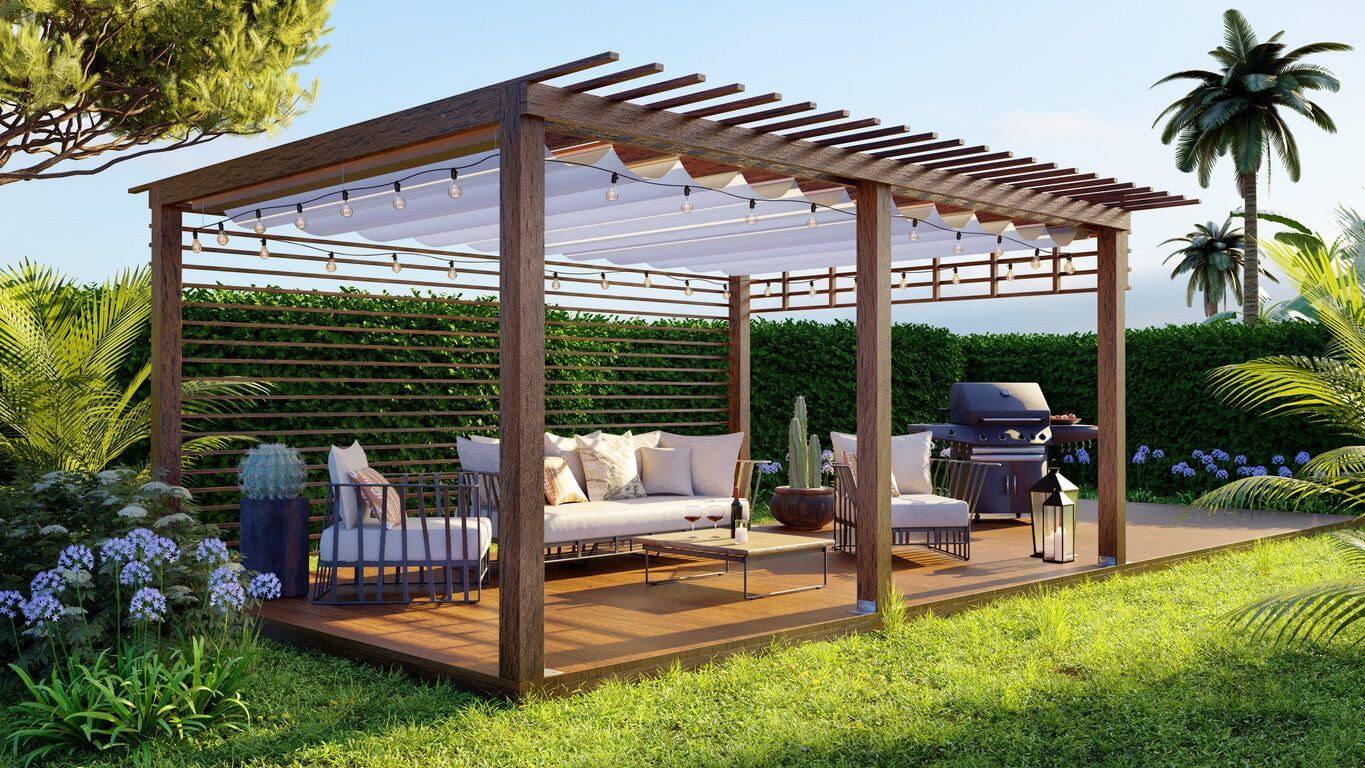
Freestanding goalpost-style frames never touch the building. Two uprights and a crossbar hold a double-sided shade over your seating, and sandbags or pavers on the base keep the frame steady. Take the weight seriously. A frame that feels solid on a calm afternoon needs real ballast to stay put in a gust.
Weighted planter posts solve the problem of a sail with no wall or tree to tie to. Set a post in concrete inside a large planter, and the planter becomes a furniture-style anchor for the sail's outer corners. Plants add even more weight and make the corner look like part of the decor.
Some balconies are too narrow for any frame. A half-umbrella or balcony parasol suits that case. It sits against the railing side of the space, shades one seating spot, and takes up very little floor.
Balconies with a ground-level footprint, like a first-floor patio, can use any of these methods with fewer worries. Upper floors bring a different problem, and the next section covers it.
What Wind Does to a Balcony That Isn't Ground Level
A backyard umbrella base or a pergola fights wind with weight kept low to the ground. A balcony shade several floors up, especially between buildings, meets faster and more turbulent gusts, because the neighboring structures funnel air around the space.
Building codes account for this. The ASCE 7 wind-design method assigns higher exposure coefficients as height and exposure rise, for example 0.70 in Exposure B against 1.15 in Exposure D at 30 feet, a gap of about 64%. That figure describes how engineers think about wind at height. It says nothing about the exact wind speed on any single balcony.
The takeaway is practical. Clamps, straps, and tension poles hold by friction and tension, and those are the first connections to slip in a sharp gust. A ground-level patio umbrella might ride out the same gust without trouble.
A simple habit covers most of the risk. Retract the shade or unclip it whenever you leave the balcony or a storm shows up in the forecast. None of the no-drill methods in this guide are rated to stay deployed unattended the way an engineered system is, so taking the shade down is part of using it.
When a Permanent, Board-Approved Upgrade Makes More Sense
Some owners find themselves re-tensioning poles every month or replacing a wind-torn sail every season. At that point, one architectural-review request can replace a recurring DIY fix.
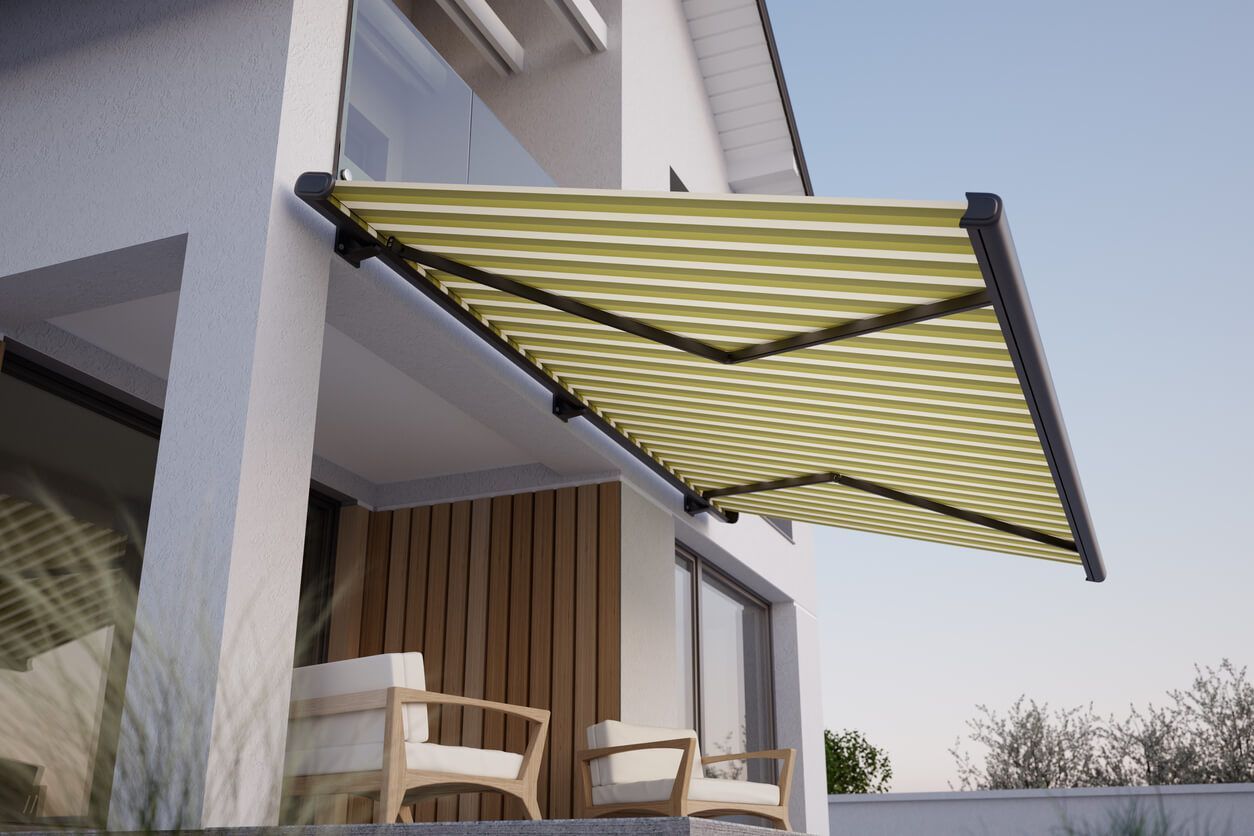
A professionally installed motorized awning with a wireless remote and a manual override is built for that kind of request. In a motorized awning for balcony use, the arms mount to the building's structural framing and not to surface material. The wireless remote opens and closes the awning, and the manual override keeps it working without batteries or building power. The pitch adjusts by crank from ground level, with no ladder.
These details matter to a board because it reviews one engineered installation, with a clear scope and a professional crew, in place of a web of straps and clamps.
This is a different category from everything above. A motorized awning anchors into the building, so it is not a no-drill option, and it goes through the association's review and any permits the building requires.
Some balconies lack a clean place to mount anything. An unusual opening, an angled wall, or no mounting beam can rule out a stock awning bracket. Custom shade solutions such as angled wall buildouts and beam buildouts for gables without a beam can fit those spaces and give the installation a solid base.
The natural next step is a measured review of your balcony and a look at what your association would actually approve.
Adding Privacy Along With Shade
Shade and privacy often come as a pair. A balcony facing a neighbor's unit or a shared walkway gets sun and eye contact at the same time.
A balcony privacy screen can pair with any method above. Mesh privacy panels clip to the same railing hardware as a sun sail, or attach as a side panel on a freestanding frame. Tighter mesh gives more privacy and also blocks more airflow, so on a breezy upper floor a lighter mesh keeps the load on your clamps and straps lower.
Check the screen's height against your association's rules. Some boards limit anything that rises above the top of the railing.
Which Option Fits Your Balcony?
Narrow high-rise balcony with only a railing
Start with railing clamps and straps for a light sun panel, or a half-umbrella that tucks into one corner. Both take little floor space. Plan to take the shade down whenever you leave, since height brings the strongest gusts.
Ground-floor patio with no overhang
A weighted freestanding frame or planter posts fit here. With no ceiling to wedge a pole against, mass does the work, and a ground-level footprint handles wind far better than a balcony several floors up.
Townhome balcony with HOA-controlled walls
Begin with a no-drill method that attaches to nothing the association controls, such as a freestanding frame with sandbags. Ask for review before adding anything that touches the railing. If the setup keeps slipping or tearing, request architectural review for a permanent upgrade.
Whichever balcony you have, a professional assessment shows what will hold up and what your board can approve. To have your space measured and reviewed,
Schedule Consultation.