How Do You Shade a Screened Porch and Actually Use It Year Round
A screened porch usually fails in two opposite directions. In summer, it turns into a bright warm box where the roof helps a little but the side openings let in low sun, glare, and trapped heat. In winter, that same porch is basically outdoors with a roof, exposed to cold air, drafts, and wind-driven weather. The screen solves bugs and almost nothing else.
That is why the question is not really how do you shade a screened porch. The real question is why the porch you already own still feels unusable for large parts of the year, and what kind of shade or enclosure changes that without ruining the view. If you are trying to make a screened porch, lanai, or enclosed porch feel like an actual room instead of a seasonal compromise, the answer comes down to understanding what problem you are solving first, then choosing the right material, openness, and mounting approach. Companies that focus on custom outdoor shade systems from Shade Doctor spend a lot of time correcting the same misunderstanding: people expect screen mesh to do the work of shade, insulation, and weather protection all at once. It cannot.
Why Screened Porches Sit Unused Half the Year
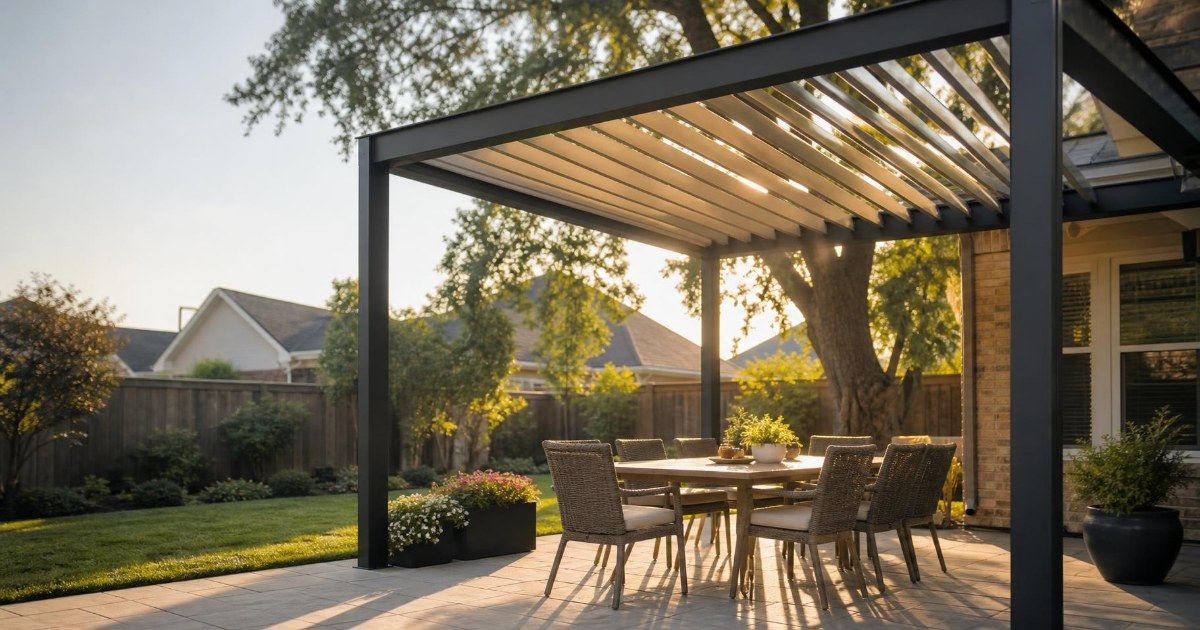
A roof blocks overhead sun. That helps at noon, especially in midsummer, but it does not solve the bigger problem on most porches. Morning sun and late afternoon sun arrive at a low angle, almost sideways, and they pass straight through the mesh. If your porch faces east or west, you can feel this immediately. The light hits chairs, floorboards, porch furniture, and people sitting near the perimeter. The porch becomes bright, hot, and hard to enjoy even though it is technically shaded from above.
That happens because screen mesh has effectively no thermal value. It is there to keep insects out, not to reject solar heat gain. It does not meaningfully stop harmful uv rays, harsh sunlight, or radiant heat. The roof handles the top. The sides are still open. So the porch becomes a room with a lid and no side protection, which is why the afternoon sun can still make it miserable.
Then the failure flips in cold weather. Once temperatures drop, the same openness that felt breezy in spring starts working against you. Cold air moves through every bay. Wind strips away any warmth the porch held during the day. If rain is pushed sideways, the screen does almost nothing to block it. A screened porch in winter is still exposed on all sides, which means the space rarely feels stable enough to use for morning coffee, reading, or dining unless the weather is unusually mild.
This is why so many screened porches become storage by accident. Cushions get pulled in. Plants move around trying to dodge direct sun. A fan gets added in summer. A portable heater gets tried in fall. None of that changes the basic physics. The porch is open where the weather matters most.
What Screens Solve and What They Do Not
It helps to be blunt here because too much porch advice dodges the obvious. Screens handle insects. That is their job. If mosquitoes, flies, and general bug pressure are your only issue, a screened porch is doing what it was built to do. If you are uncomfortable because of heat, glare, rain, wind, privacy, or cold, the screen is not failing. It was never designed for those problems in the first place.
Here is what screened mesh does not solve. It does not stop solar heat gain. It does not provide real light control. It does not block glare off a phone, book page, or dining table. It does not create daytime privacy from neighbors. It does not stop wind-driven rain. It does not insulate against cold. It does not protect porch furniture from uv damage the way denser outdoor shades, outdoor blinds, or clear panels can.
Each of those problems requires something specific. Solar heat gain and glare require a shade material with the right openness and color. Privacy requires a denser mesh, solid fabric, or a carefully chosen outside mount that closes visual gaps at the edges. Wind-driven rain usually requires side tracks, closer edge retention, and sometimes clear panels instead of mesh. Cold requires a barrier, which means clear vinyl or glass-like panel systems, not standard screen. If the main issue is low-angle west light, this breakdown is similar to what happens on open patios dealing with late-day sun exposure from the side.
That honesty is what makes a porch plan useful. Once you stop asking one product to solve five different problems, the choices become much clearer. Porch shades, porch blinds, outdoor blinds, and outdoor shades all have a place, but only when they are matched to the actual failure of the room.
Adding Shades to an Existing Screened Porch
This is the practical heart of the project because most people asking how do you shade a screened porch already have one built. They are not starting with a blank slate. They have existing posts, beams, trim, screen bays, maybe a wood ceiling, maybe aluminum framing, maybe a mix of decorative details that looked good on paper and now create awkward opening sizes. The work is not conceptual. It is about fitting a functioning shade system into what is already there.
In many cases, shades can be mounted directly to the existing porch structure. That might mean fastening to a beam header, under a soffit, or across individual openings between posts. The best mounting method depends on whether the porch framing is square, how much depth exists for the roll, and whether the shades need to disappear visually when raised or simply work cleanly when down. This is where a site-specific approach matters more than product marketing.
Working within existing screen bays is often the cleanest path. Each bay can receive its own shade if the widths are manageable and the structure is consistent. On a porch with irregular bay widths, though, a one-size-fits-all approach starts to look sloppy fast. One opening might be 93 inches wide, the next 101, the next slightly out of square because the house settled or the trim was built to hide a framing issue. Good porch shades are sized to the actual opening, not to the idea of the opening.
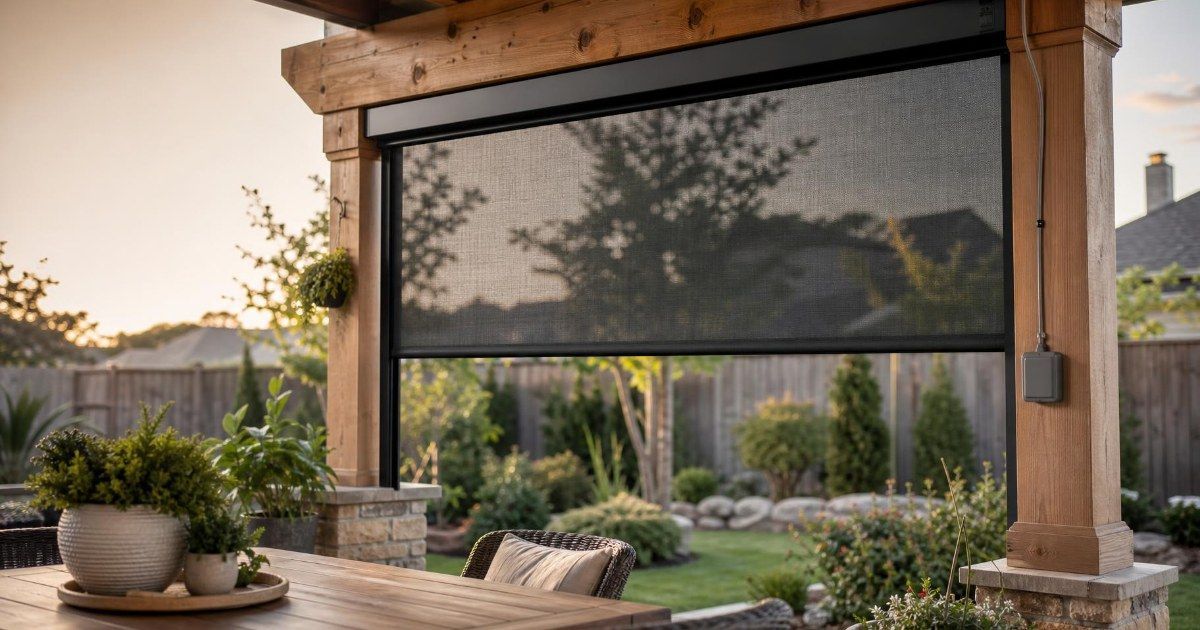
Side track systems and open-roll systems serve different goals. A side track system holds the fabric edges in place, improves wind performance, reduces light gaps, and helps with insects, glare, and rain control. It is the more room-like option. An open roll is simpler and sometimes cheaper, but it leaves the edges exposed and allows more light, wind, and movement. For a screened porch where people sit close to the perimeter, those edge gaps matter more than they do on a broad open patio or deck.
Homeowners can assess a few things on their own before scheduling a visit. Measure the clear width and height of each bay. Look for obstructions like door handles, lights, fans, sill trim, or uneven flooring. Check whether the posts and header feel substantial or decorative. Take note of whether the porch gets hammered by afternoon sun, whether rain blows in from one side, and whether your main frustration is heat, privacy, or cold. That information helps narrow the right system quickly.
What you cannot reliably assess from the ground is structural adequacy and tolerance. Can the existing frame carry the load of multiple roller housings? Is the mounting surface plumb enough for tracked shades to run smoothly? Will a window frame detail, sliding doors, or a decorative sill interfere with the drop path? Those are site-visit questions. They are also the difference between shades that look integrated and shades that always feel added on. For a sense of how these projects are measured and laid out before fabrication, the process behind custom shade design and field measurement is useful context.
Choosing Openness for a Porch Rather Than a Patio
Openness percentage is where many porch projects are won or lost. People understandably want two things at once. They want stronger heat rejection and glare control, and they want to preserve the view into the yard, garden, pool, or tree line. The problem is simple and annoying: lower openness means more block and less view. Higher openness means more view and less protection. There is no fabric setting that gives both at full strength.
That trade-off matters even more on a porch than on a patio. On an open patio, seating is often pulled inward and the perimeter feels farther away. On a screened porch, people usually sit close to the edge because the room itself defines the boundary. You are often only a few feet from the screen. That means the texture of the fabric, the amount of visible light coming through it, and the clarity of the outward view all become more noticeable.
Lower openness fabrics are better for heat rejection, daytime privacy, and harsh sunlight. They cut more glare and do a better job protecting finishes, paint, rugs, and porch furniture from uv rays and uv damage. They can also make the porch feel more enclosed, which some homeowners want and some do not. If your porch gets blasted by direct sun every afternoon, lower openness may be worth the sacrifice in view.
Higher openness fabrics preserve more natural light and a softer visual connection to the outside. They can feel lighter and less imposing, especially in a porch with a wood ceiling, painted trim, and a strong view of the yard. But they allow more heat and glare to pass through. If your issue is mostly brightness rather than severe heat, or if airflow and openness matter more than maximum block, a more open mesh may be the better compromise.
Color also changes perception. Darker fabrics often preserve outward visibility better during the day, while lighter colors can reflect more light but sometimes feel more visually present. If you are comparing porch blinds, outdoor blinds, or shade cloth options, the real question is not what looks fancy in a sample book. It is what level of light control you can tolerate when sitting three feet from the perimeter in August.
That is why openness selection should happen side by side with orientation and use. A porch used for dining at sunset has different needs than a porch used for quiet mornings. A west-facing room may need a denser fabric on one side and a more open mesh elsewhere. For a deeper comparison of how visibility and performance shift across fabrics, see this guide to shade textile performance and material behavior.
Solid Fabric, Mesh or Clear Panels
These three approaches are often discussed as if they are interchangeable. They are not. Mesh, solid fabric, and clear panels solve different problems, and confusing them is one reason screened porches stay disappointing after an upgrade. The right material depends on whether you are trying to control heat, preserve airflow, add privacy, or keep a porch usable in cold weather.
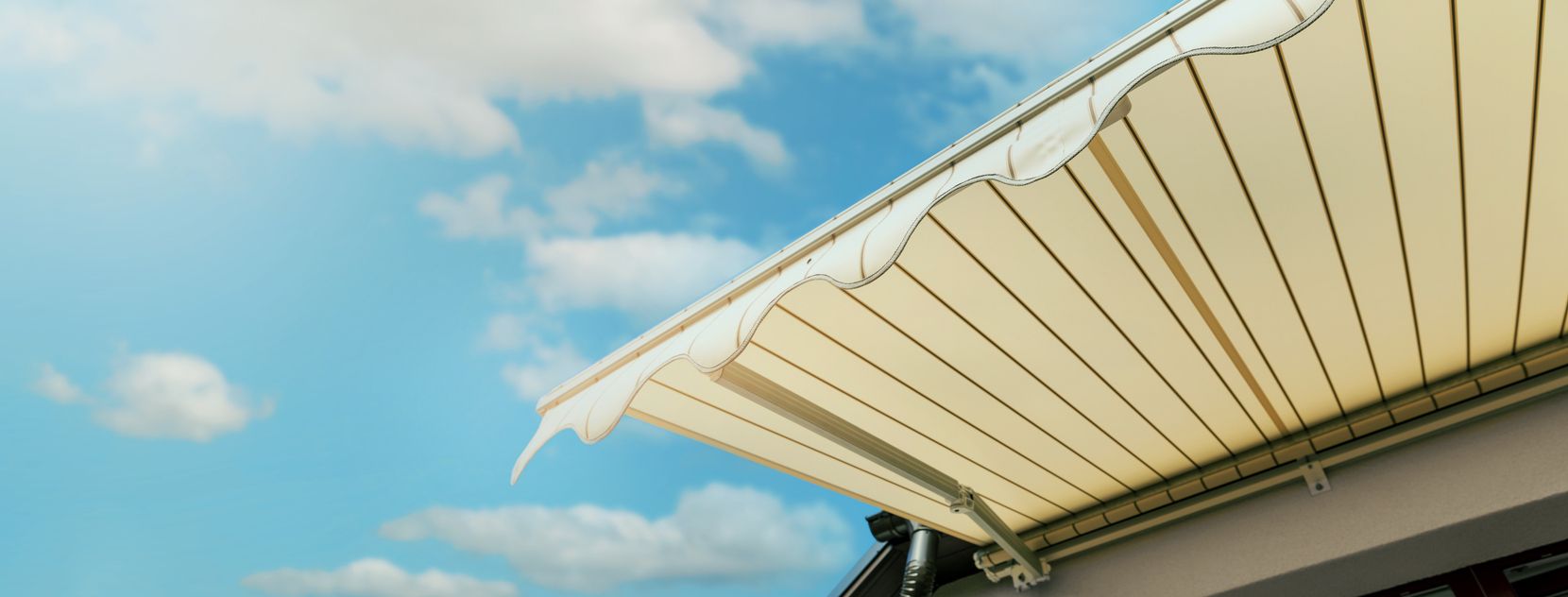
Mesh is the usual answer for heat, glare, and retained airflow. It filters sunlight, reduces uv rays, softens the light entering the room, and still lets the porch breathe. This is the material most people mean when they talk about outdoor porch shades, outdoor shades, porch shades, or porch blinds for a screened space. It is best when summer comfort is the main issue and you still want the room to feel like a porch.
Solid fabric is for stronger block. It creates more privacy, reduces light more aggressively, and can visually separate the porch from the yard or neighboring homes. It is useful when one side of the porch faces a close property line, a street, or an area where daytime privacy matters. It can also help on sides exposed to severe glare. The trade-off is obvious. You lose more view and more daylight.
Clear panels are for wind and cold. They are not the first choice for heat relief because they do not work like solar mesh. Their job is to hold a buffer between the porch and outdoor air. In northern climates, or on porches used during shoulder seasons, clear vinyl panels can do more for comfort than mesh ever will. They cut drafts, keep wind-driven rain out better, and let the room hold warmth more effectively. They can also create condensation issues if airflow is poor, which is why they need to be planned carefully.
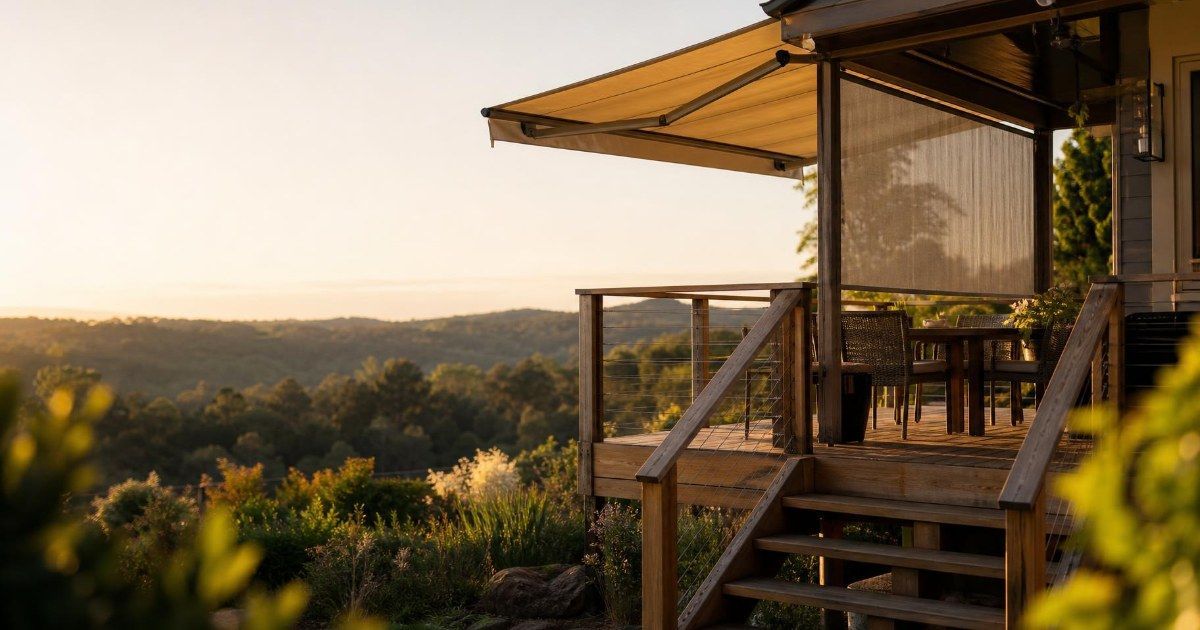
Many porches benefit from a combination. A west-facing side may use denser mesh to cut afternoon sun. A street-facing side may use solid fabric for privacy. A north-facing side in a colder climate may benefit from clear panels during winter months. This mix-and-match approach often works better than treating every opening the same just because symmetry feels cleaner on paper.
If you have ever considered bamboo-style matchstick blinds, decorative porch blinds, or cheaper outdoor blinds from a big-box shop, they can create a pleasant look but rarely solve the real performance issues of a screened room. They may filter some light. They may look warm against wood trim and plants. But they usually offer limited edge control, inconsistent weather durability, and little real defense against uv damage, glare, or wind.
Lanai and Fully Enclosed Porch Differences
A lanai or a more enclosed porch changes the calculation because airflow and moisture behavior change with it. In a standard screened porch, air moves freely, which helps with ventilation but does little for temperature control. In a lanai, where the structure may already feel more room-like, adding shades can push the space closer to an outdoor living room. That can be a benefit, but it also means trapped heat becomes more noticeable if the wrong material is chosen.
Fully enclosed porches also raise condensation questions. If you add clear panels or reduce airflow too much, moisture can collect on glass-like surfaces or around the window frame, especially in humid climates and during temperature swings. A porch that feels sealed without actually being climate controlled can get stuffy fast. In these spaces, balancing airflow, light control, and seasonal closure matters more than simply adding the densest option available.
What Changes by Climate
A screened porch fails differently depending on where it is. The fix in one region can feel wrong in another. That is why climate should shape the material choice before style does. A porch in Houston does not behave like one in Denver, and neither behaves like one on the Gulf Coast or in the Northeast.
In the humid South, the usual problem is trapped heat plus long-season insect pressure. Airflow matters almost as much as shade. If you choose a fabric that blocks too much breeze, the porch can feel still and muggy even while it is darker. In these climates, mesh porch shades and outdoor blinds need to cut glare and uv rays while still allowing enough air movement to keep the room alive. If your home is in a storm-prone region, wind retention and edge control also matter more, which is why coastal installations often borrow ideas from engineered high-wind shade systems.
In dry western climates, direct solar intensity and dust are often the bigger issue. Breeze can matter less than hard sun exposure, so a denser fabric is often more tolerable. The porch may benefit from stronger block on the sides taking the worst sunlight, especially if the yard reflects heat back toward the house through concrete, stone, or pale surfaces. Outdoor use in these climates can be punishing on materials, but the comfort payoff from reducing direct sun is immediate.
In northern climates, the porch is often lost to cold for months. Mesh helps with summer glare, but it does very little once temperatures drop. If the main complaint is that the room dies in fall and stays dead through winter, clear panels or a more substantial seasonal enclosure do more than mesh ever will. This is one of those cases where the right answer may involve accepting less ventilation in exchange for more months of use.
The easiest way to identify your own primary constraint is to ask what sends you indoors first. Is it glare on your face and heat on your arms by late afternoon? Is it bugs at dusk? Is it wind and cold even on bright days? Is it rain blowing across the floor? The first condition that makes the porch unusable is the one your system should be designed around. Cost, fabric, and openness all make more sense once that answer is clear. For budgeting expectations, this breakdown of custom motorized shade pricing factors helps connect material and system choices to real project scope.
What a Porch Shade Project Involves
Most screened porch shade projects follow a straightforward path even though the details vary by house. First comes measurement and assessment. Openings are checked for width, height, squareness, mounting depth, and structural support. Existing screen bays, trim, ceiling details, and door locations all matter. A porch with arched details, uneven posts, or mixed materials usually takes more planning than a simple rectangular room.
Next comes system selection and lead time. That includes choosing whether each opening gets mesh, solid fabric, or clear panels, whether the shades run in side tracks or hang as open-roll units, and what openness level makes sense for each side. Color, hardware finish, and controls are finalized here too. Lead times depend on customization and season, but these are made-to-measure components, not off-the-shelf sheets you trim in the driveway.
Install day is usually more controlled than homeowners expect. Mounting points are prepared, hardware is secured, shades are hung and aligned, and the operation is tested. On a motorized project, controls are paired and adjusted. On a manually operated system, the pull and drop are checked for smoothness and stopping points. The point is not simply to get the shades hung. It is to make sure the room works as a room when they are down and disappears appropriately when they are up.
Afterward, what changes is not just comfort but behavior. People start using the porch at times they previously avoided. Morning coffee shifts outside. A west-facing dinner becomes possible without everyone rotating chairs away from the light. Porch furniture lasts longer because uv damage and harsh sunlight are reduced. Plants that hated the blast of direct sun can stay put. The room stops acting like a seasonal compromise and starts earning its square footage.
Frequently Asked Questions
Homeowners usually reach the same set of practical questions once they understand the porch problem clearly. The answers below are direct on purpose, because screened porch projects go better when expectations are realistic from the start.
Can outdoor roller shades protect a patio from sun and bugs? Yes, but only partly, and the answer is different on a patio than on a screened porch. Outdoor roller shades can reduce sun, glare, and some insect intrusion when they fit tightly and use side retention, but mesh is not a sealed bug barrier by itself. On a porch that already has screen, added shades improve comfort far more than insect control.
Do roller shades block rain? Sometimes, but not completely in every condition. Mesh shades can reduce light rain and cut some wind-driven spray, especially when used in side tracks, but they are not waterproof walls. Solid fabric can block more, and clear panels do even better for weather protection. Heavy rain with wind will always test the edges, bottom gaps, and mounting details.
Can shades be added to an existing screened porch? In most cases, yes. Existing porches are commonly retrofitted with porch shades, outdoor shades, or outdoor blinds mounted to the current structure. The main questions are whether the framing can support the system, whether the openings are square enough for smooth operation, and whether doors, trim, or decorative details interfere with the drop path.
What openness percentage is best for a porch? The best openness depends on what you hate more: losing some view or keeping too much heat and glare. Lower openness gives stronger heat rejection, more daytime privacy, and better uv protection. Higher openness preserves more natural light and visibility. On porches, where people sit close to the perimeter, that trade-off is more noticeable than it is on a larger patio.
Do porch shades make the space hotter? The right shades usually make the porch more comfortable, not hotter, because they stop sunlight before it floods the room. The exception is using the wrong material for the climate. If a porch in a humid area gets enclosed too tightly without airflow, it can feel stuffy. Mesh for outdoor use helps with heat while still letting air move.
If your porch in the Houston area sits empty whenever the weather leans too hot, too bright, or too exposed, the right fix usually starts with understanding which side of the problem is winning. For homeowners comparing options across the Houston screened porch shade and outdoor comfort market, the most useful next step is a real assessment of sun angle, airflow, opening sizes, and how much view you are willing to trade for comfort.