Do Motorized Patio Shades Survive Houston Storm Season
Yes, motorized patio shades can survive Houston storm season when they are specified correctly, mounted to the right structure, and operated the right way before bad weather arrives. That short answer matters because many Houston homeowners assume every patio shade is either hurricane proof or hopelessly fragile. Neither is true. On the Gulf Coast, the difference comes down to engineering, substrate, wind load, hardware, and whether the system is being judged while deployed or while retracted.
If you are researching hurricane rated patio shades houston, the most useful starting point is this: a shade system is only as storm-ready as the weakest part of the assembly. The fabric, side tracks, anchors, fasteners, motor housing, and the beam or wall it attaches to all share the load. A clean brochure claim means very little if the installer ignores the actual conditions at your house in Memorial, Kingwood, Cypress, Katy, Pasadena, or Kemah. For homeowners comparing options in the Houston service area, the real question is not whether shades survive storms in theory. It is what correctly specified means for a Gulf Coast patio in practice.
Houston weather is hard on outdoor products in a very specific way. Summer heat bakes components all day, humidity hangs in the air like a wet towel, and then a thunderstorm can arrive with violent gusts before you finish moving the outdoor furniture. Add salt influence in the southeast metro, especially closer to the bay, and you have a durability test that exposes weak hardware fast. That is why buyers should think less about marketing language and more about load path, corrosion resistance, and operation protocol.
There is another reason this topic needs a straight answer in August. Peak Atlantic hurricane season makes homeowners nervous, and for good reason. A patio shade can absolutely improve sun protection, privacy from prying eyes, solar control, and comfort in an outdoor living space. But if you expect it to stay down through a named storm just because someone used the word durable, you are setting the project up for failure. A better approach is to choose a system engineered for local conditions and use it the way it was designed to be used.
How Wind Ratings Work on Outdoor Shades
The biggest point of confusion in this category is wind rating language. Most competitor articles blur together two very different ideas, and that is where homeowners get misled. When you see a wind number attached to shades, awnings, roller shades, or screens, you need to ask whether it is an operational wind rating or a structural rating. Those are not interchangeable terms.
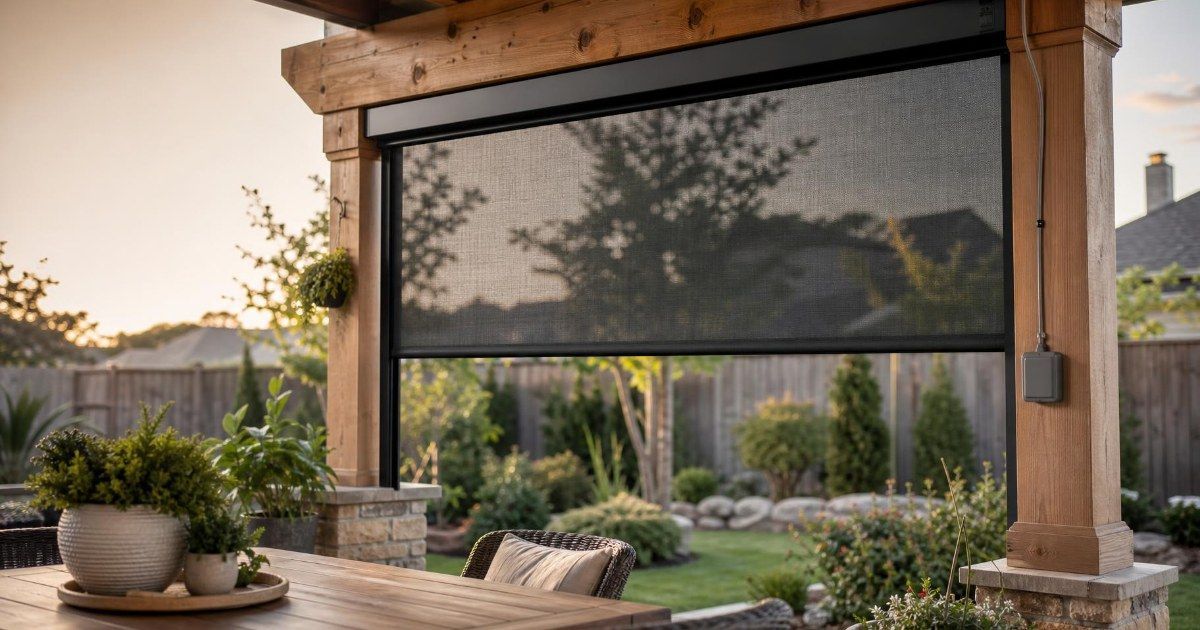
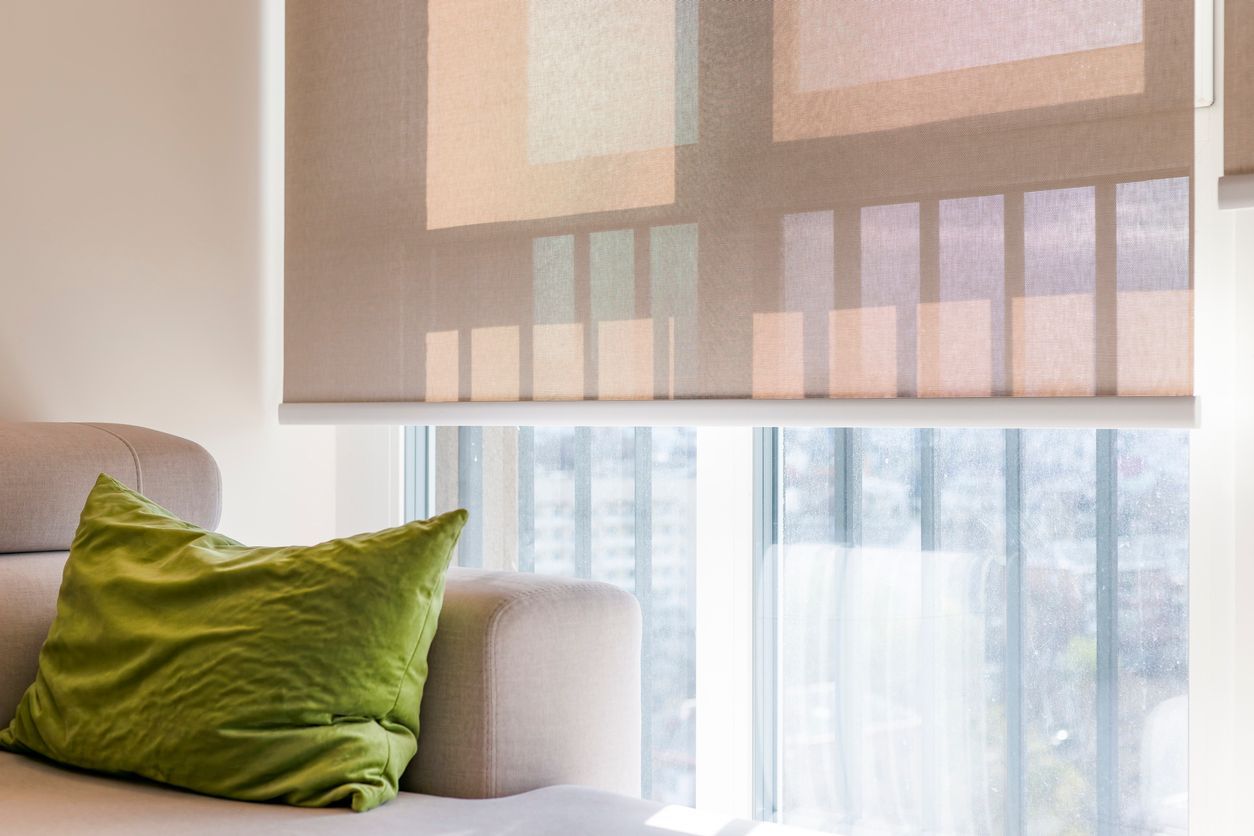
An operational wind rating refers to the wind speed at which the shade should be retracted or no longer used in the down position. Think of it like a speed limit for deployment. The system may function beautifully for solar control, glare reduction, heat reduction, bug control, and privacy on a typical Houston patio, but once gusts approach the operational threshold, the correct move is to retract it. This is especially true for motorized patio screens and roller shades that present a broad surface area to the wind. A deployed screen behaves a little like a sail. Even mesh that allows airflow still catches force.
A structural rating refers to what the mounting system, frame, housing, and connected assembly can withstand when the unit is retracted and secured in its intended resting position. That is a different test condition. In plain English, a shade may be designed to be put away before strong wind arrives, while the installed system itself is built to remain attached to the home when stored correctly. For Gulf Coast buyers, that distinction is the whole game.
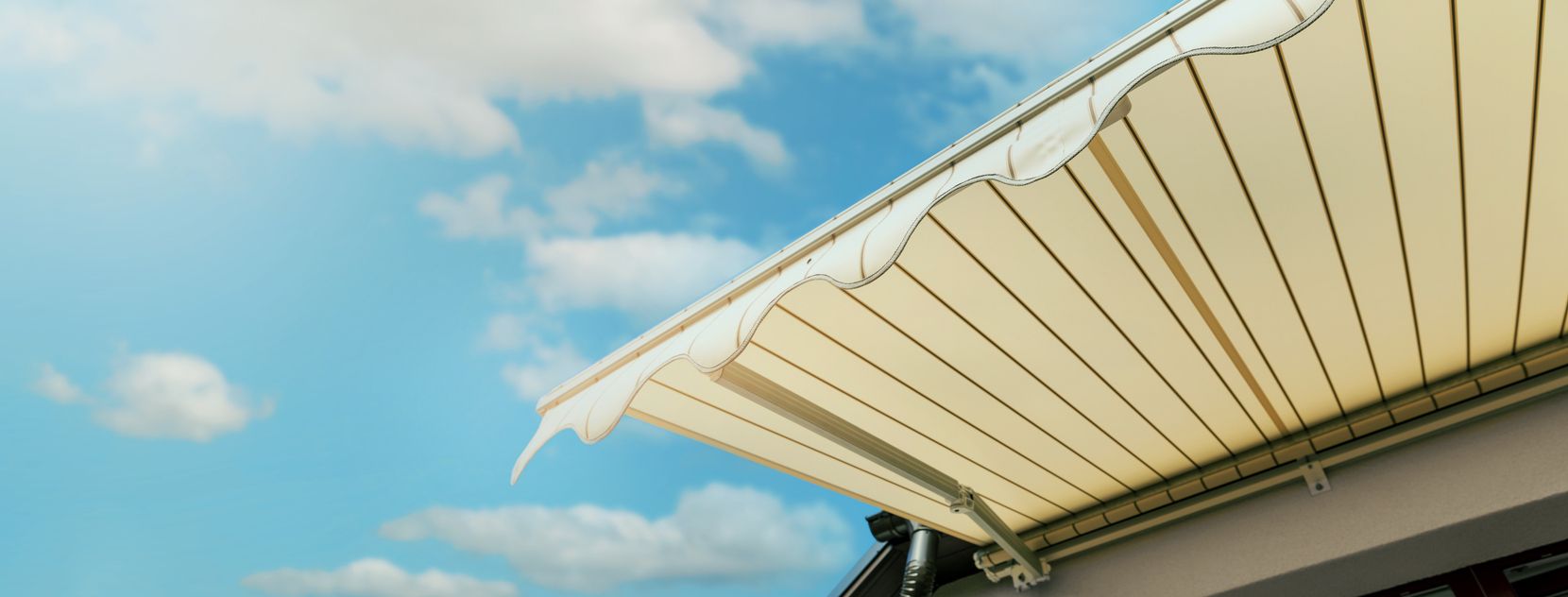
This matters because homeowners often ask a version of the same question: how much wind can a retractable awning withstand, what is the maximum wind speed that an electric awning can withstand, or can retractable awnings withstand wind at all? The truthful answer is that they can withstand wind differently depending on whether they are open or closed. A deployed awning and a retracted awning are living in two different physics problems. The same logic applies to patio shade systems, screens, and shutters.
When you compare motorized patio shades with other exterior shading products, ask for both numbers and the conditions behind them. If a company only gives you one vague claim, keep asking. Was the system tested as a complete assembly? Was it mounted into steel, engineered wood framing, concrete, or masonry? Was the number tied to a particular width and projection? Was the product down, partially down, or fully retracted? Without that context, the number is more slogan than specification.
It is also important not to guess at product-specific mph ratings. Shade Doctor’s site highlights strong warranty coverage and wind-conscious design, but this article is not the place to invent a speed number for any product line without direct manufacturer confirmation. That is especially important in Houston, where homeowners may use those claims to make decisions about storm protection and insurance expectations. If you are comparing systems, ask the installer for the exact tested rating of the specific model being proposed, not a general category promise.
Texas Wind Load Rules That Apply to Houston Patios
Before you buy a patio shade in Houston, it helps to separate local code, coastal insurance rules, and product marketing. They overlap, but they are not the same thing. The code side determines how loads are calculated and what the installation should account for. The insurance side matters for certain coastal properties. The product side tells you how the shade itself is intended to perform.
Texas operates under the 2021 International Building Code with Texas amendments, using ASCE 7-16 for wind load calculation. Required design wind speed is location-specific, determined via the ASCE 7 Hazard Tool or the ATC Hazard by Location tool. That means a responsible installer should not treat every Houston patio the same. Wind exposure, building height, attachment conditions, and exact location all affect the design conversation. A house tucked into an older neighborhood with tree cover does not present the same exposure profile as a bay-facing property with open fetch.
There is one accuracy point that matters a great deal for this topic. Most of Houston proper sits outside the Texas windstorm programme. That means a homeowner in Memorial, the Heights, Bellaire, West University, Katy, Cypress, or much of central Houston should not be told that a WPI-8 windstorm inspection certificate is automatically part of a patio shade project. It usually is not. On the other hand, readers in Baytown, La Porte, Deer Park, Seabrook, or Kemah may be in a different situation depending on the exact property location.
The Texas Department of Insurance windstorm programme covers 14 first-tier coastal counties plus part of Harris County only. Within Harris County the structure must sit east of Highway 146 and inside the city limits of the cities shown on the TDI Designated Catastrophe Areas map. That is why broad statements about all Houston homeowners needing the same certification are wrong. A Katy patio and a Kemah patio do not live under identical windstorm program rules even though both are in the greater Houston orbit.
Structures in designated catastrophe areas built, repaired or added to on or after 1 June 2008 must comply with the 2006 IRC or IBC with Texas Revisions for a 120 mph 3-second gust to be eligible for Texas Windstorm Insurance Association coverage. A WPI-8 windstorm inspection certificate signed by a Texas licensed professional engineer or a TDI windstorm inspector is required for TWIA coverage. The TWIA building code contains a dedicated section covering awnings and patio covers. Those points are highly relevant if your property falls inside the designated catastrophe area and you want to preserve or obtain TWIA eligibility.
Because TDI can update adopted codes and program guidance, all code statements should be re-verified against the Texas Department of Insurance at time of writing before publication. That is especially important for a blog post that may stay live for years while code references evolve. If your home is in the eastern metro, a local conversation around site conditions and service coverage in places such as Baytown shade projects should include whether TWIA-related documentation applies to your address specifically.
For everyone else in Houston, code still matters even when TWIA does not. A shade installer should still be thinking about wind load, substrate, fastener schedule, edge details, and the strength of the supporting structure. Good storm performance starts long before the first thunderhead builds over the Gulf Coast.
What Fails First in a Houston Storm
When a patio shade system fails in Houston storms, the damage rarely starts where homeowners expect. People often picture the fabric shredding first because fabric is visible and easy to worry about. In reality, the first failure point depends on the exact system and the conditions around it. Sometimes the fabric is the issue. Sometimes the anchors are the real culprit. Sometimes the shade survives but the structure it was attached to does not provide enough holding strength.
Fabric can fail when the wrong openness, weight, or edge reinforcement is chosen for the application. In lower winds, a screen may simply flutter. In stronger gusts, repeated pressure cycling can stress seams, hems, zippers, or retention points. Rain also changes the load picture. Water adds weight, and wind-driven rain can turn a comfortable patio shade into a stressed membrane. That is one reason leaving a screen down during severe weather is a bad gamble even when the product itself is marketed as robust.
Mounting anchors are another common weak link. This is where installation quality becomes more important than showroom talk. Fastening into solid concrete is different from fastening into brick veneer, hollow block, engineered lumber, steel tube, or a decorative beam that looks substantial but is not structural. If anchors are undersized, poorly spaced, or installed into weak substrate, the system may peel away under load. The homeowner sees a shade failure, but the real problem was an attachment failure.
Side tracks can also become the stress concentrator. On guided screens and some motorized patio screens, side retention helps maintain control and a cleaner seal against bugs, glare, and sun. But that same guided geometry means the tracks, end retention, and mounting points must manage force properly. If the engineering is off or the opening is oversized for the selected system, the track area may deform, loosen, or release under storm pressure.
The motor housing and headbox are usually less vulnerable than the exposed screen fabric, but they are not immune. Wind-driven debris, water intrusion from poor detailing, and vibration over time can all take a toll. Corrosion is the quieter enemy here. In the southeast Houston metro and other Gulf Coast locations with salt influence, hardware can age faster than homeowners expect. Stainless fasteners, powder-coated aluminum, and compatible metals matter because galvanic corrosion can quietly weaken the assembly over time.
Then there is the issue many homeowners never hear about during a sales visit: the attached structure may fail before the shade does. If the patio cover, fascia, beam, or wall was not designed to receive the load, the shade can become the messenger that reveals a structural weakness. This is especially common on retrofits where a beautiful outdoor living space was built in phases by different contractors over time. The shade company may be the first one to ask whether that beam is decorative or load-bearing, and that question is worth listening to.
In practical terms, the first thing to fail in Houston storms is usually the first thing that was underspecified. That could be the fabric, the side tracks, the anchors, the motor housing, or the supporting structure. Storm durability is a chain, and the chain breaks at its thinnest link.
Retract or Leave Down: What to Do Before a Named Storm
For most motorized shades, the safest storm protocol is simple: retract before the bad weather arrives. Homeowners sometimes hope a screen left down will act like a storm barrier, but that is usually the wrong instinct unless the product was specifically engineered, tested, and documented for that use. For ordinary patio shade operation in Houston, the smart move before a named storm is to put the system away and reduce exposure.
The sequence does not need to be complicated. The important thing is to do it early, not when the first outer bands are already whipping the patio. Wind gets mean before the center of a storm arrives, and once gusts rise, operating the shades may become unsafe or impossible. A little planning beats a panicked remote-control sprint in sideways rain.
Start by clearing the patio. Bring in or secure outdoor furniture, planters, umbrellas, lightweight decor, and anything that can become a projectile. Inspect the opening around the shades for loose items, especially if your outdoor living space backs up to a pool deck or open yard where debris can travel. Then fully retract the shades or screens into their intended stored position. If your system has locks, storm clips, or manufacturer-specific securing steps, follow those exactly.
After retraction, disconnect power only if the manufacturer or installer recommends it as part of storm preparation. Some homeowners assume killing power is always best, but that is not universal advice. The right protocol depends on the control setup, backup systems, and whether automated weather devices are in play. This is where the installer’s post-installation guidance matters as much as the hardware itself.
Automated wind sensors can help by triggering retraction when wind reaches a programmed threshold. They are useful for fast-moving summer storms and for homeowners who are away from home. But it is important to understand what they do and what they do not do. A wind sensor is not a hurricane shield. It is an operational safeguard that helps retract the shade before deployment conditions become unsafe. It does not change the fact that a named storm deserves manual preparation, advance retraction, and a broader property check.
Rain introduces another common question: can a retractable awning be left open in the rain? Sometimes light rain is acceptable for specific systems if the pitch and drainage conditions are correct, but wind and rain together are a different story. In Houston storms, rain is almost never acting alone. It arrives with gusts, pressure changes, and flying debris. That combination is what makes pre-storm retraction the right default for most patio shades, awnings, and screens.
If you want a product category that actively contributes to storm protection for openings, that is a different conversation than comfort shading. Exterior shades and roller shades help with solar control, privacy, and comfort. Custom hurricane shutters serve another purpose entirely. Homeowners should not confuse the two or expect one product to do the full job of the other.
Specifying a Shade for Gulf Coast Conditions
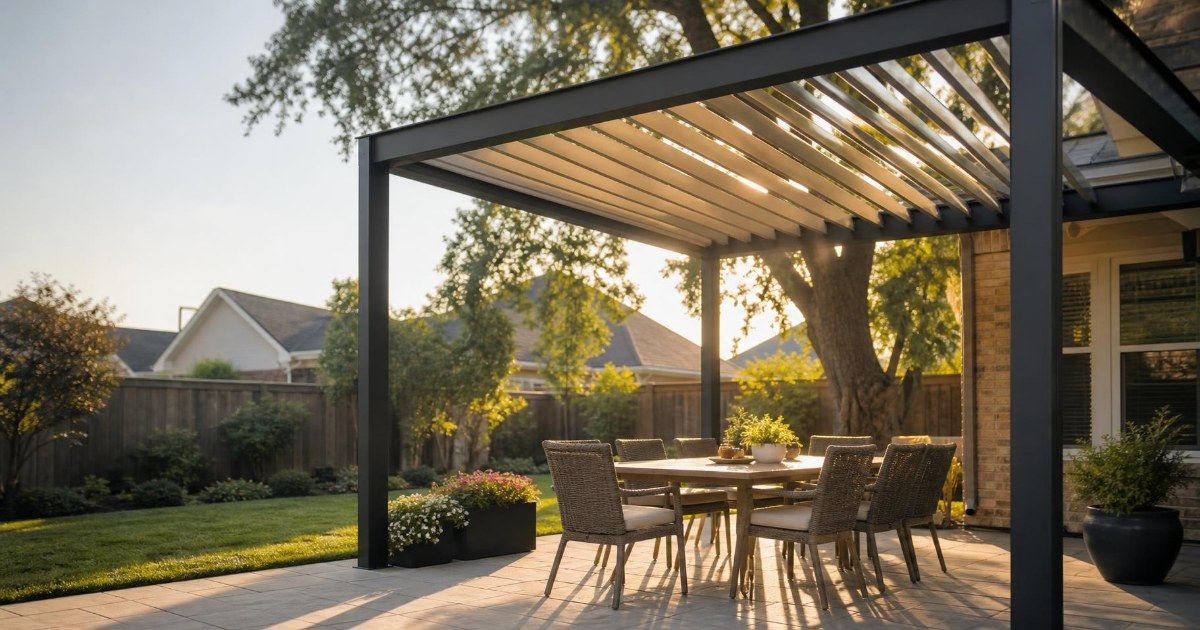
If your goal is to enjoy the patio through Houston heat while reducing storm risk, specification matters more than aesthetics alone. Style still matters, of course. A shade should enhance curb appeal, fit the architecture, and feel like part of the house instead of an afterthought. But on the Gulf Coast, the best-looking option is only the best option if it can handle the local environment.
Fabric selection is the first major decision. Heavier technical textiles can improve stability, solar control, and durability, but they also change the load profile. A tighter weave may block more sun and harmful UV rays, helping with heat gain and energy efficiency around adjacent windows and doors. At the same time, less air permeability can increase wind pressure when the shade is deployed. The right answer depends on the opening size, orientation, desired visibility, privacy goals, and how the patio is actually used.
For west-facing openings, solar control often becomes the driving concern because low-angle sun turns a Houston patio into a radiant oven by late afternoon. In those cases, guidance from resources on low-angle sun protection for west-facing patios can help homeowners understand why openness factor and placement matter so much. Better sun protection improves comfort, reduces glare, and can make an outdoor living space feel usable again in August instead of abandoned until dusk.
Hardware corrosion resistance is the next specification point, especially for the southeast metro and other areas with coastal influence. Aluminum components, powder-coat quality, stainless hardware grades, and compatible metals all affect long-term performance. Corrosion is sneaky. It does not announce itself with one dramatic failure on day one. It shows up as staining, seized fasteners, weakened connectors, rough operation, and shortened service life. For Gulf Coast projects, highest quality hardware is not a luxury line item. It is basic risk management.
Anchor type should always match the substrate. Concrete, grouted masonry, structural steel, dimensional lumber, engineered wood, and insulated wall assemblies all require different fastening strategies. This is where custom designs and field verification matter. A good installer does not walk up, eyeball the opening, and promise a seamless install in five minutes. They inspect what is behind the finish surface and choose anchors that suit the actual load path. That is one reason a project involving custom outdoor shades should include careful measuring and design work before equipment is ordered.
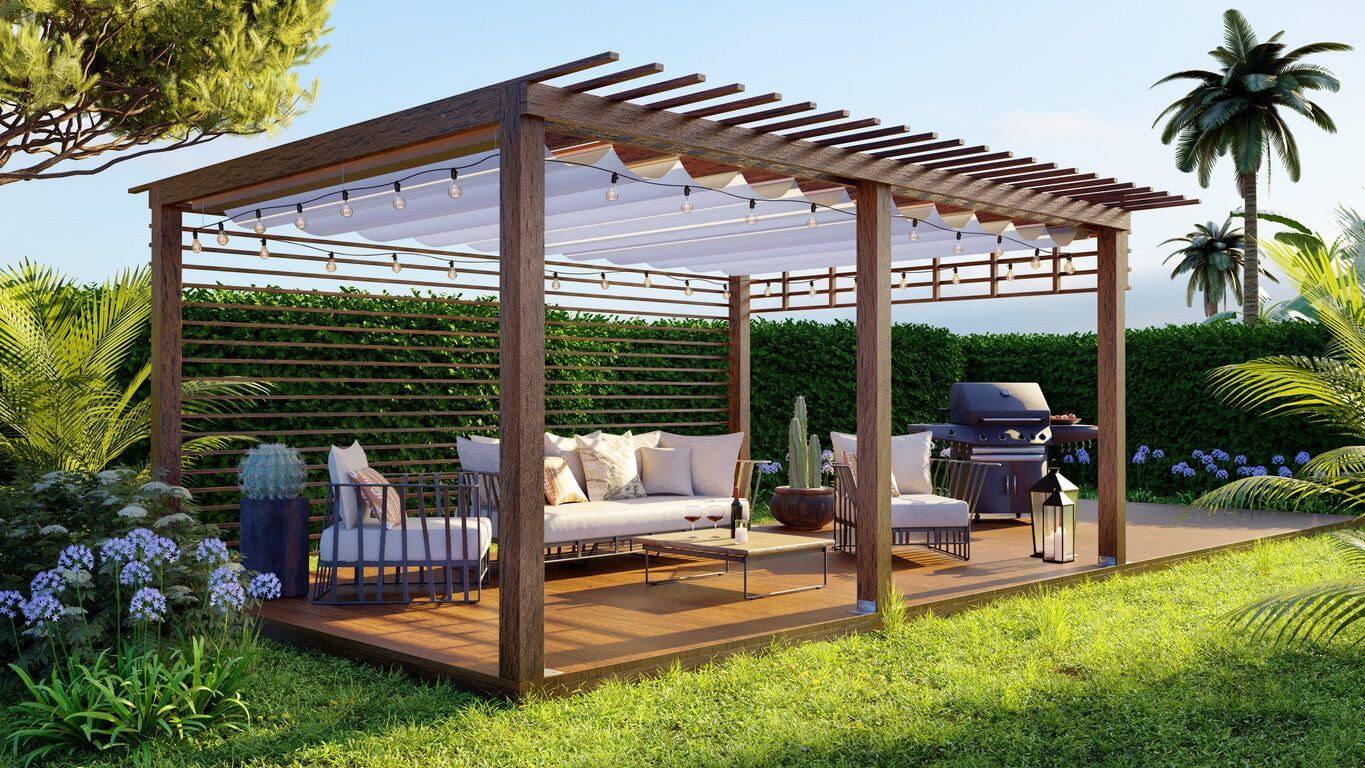
Opening size also changes the conversation. Larger spans can create beautiful outdoor living results, but bigger roller shades and screens create bigger forces. Width, drop, exposure, and retention method all work together. A small patio opening in Katy may accept a different solution than a wide waterfront opening near Seabrook. Homeowners often want the largest uninterrupted screen possible, and sometimes that is feasible. Sometimes the smarter answer is to divide the opening or revise the support framing to get a better engineering result.
Finally, think through serviceability. A shade system in Houston lives outdoors year-round, which means motors, controls, tracks, and fabrics need occasional attention. A system that can be maintained properly tends to age better than one that looks sleek on install day but is difficult to inspect or service later. That is where ongoing support for shade system service and maintenance becomes part of the specification, not an afterthought after the first storm scare.
Choosing a Houston Installer Who Understands Wind Load
Even the highest quality shades can underperform if the installer treats every project like a simple retail add-on. Houston is too variable for that. The right installer should understand the difference between a protected suburban patio and an exposed Gulf Coast opening, between decorative cladding and structural attachment, and between a comfort feature and a component that must coexist with serious storm weather.
Ask how the company evaluates substrate, span, exposure, and operational expectations. Ask whether they distinguish between operational wind rating and structural rating. Ask who verifies the attachment condition if the patio cover was built by another contractor. Ask what changes if the property sits in the eastern metro where TDI windstorm program requirements may apply. Good answers are usually specific. Weak answers sound polished but generic.
A Houston installer who really understands wind load should also be comfortable telling you when a product is the wrong fit. Sometimes homeowners come in wanting retractable awnings when guided screens or another patio shade form would handle the opening better. Sometimes they need a solar control solution for one side and a separate storm protection strategy for windows and doors. Sometimes the patio itself needs reinforcement before any screen or shutter system is installed. Honest design advice protects the project.
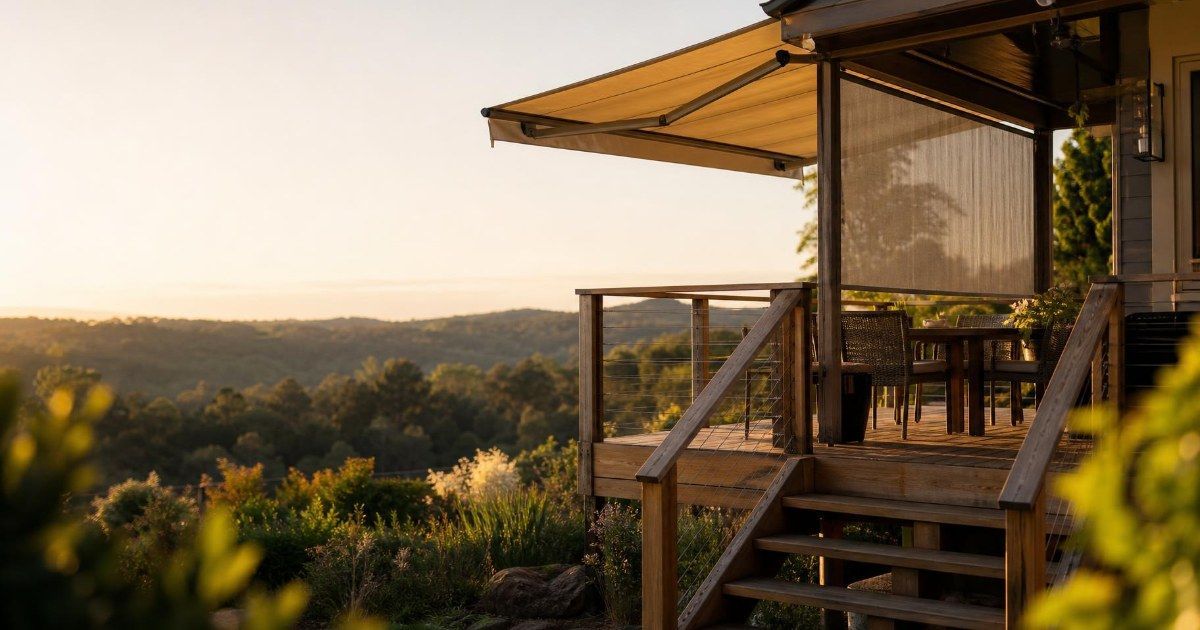
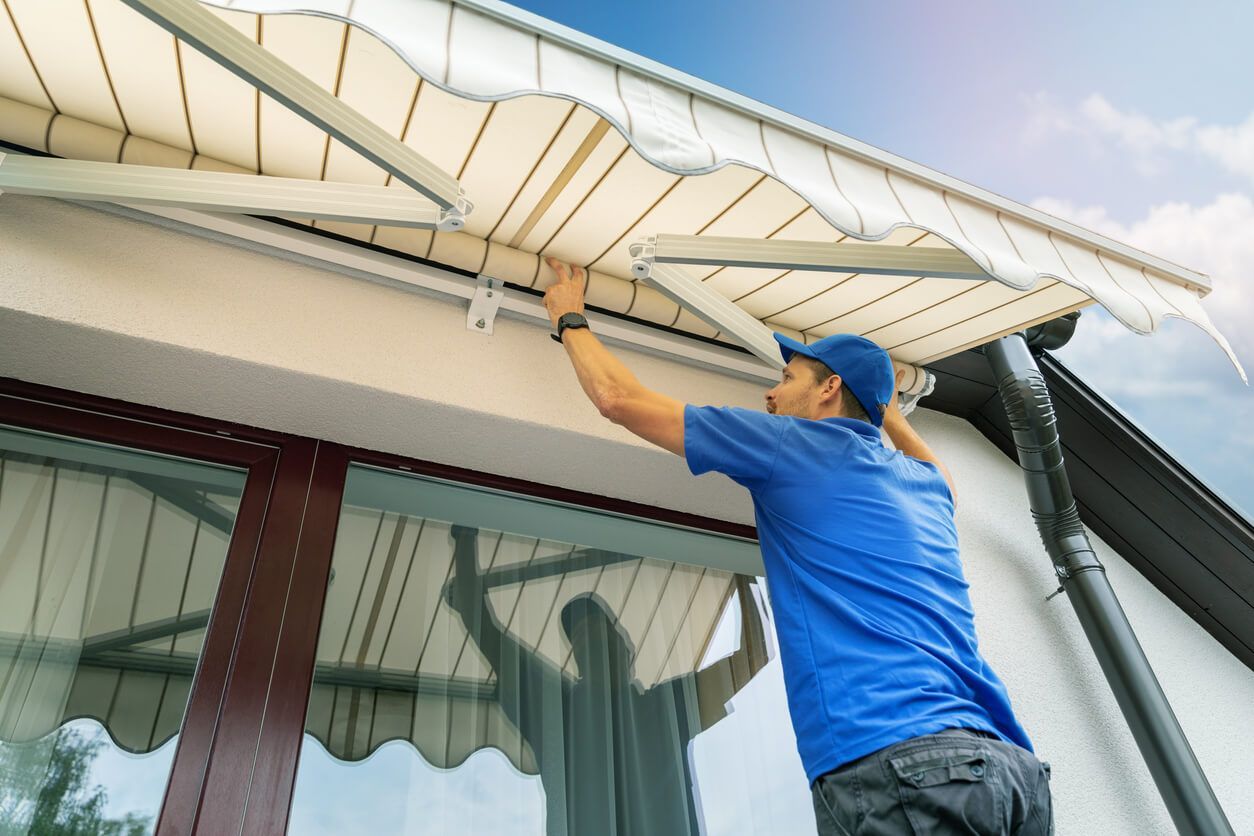
It also helps to work with a team that can explain adjacent options without blurring categories. For example, homeowners comparing shades and awnings may benefit from context in electric awning design considerations, especially when trying to understand why windy conditions change the best product choice. A retractable awning can be excellent in the right setting, but for certain Houston patio conditions, motorized patio screens or guided roller shades may offer better control and a more secure fit.
Look for an installer whose process includes consultation, measuring, design proposal, and site-specific installation planning. That process matters because Gulf Coast shade work is less like buying a lamp and more like tailoring a suit for a moving, weather-exposed structure. The best result is a perfect fit that accounts for style, safety, durability, and day-to-day function. It should elevate the outdoor space, improve energy efficiency near the home, and still respect what storms can do in this part of Texas.
If you are weighing shade options now, especially during peak storm season, it is reasonable to ask blunt questions. Will this system be retracted in a named storm? What substrate are you anchoring into? How does salt influence affect hardware choice? If I live in Baytown or Kemah, do TWIA-related requirements apply to my address? What support is available after installation? Those are the questions that separate a durable project from an expensive lesson.
A careful consultation should also clarify what the system is meant to do every day. Patio shades can transform an outdoor living space, reduce solar control issues, cut glare, help with bugs, improve privacy, and make a Houston patio usable through more of the year. They can even complement other exterior elements such as shutters and screens for a more complete envelope strategy. But they perform best when expectations are grounded in engineering instead of wishful thinking.
Frequently Asked Questions About Houston Storm Season and Patio Shades
These are the questions Houston homeowners ask most often when comparing shades, screens, shutters, and awnings ahead of storm season. The answers below aim to separate comfort shading from true storm protection and to give you a realistic framework for buying and operating the right system.
How much wind can a retractable awning withstand?
That depends on whether the awning is open or retracted, the exact model, the projection, the mounting condition, and the manufacturer’s tested rating. A deployed retractable awning usually has a much lower operational wind limit than the structural resistance of the unit when retracted. In Houston, the important question is not just the number. It is when the awning should be brought in and what the installed assembly can withstand once stored properly.
What is the maximum wind speed that an electric awning can withstand?
There is no one-size-fits-all answer. Electric awnings vary widely by engineering, width, pitch, and attachment method. Any installer quoting a single universal number for all electric awnings is oversimplifying. Ask for the specific tested rating of the exact product being proposed and whether that rating applies while the awning is deployed or retracted.
Can retractable awnings withstand wind?
Yes, but only within their intended operating conditions. They are designed to handle normal outdoor use, not to remain extended through every storm. In windy conditions, especially on the Gulf Coast, they should usually be retracted before gusts rise. Automated wind sensors can help with sudden weather changes, but they do not replace manual storm preparation before a named storm.
What type of awning is best for windy conditions?
For windy conditions, the best choice is the product whose engineering matches the site. In some settings that may be a retractable awning with proper pitch and controls. In others, guided screens, roller shades, or another patio shade system may provide better control. Exposed Houston patio openings often need a more site-specific answer than homeowners expect, especially when wind, rain, sun, and salt all factor into the design.
Can a retractable awning be left open in the rain?
Sometimes light rain is acceptable for certain systems, but wind and rain together are where problems start. In Houston storm weather, a retractable awning or patio shade should generally not be left open. Water adds weight, gusts add force, and debris raises the risk of damage. Before a named storm or severe weather event, retracting the system is usually the safest move.
For homeowners trying to balance outdoor comfort with storm awareness, the takeaway is straightforward. Motorized patio shades can be a smart investment in Houston, but they are not magic fabric. They succeed when the system is engineered for the opening, installed to the actual substrate, maintained over time, and operated with common sense when storms threaten. That is what correctly means on the Gulf Coast.