How Do You Shade a Raised Deck Without Losing the View
People build a deck up high for the view and the breeze. That same height leaves the boards open to the sun from overhead and from every side, with nothing nearby to break it up. The patio shade that works at ground level often runs into trouble up there, because posts, anchor points and wind all behave differently once the floor sits several feet above the yard.
So how do you shade a raised deck and keep the view that made you build it? This guide starts with the structural limits of an elevated deck, since those limits decide what can be attached where. From there it covers the overhead options and the side options that cut the glare and heat without boxing the space in.
Why a Raised Deck Is Harder to Shade Than a Patio
A patio sits on the ground, so a post goes into a footing and the job is done. A raised deck has no ground under its boards. Any new post has to run the full height from the yard below, or it has to pass through the deck frame and send its load into joists and beams that were sized for something else.
Railings add a second limit. Once a deck sits more than 30 inches above the grade below, building code calls for guards along its open sides, and those guards exist to protect people. The same code designs a deck guard for a single 200-pound concentrated load. That is a different job from holding a tensioned sail or a heavy fabric panel through a gust.
Sky exposure is the third difference. A raised deck sees more open sky on more sides, and for most of the day as much UV arrives scattered from the sky as comes from the direct sun. A cover directly overhead stops the direct beam, and the scattered and reflected light still reaches people sitting under it.
Wind is the fourth. An elevated platform catches gusts that a fenced backyard patio rarely feels, so anything that spreads fabric across the space has to be built to hold.
That is why most raised deck shade ideas come down to one question: where can this attach? The answers are the house wall, the deck framing, or a structure built for the job.
Map the Sun and the View Before You Choose
Start with orientation. An east facing deck heats up early and eases off by afternoon, while a west facing deck stays hot late into the evening. Then think about the hours your household actually uses the deck. A deck built for morning coffee has a different problem than one that hosts dinner at seven.
Next, find the two sides that matter: the side that holds the view and the side that takes the low sun. On many raised decks those are different sides, and that difference decides the setup. Midday sun comes from above, and nearly half of the daily UV radiation arrives between 10 a.m. and 4 p.m., so overhead cover handles the longest stretch of the day. Low morning or evening sun comes in under any overhead cover from one direction, so side cover belongs on that side only. The view side stays open.
The last step is to shade the zones you use. A dining table, a lounge group and a grill station each need cover at different hours, and covering the whole deck costs more and closes in more sky than those areas call for. Spend one weekend watching where the shadows fall at the hours you sit outside, then mark the spots on a quick sketch. That sketch becomes the shopping list for everything that follows.
Overhead Shade With No Posts: Motorized Awnings for Decks
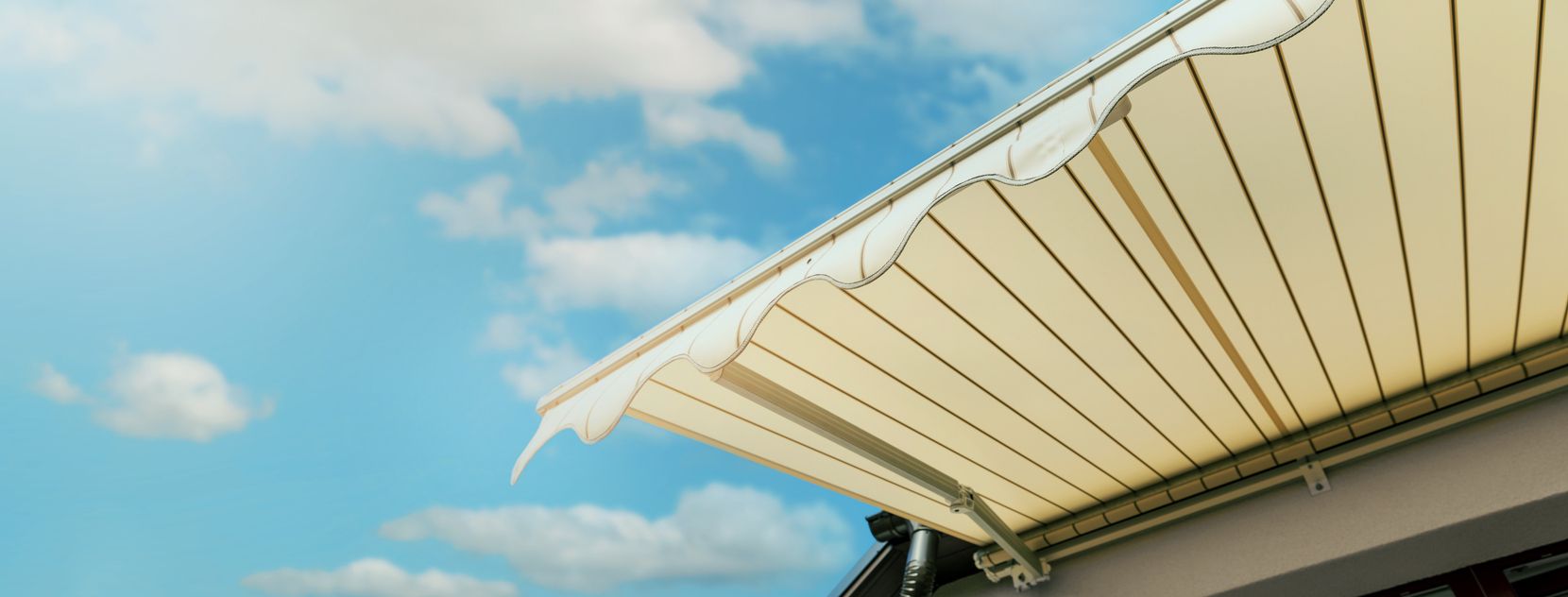
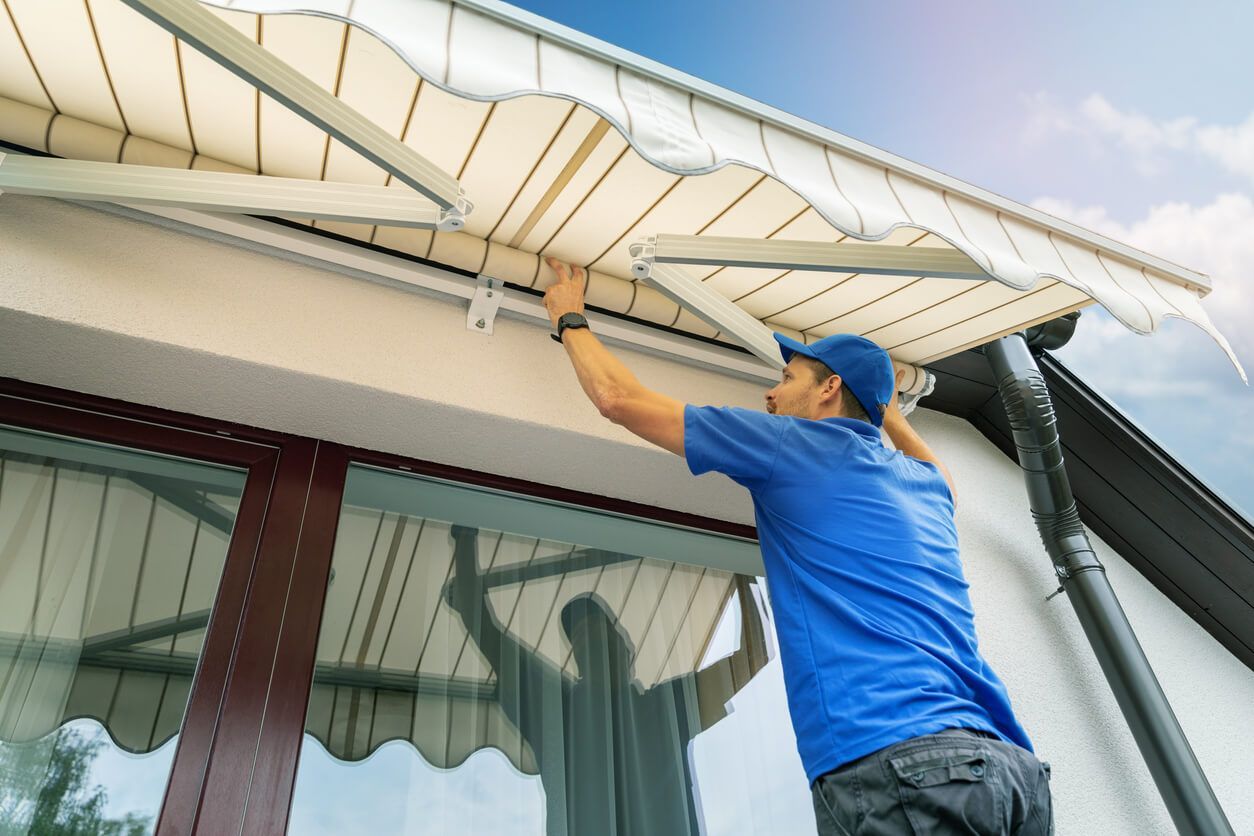
A wall mounted retractable awning suits a raised deck because it hangs from the house. It puts no posts on the deck boards and none in the yard below, and it rolls back when you want open sky. The cover shows up when the sun does and leaves when you ask it to.
Shade Doctor builds motorized awnings made for patios and decks that extend or retract at the touch of a wireless remote. App options and smart home integration are available, so the awning can fit into the way you already run your home. A manual override covers power outages and personal preference, which makes the awning easy for owners of every age and ability to use.
Easy Pitch Adjustment lets you change the slope with a crank from the deck, with no ladder and no complex tools, so the awning can follow the sun angle as the afternoon moves. Dimmable LED lights are built into the arms and run from the same remote, which turns the awning into evening lighting for dinners and gatherings.
Custom sizes, shapes and colors let the awning fit the zone you mapped, such as the dining area, and match the exterior of the house. The best motorized awning for a deck is one sized to that zone and mounted to a wall that can carry it. Because the full projection hangs off the house, the mounting wall matters. Siding and brick veneer each need proper backing behind the mounting points, and a site visit settles what your wall can hold. For many owners, motorized awnings for decks are the first piece of the plan, since they deliver midday shade without touching the deck structure.
Side Shade That Keeps the View: Motorized Screens and Solar Mesh
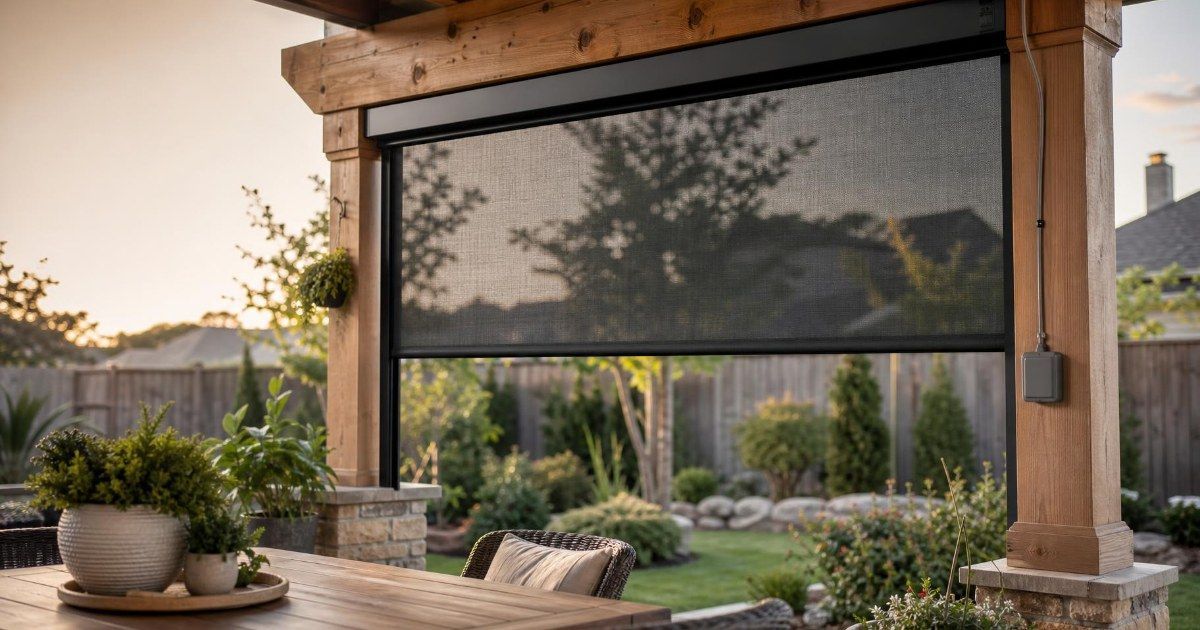
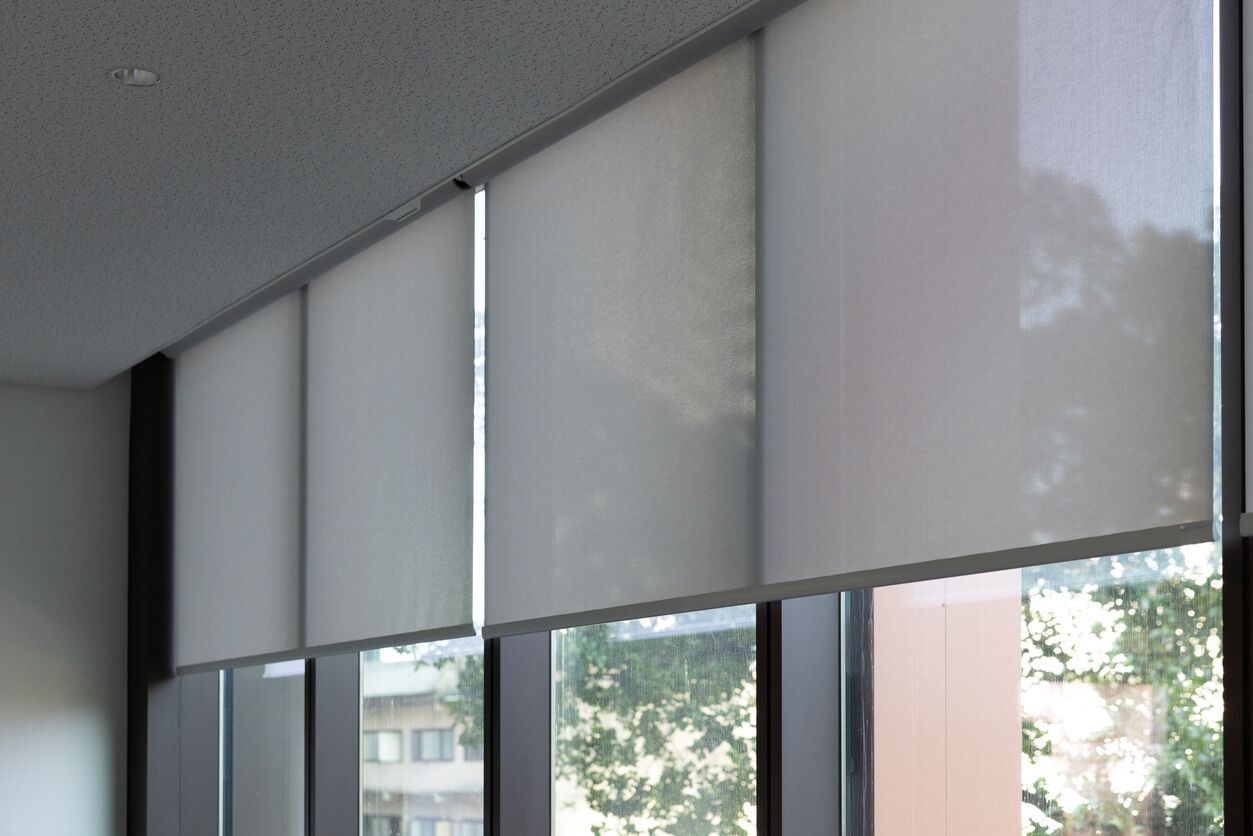
Low morning or evening sun slips in under any overhead cover, and vertical shades answer that angle. Motorized shades that roll down into side tracks store in a housing at the top of the opening, drop at the touch of a button, and stay taut thanks to a weighted bottom bar. Shade Doctor guarantees the hardware against winds up to 105 mph, which counts on an exposed deck. The motor runs on battery, a plug-in transformer or hardwiring, depending on the installation.
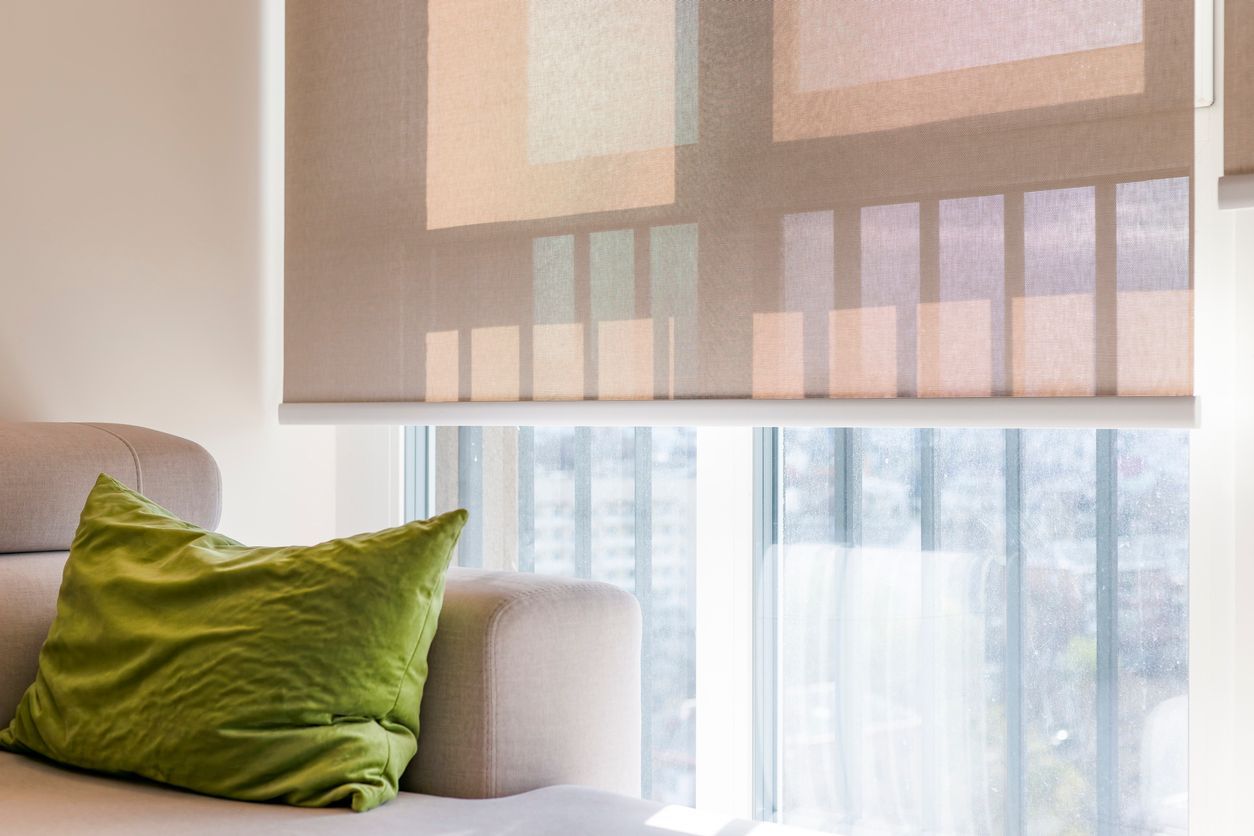
Mesh openness sets how much view you keep. Solar mesh blocks up to 90% of UV rays while holding the view and letting air move through, so the treeline stays visible from your chair. Higher opacity fabrics trade the view for privacy and light blocking, which suits a side that faces a neighbor. Both run on the same hardware, so the fabric can differ from one side of the deck to the next.
That flexibility is what makes a motorized deck shade worth the planning. The shade drops only on the side and at the hours it is needed, then rolls away and returns the full view. The side tracks also close the gaps along the edges that insects use, which helps at dusk.
Deck shades screens need something to mount to. On a raised deck that means posts, beams or a pergola. Shade Doctor quotes custom beam buildouts as part of the same project when an opening lacks a beam, so the frame and the shades arrive in one proposal.
One more space deserves a look: the area under a raised deck. The deck above already acts as a roof. Side shades set between the support posts turn that space into a shaded patio, with the yard still visible through open mesh.
Pergolas and Covered Structures on an Elevated Deck
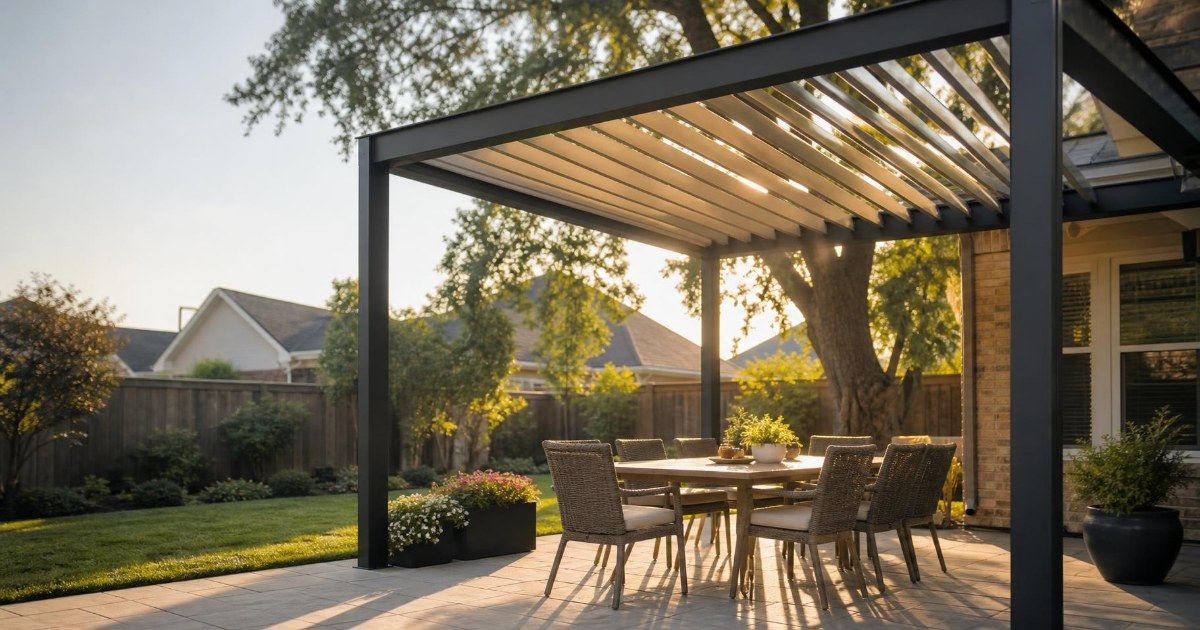
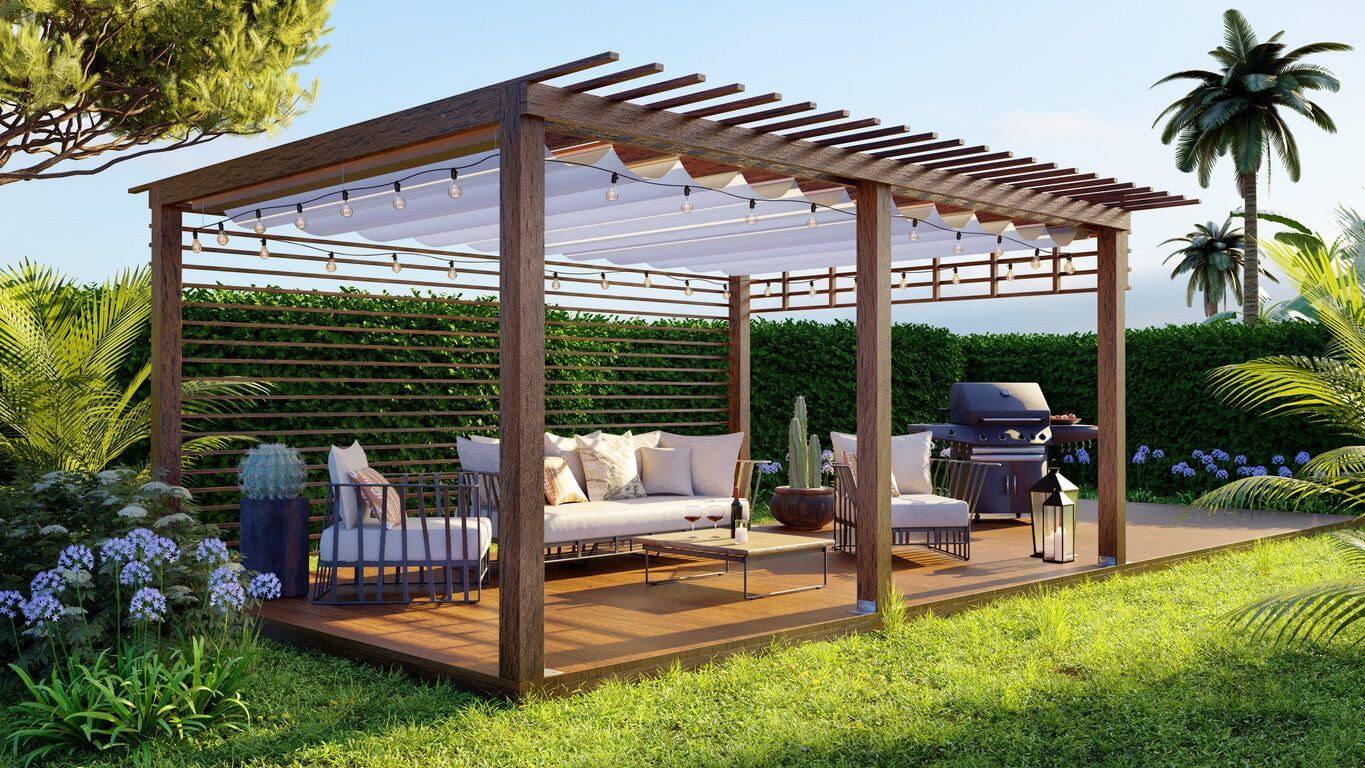
A pergola gives side screens a frame to mount to and gives overhead shade without a solid roof. Shade Doctor offers a manually louvered pergola whose louvers rotate up to 90 degrees, so it opens to the sky or closes for shade and rain. It runs without a power source. It comes in 10 by 10 and 12 by 12 foot sections that combine for larger coverage, with an integrated gutter system and optional privacy walls.
The structural question comes first on a raised deck. Posts placed through the deck frame send their load into the joists and beams. Exterior decks are designed for a 40 psf uniform live load, and a pergola adds its own weight and the push of the wind on top of that. Posts set outside the deck footprint run down to the ground and carry their own load, which leaves the deck framing out of it. Which route fits depends on the framing, the size of the deck and its height above grade, and an on-site look settles it.
A roof extension or a covered porch gives full rain cover and becomes a permanent part of the house. It also closes off the sky for good and takes much of the open view with it. A louvered pergola leaves that choice with you. Open the louvers for a clear sky and a long view, or close them when the sun or the rain arrives.
Shade Sails, Umbrellas and Pop-Ups: Where They Fall Short Up High
Most pages on this topic lead with the low cost options, so they deserve a fair look. Shade sails need strong anchor points and steady tension. On a raised deck that means heavier posts, knee bracing or cable runs back to the house, because the railing was built to guard people and cannot carry that pull. A sail that snaps in the wind loads its anchors again and again.
Umbrellas and pop-up canopies give small, movable shade. On an exposed deck they catch wind the way a sail does, and they have to come down when a storm rolls in. A pop-up canopy also covers a small footprint, so the low sun finds its way around it.
Each one has a setting where it works. A small deck, occasional use or a tight budget can make an umbrella the sensible pick. A sail can be a fine fit where sturdy posts already stand at the right spots. For a deck you use most evenings, or one that sits high and open, the options above give steadier results with far less daily effort.
Putting It Together
The setup most raised decks end up with has two parts. Overhead shade that retracts, either an awning or a louvered pergola, covers the long midday hours. Side shade drops only where the low sun comes in, with the mesh openness chosen to keep the view. Shade that covers the direct sun, the sky and the sides gives the fullest protection, and this pairing covers all three while leaving the best side of the deck open.
The right deck shade solutions depend on sun path, deck height, wind exposure and mounting surfaces, and those details change from one house to the next. An on-site visit settles them. Shade Doctor's process starts with a consultation where the team walks your property and listens to how you use the space. A custom design proposal follows, then professional installation by skilled craftsmen, and then you enjoy your new outdoor space.
To book a free in-home visit, choose
Schedule Consultation and tell the team about your deck.