Why Is My Covered Patio Still Hot in Houston? The 4 Causes and What Fixes Each
It is 5 PM in September. You step onto the covered patio that came with the house, the one with a real roof and a ceiling fan, and the heat meets you at the door. At noon the same spot felt fine. By mid afternoon the shade line has slid off the seating area, the glare has found your eyes, and the slab is giving off warmth like a burner that was just switched off.
If you have been wondering why your covered patio is still hot in Houston, the short answer is that a patio roof stops only the sun that comes from straight above. In Houston, heat also arrives from the side, rises from the slab and settles into thick, humid air. Four causes show up again and again, and each one has its own fix. This post starts with what a roof really does, then matches the repair to the problem so you can decide what your patio needs.
Shade and Cool Are Two Different Things: What a Patio Roof Actually Does
A patio roof does one job very well. It blocks direct sun from overhead, so the people and furniture under it stay out of the brightest light. That job is real and valuable, and it is also the whole job. A roof has no say over the air temperature underneath it, and on a Houston summer afternoon that air is already hot. The normal daily high at Houston's main weather station is 92.3°F in June, 94.5°F in July and 94.9°F in August, and the humidity makes every one of those degrees feel heavier.
This is the heart of the question of why a patio cover does not keep things cool. The roof changes how much sunlight lands on you. It leaves the temperature of the surrounding air alone. A person standing in shade at 95°F is standing in 95°F air, with sticky humidity on top.
What you feel on your skin comes from two things: the air temperature and the radiant heat from the sun and from hot surfaces around you. Researchers who studied 1,284 people outdoors over a full year found that globe temperature, which captures radiant heat, explained 51% of how hot people said they felt, while shade lowered the rating by only about one point on a nine-point scale. Shade helps, and radiant heat from other directions still reaches you.
The National Weather Service adds a useful detail. Heat index values are built around shady, light-wind conditions, and full sunshine can raise them by up to 15°F. The number on your phone describes a spot in the shade. Your patio at 5 PM, with sun skimming in from the side, can feel a good deal hotter than that number.
A solid roof with closed sides can also hold warm air. When breezes cannot move through, the air under the ceiling warms through the afternoon and lingers into the evening. So a patio can have a fine roof and still feel like a warm room. The four causes below explain where the rest of the heat comes from.
Cause 1: The Sun Comes In Sideways After Mid Afternoon
At noon in Houston the sun sits high, and a patio roof casts a deep shadow right where you sit. As the afternoon goes on, the sun drops toward the west and southwest. The light stops falling down and starts traveling across the yard. It slips under the front edge of the roof, and the shade line pulls back toward the house, often leaving the seating area right when people want to be outside.
Shade Doctor describes the Houston version plainly: Houston patios take direct sun from mid afternoon until sunset, and an overhead cover does little once the sun drops below the roofline. Shade Doctor's own write-up on the so-called 4:00 PM problem puts it in a picture most homeowners recognize. The roof turns into a visor. It shades the top of your head while the sun shines straight into your face. If you have ever watched guests drag their chairs backward, inch by inch, to escape the light, you have seen the problem in action. The full story is in the post on low-angle sun protection for west-facing patios.
Orientation decides how hard this hits. A west-facing patio in Houston takes the brunt of the late-day sun, and a southwest-facing one is close behind. These are the patios that feel wonderful in the morning and become unusable just as dinner starts. East-facing patios get their sun early and tend to cool off by the time most people come outside. North-facing patios usually avoid the strongest direct exposure.
Many homeowners respond by asking for a deeper roof. More depth does push the shade line out a little farther, and it only delays the problem. The sun keeps dropping, and once it sits low enough, light still travels under any roof that has open sides. A deeper roof also costs more and can darken the rooms next to it.
The better question is what will block the low sun at 4 PM and after. The answer is a barrier on the side the sun comes from. For a west-facing patio, that means the west side, and often part of the south side too. That barrier has to be vertical, because the light is traveling horizontally.
Cause 2: Builder Covered Patios Are Placed by the Floor Plan, Not the Sun
Plenty of Houston homes come with a covered patio from the builder. It looks finished and it adds a nice room to the plan. It also tends to underperform, and the reason lies in how it was placed.
A builder patio follows the floor plan and the roofline. Its position, its depth and its shape come from where the back of the house sits and where the roof naturally extends. The direction the patio faces gets little attention, and the afternoon sun gets none. A cover that lands on a west-facing wall is built exactly like one on a north-facing wall, and the two patios live very different lives.
Builder patios also tend to have open sides. The roof sits on a few columns, with nothing along the edges to catch low sun. Some have open gable ends with no beam across them, so the opening above is wide and unprotected. Others have angled walls that make a simple fix harder to picture. Then there is the slab. On many Houston builds, the concrete runs past the roofline, so the shade needs to sit out past the edge of the slab to be useful.
New subdivisions add one more factor. The lots are often fresh, and young trees give little shade for the first several years. In an older neighborhood, a mature oak might block that western sun for free. On a new build, nothing stands between the patio and the horizon.
Shade Doctor works with these conditions on Houston homes regularly. Open gables with no beam, angled walls and slabs where the shade needs to sit past the concrete edge come up constantly on Houston builds, and the crew handles them as part of the same project. The rest of this post shows how. If your builder patio feels like it was designed for a floor plan and not for a Houston afternoon, you have read the situation correctly.
Cause 3: The Slab, Walls and Pool Deck Keep Radiating Heat
Hard surfaces soak up heat all day. Concrete, pavers, brick walls, fences and pool decks all take in the sun's energy through the afternoon, then give it back into the air long after the sun has moved on. The slab under your feet might sit in the shade, and the concrete a few feet past the roof edge sits in full sun. That sunlit strip warms the air that drifts onto your seating area.
Numbers from other hot places show how large the effect can get. In an Arizona study, conventional paving such as asphalt reached surface temperatures up to 152°F at mid-day, while cooler pavements ran 10 to 16°F lower. Those pavements also pass their heat to the air above them. A Houston driveway or pool deck will not match that exact figure, and it follows the same physics.
Houston's nights make the situation worse. The normal overnight low in July is 75.7°F, and in August it is 75.4°F. Surfaces that took in heat all day barely get a chance to cool off before the sun comes back up. The slab, the brick wall behind the outdoor kitchen and the fence along the property line all hold their warmth into the evening. That is a big part of why a covered patio can be too hot at 8 PM, well after the sun has set.
Color matters too. Light surfaces reflect more sunlight and stay cooler to the touch. Dark surfaces absorb more and run hotter. A light broom-finished slab and a dark stained one can feel very different underfoot at 4 PM. ENERGY STAR makes the same point about roofs: a clean white roof that reflects 80% of sunlight stays about 50°F cooler than a grey roof that reflects only 20%.
Reflection adds to the glare. Light bounces off a pool surface, a pale wall or a stretch of bright concrete and arrives at your eyes and skin from angles no roof can cover. Even in shade, some of that reflected light finds its way in.
You can feel this one for yourself. Lay a hand on the slab, the wall and the fence at about 4 PM. The surfaces that feel hottest are the ones feeding warmth into your patio. Blocking the sun before it reaches those surfaces is what cools them down, and that points to a fix on the sunny side of the patio.
Cause 4: Houston Humidity Weakens the Usual Fixes
Standard advice for hot patios goes like this: add a fan, add a mister, and wait for relief. On the Gulf Coast, those ideas work far less well than they do in the dry West.
Your body cools itself by sweating, and sweat cools you as it evaporates. In humid air, evaporation slows to a crawl. The sweat sits on your skin, and you feel sticky and warm even in shade. That is why 92°F in Houston feels so different from 92°F in a dry desert city.
Misters and evaporative coolers depend on the same process. They work by evaporating water into the air, and they do their best job where the air is dry. The U.S. Geological Survey notes that evaporative coolers work best in the dry western U.S., and in the humid eastern U.S. conventional air conditioning must be used. Houston sits in the humid category. A mister on a Houston patio mostly adds moisture to air that is already full of it.
Ceiling fans fare better, and they have limits too. A fan cools through wind chill, moving air across your skin so that sweat evaporates a little faster. The Department of Energy says that using a ceiling fan allows the thermostat to be turned up about 4°F with no loss in comfort. That is a nice gain, and it comes from moving air that is already on the patio. A fan has no effect on sun striking you from the side, and it cannot cool a slab that is radiating heat.
So fans earn their place as a supplement. A good fan under the roof makes a shaded patio more comfortable once the sun is under control. The first job is to stop the sun and the stored heat from piling up in the first place, and that brings us to the fix.
Adding Shade to a Covered Patio: Matching the Fix to the Cause
Start by looking at the patio the way a designer would. Note which direction it faces. Watch where the shade line goes between 3 PM and sunset, and mark where the sun first reaches your seating. Then touch the slab, the walls and the fence to see which surfaces are running hot. Ten minutes of that tells you most of what you need.
Here is how the causes line up with the fixes. Low sun from the side points to vertical shade on the open sides. Heat from a sunlit slab or wall points to the same fix, because shade that goes up before the sun reaches the surface keeps it cooler. Humidity points to keeping fans as a supplement. Builder layouts with open gables or angled walls point to a bit of structural work first. Vertical shade on the open sides carries most of the load in nearly every case.
Motorized shades on the open sides
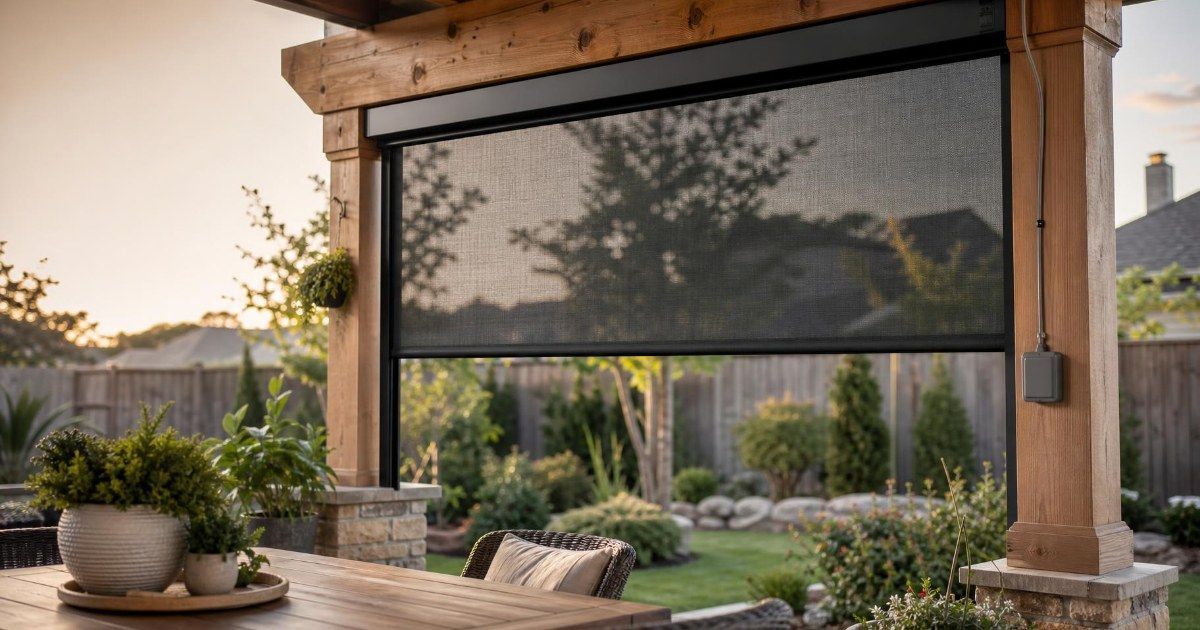
The most common Houston installation is also the simplest to describe. The shade mounts to the existing beam and drops down the open sides of the covered patio you already own. The roof stays as it is, and you gain the walls it never had.
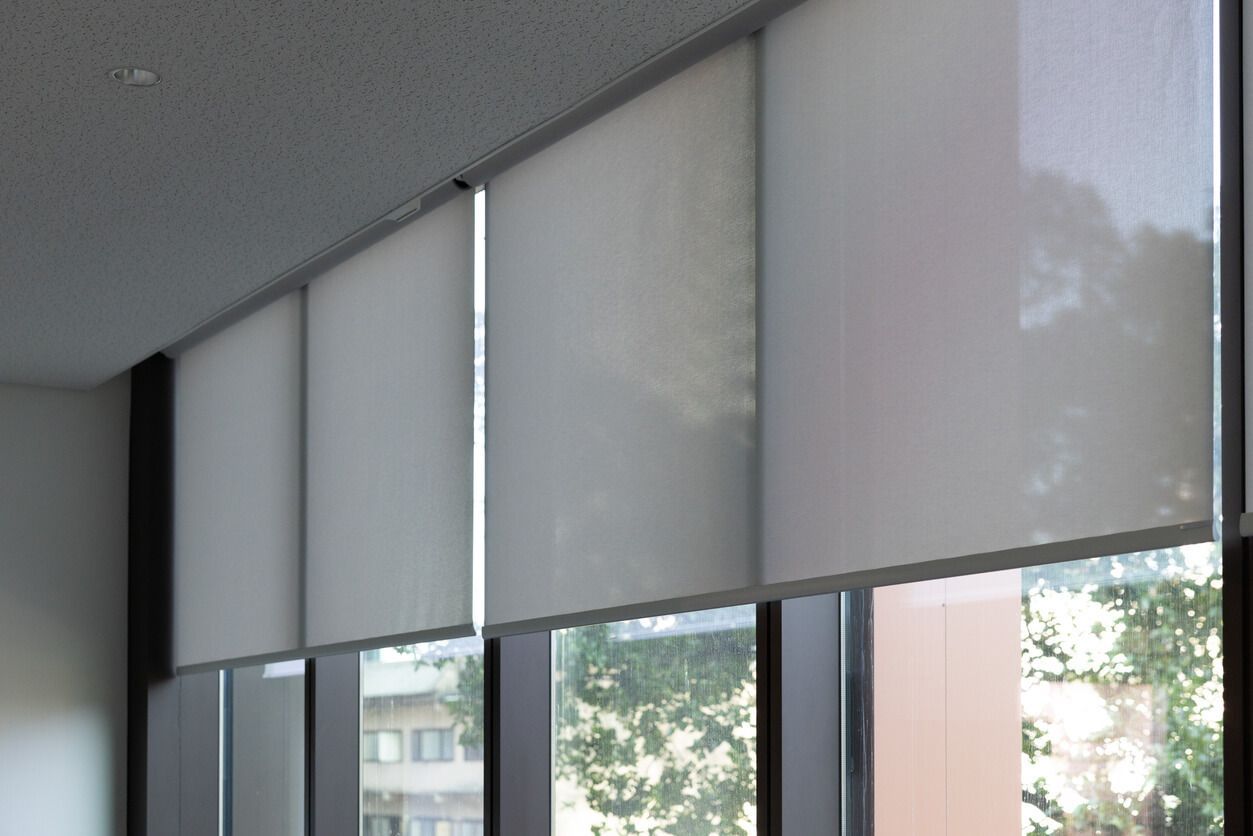
The shade rolls down into side tracks on both edges, and a weighted bottom bar holds it taut. That track system keeps the fabric from flapping in a breeze and closes the gaps along the edges. On a Houston patio, a vertical shade on the west or south side is what deals with the low afternoon sun. The shades can run on a schedule or close when the afternoon sun hits, so the patio is ready before you step outside. You can read more about how these systems work on the page for motorized patio shades.
Choosing fabric openness
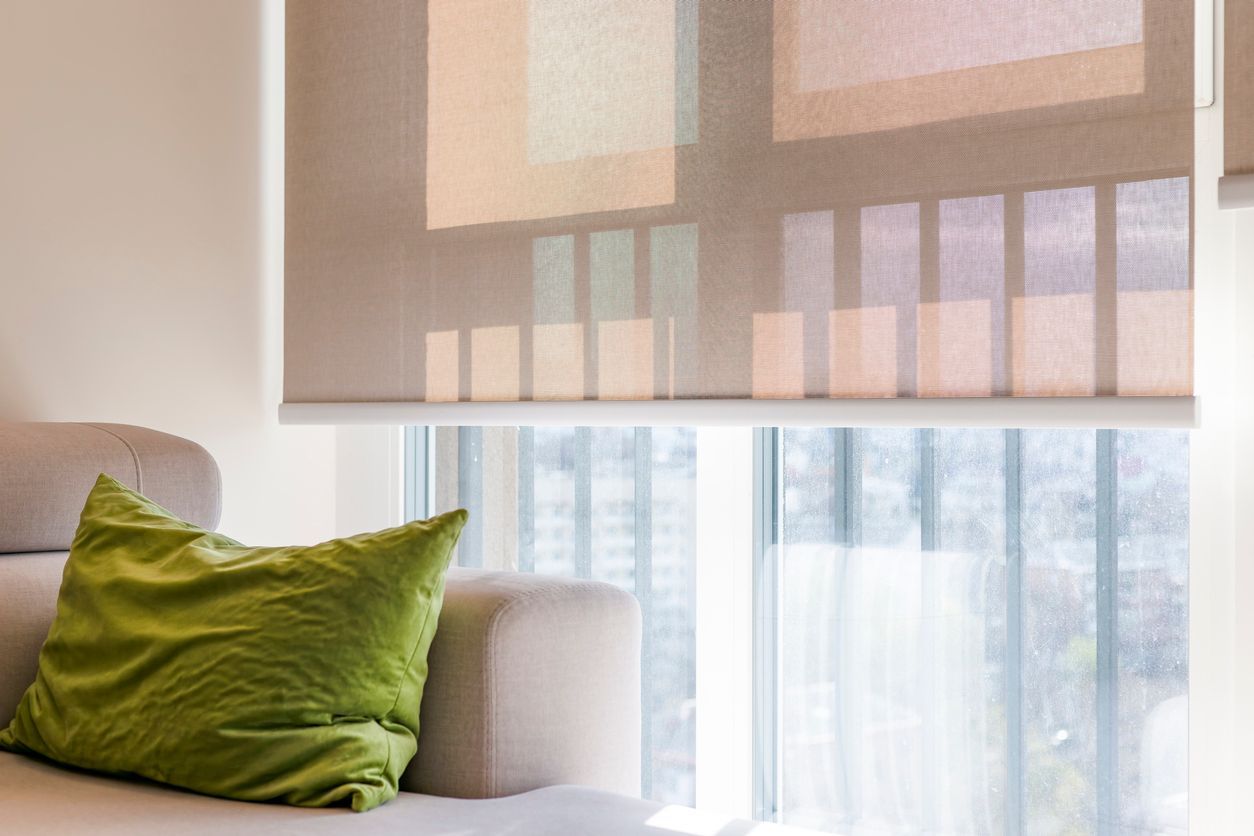
Fabric choice sets how much sun, view and air you keep. Solar mesh blocks up to 90% of UV rays while keeping the view and letting air move across the patio, which suits most Houston homeowners who want to see the yard and feel a breeze. Open mesh holds the view and the airflow. Low openness gives full privacy and blocks more light, which works well along a property line or toward a neighbor's yard.
Many homes end up with different fabrics on different sides. A more open mesh faces the view, and a denser one takes the western sun.
Openings that need structural work first
Some builder patios need a little work before a shade can hang properly. A patio with an open gable and no beam gets a beam buildout. Angled walls get an angled wall buildout, which gives the shade a solid base to attach to. A slab where the shade has to clear the concrete edge gets coping. Shade Doctor quotes these buildouts as part of the same project, so one estimate covers the whole job.
Sloped concrete gets handled in the fabric. The shade is custom-cut to the slope of your patio so it fits and runs properly. Openings can be large, with shades up to 30 feet wide and 20 feet tall.
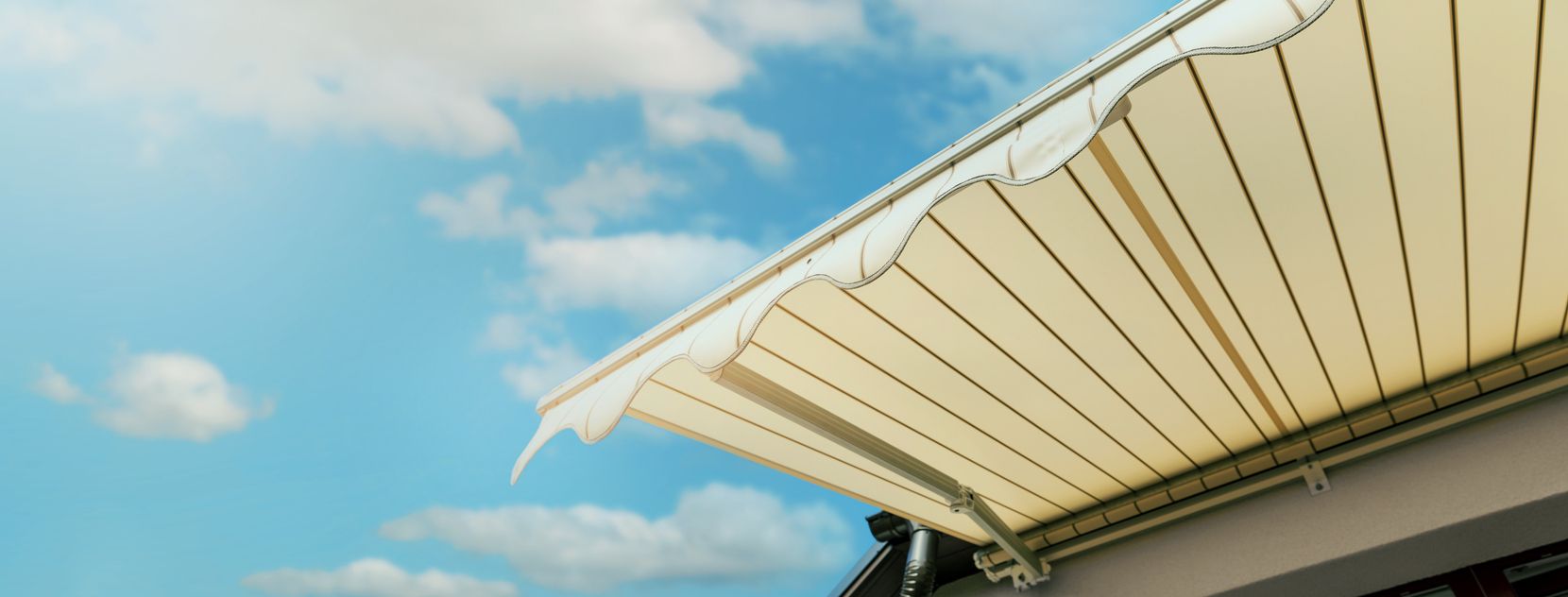
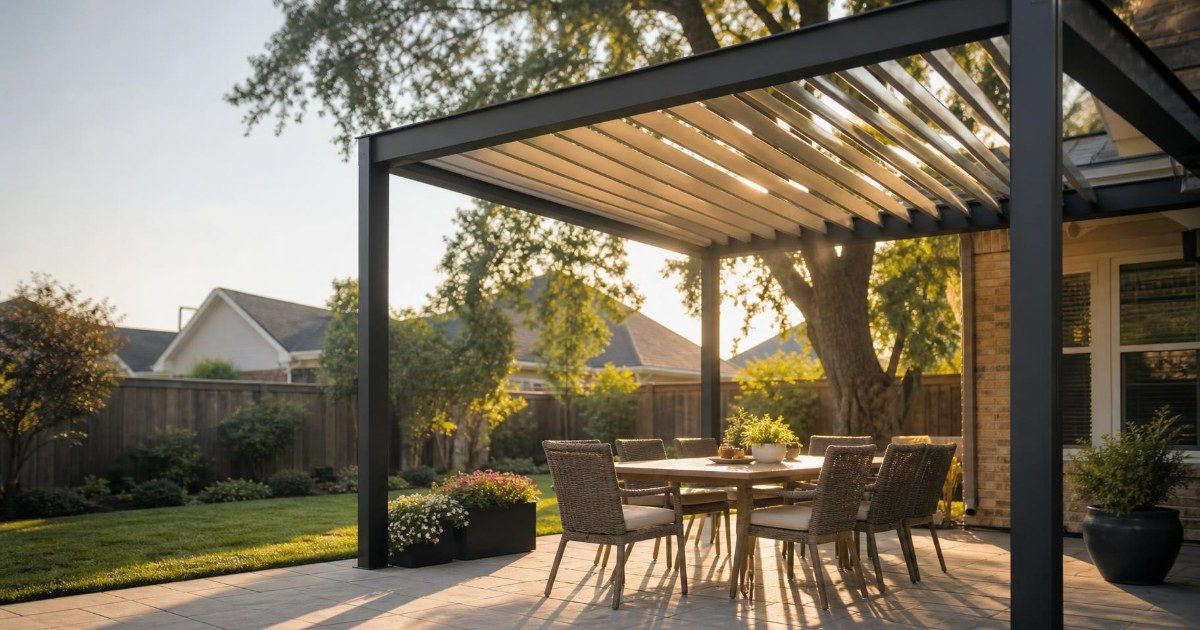
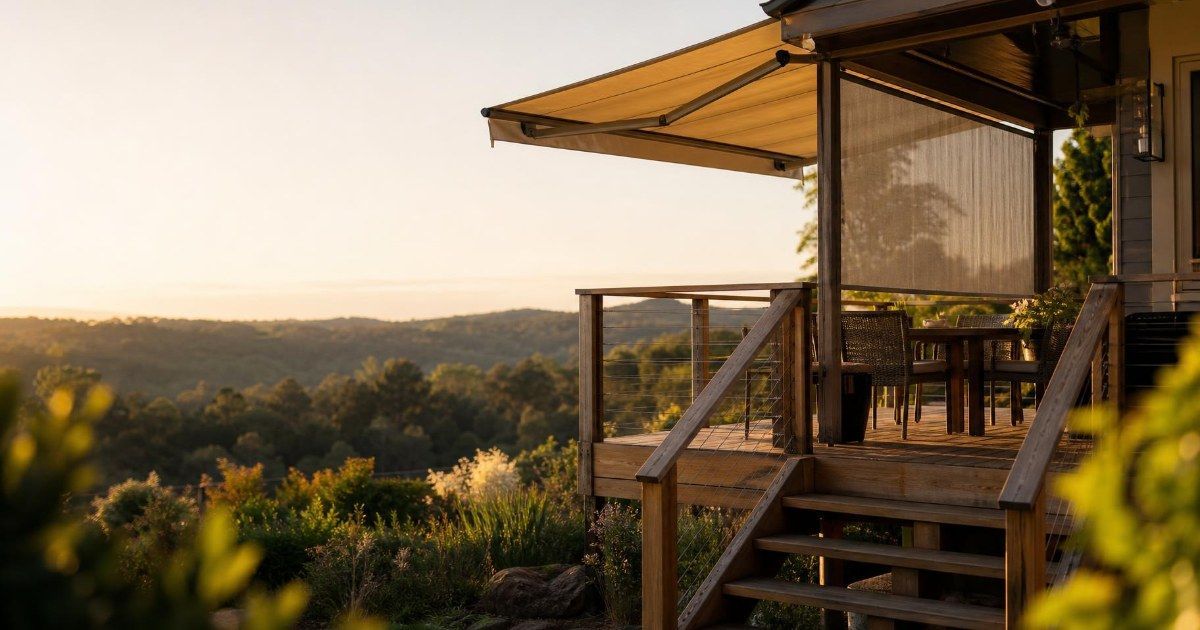
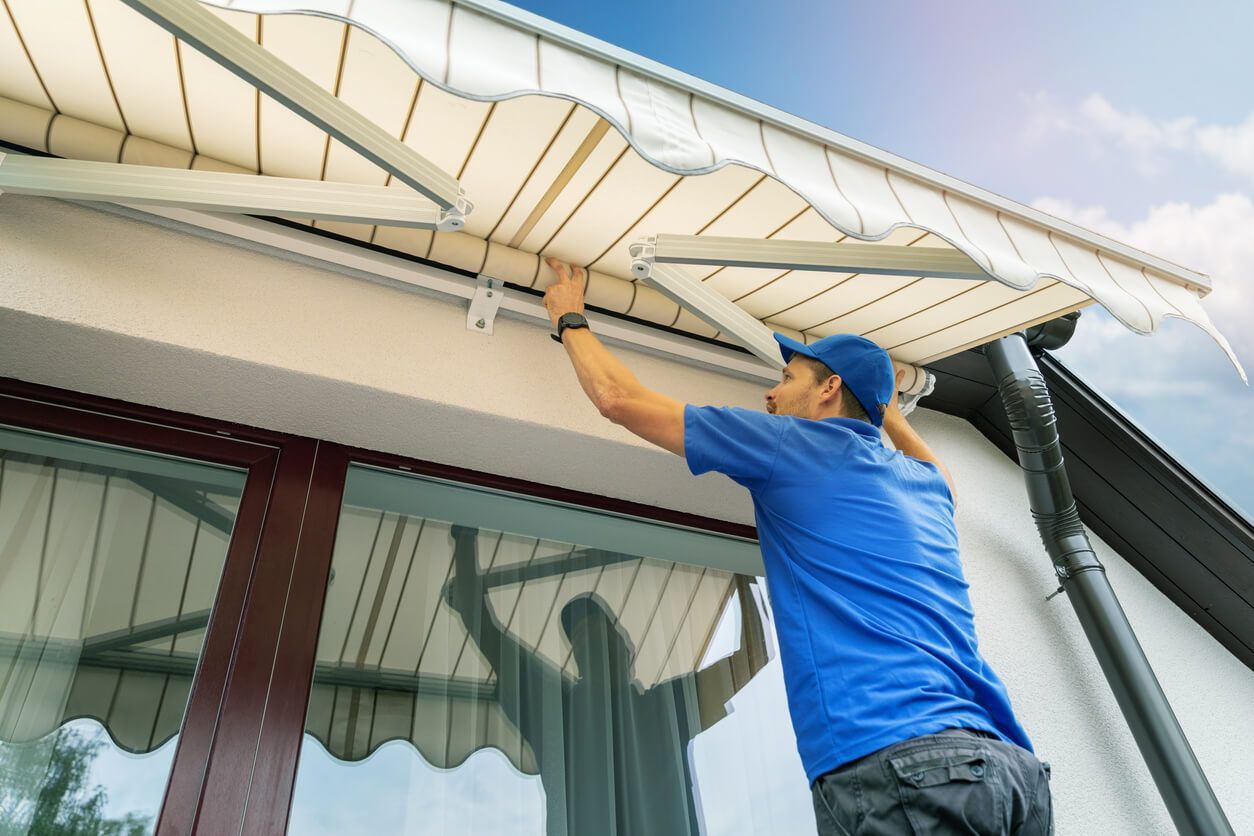
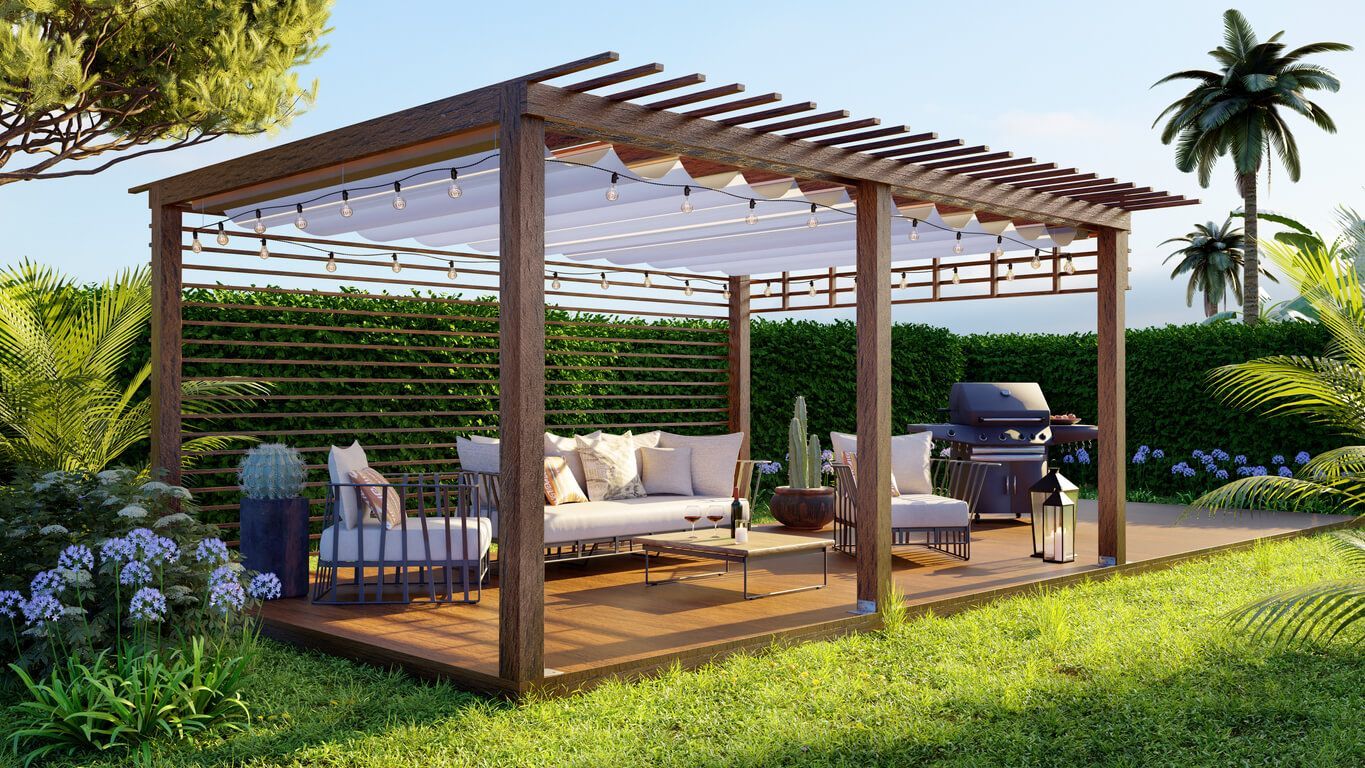
Where there is no cover at all, a retractable awning creates shade straight from the house wall, with built-in LED lights and a manual override. A modular louvered pergola covers an open area where no structure exists. For west sun, an awning with a drop-down front valance adds the vertical piece, and the post on awnings with drop-down front valances shows how that works.
Planning Patio Shade on a New Build in Texas
If your home is still under construction, you have a real advantage. Shade is much easier to plan before framing and masonry are finished. The cleanest results come from deciding early where the shade will live.
Shade Doctor's guidance for new homes centers on a few details. A recessed pocket in the header hides the roller and motor, so the shade disappears when it is rolled up. Side tracks can be set into stone or brick columns, which keeps the edges tidy. Power gets planned before finishes go on, so no wiring ends up exposed on a finished wall. The full explanation is in the post on flush-mounted motorized screens in new home construction. Share those details with your builder while the plans are still flexible, and the finished patio can handle a Texas afternoon from day one.
HOA review comes up often on new builds. Most Houston-area master-planned communities require architectural review before an exterior change, and a retractable shade that rolls away when not in use generally moves through review more easily than a permanent structure. Committees typically want a dimensioned drawing, the product specification, the fabric color and the mounting method, and Shade Doctor can provide the product documentation a submission needs. Having that paperwork ready early keeps the schedule moving.
The Roof Was Never the Whole Answer
A covered patio gives you a good start. The hot hours come from low sun, warm surfaces and heavy air that a roof alone cannot change, and for most hot covered patios in Houston the fix is closing the open sides against that low sun.
Shade Doctor starts every Houston project with a free estimate and an on-site measure. To make the estimate firm, have your opening width and drop, the direction the patio faces and a photo of the existing structure ready. Ask for a
free estimate and give your patio the afternoon it was supposed to have.