Can a Pergola Have a Solid Roof? Louvered vs Solid Explained
Can a Pergola Have a Solid Roof?
Yes, a pergola can have a solid roof. A traditional pergola has an open top of rafters or lattice that breaks up sunlight and gives partial shade, so whether a pergola has a roof depends on the version you choose. Solid, louvered and polycarbonate tops are the three roofed variations people ask about most.
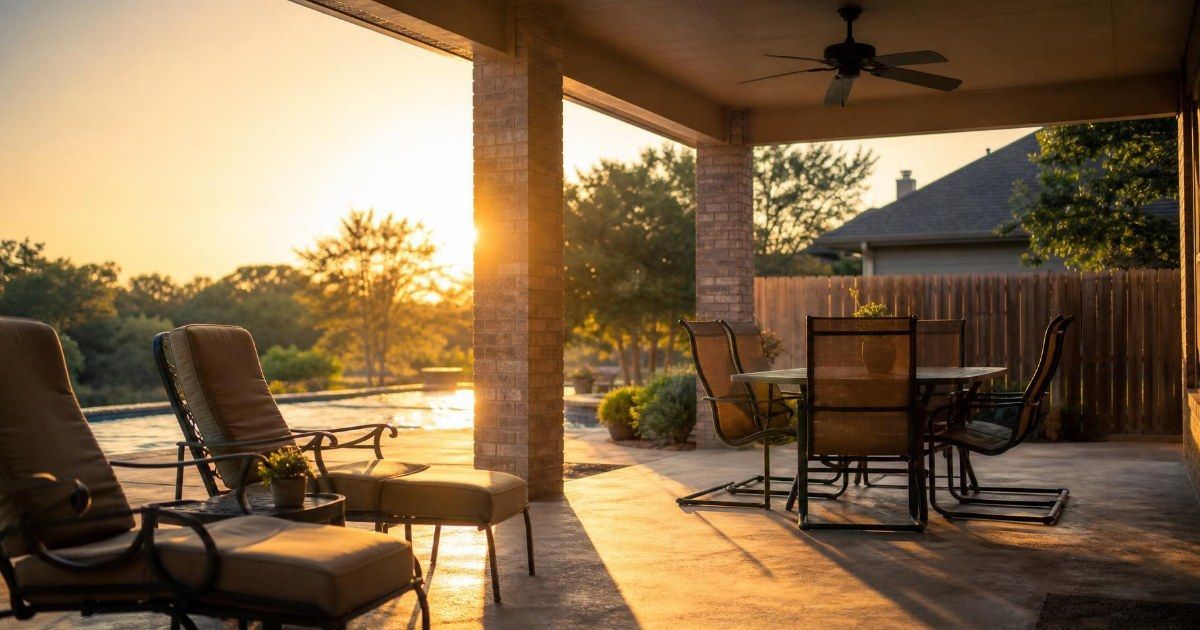
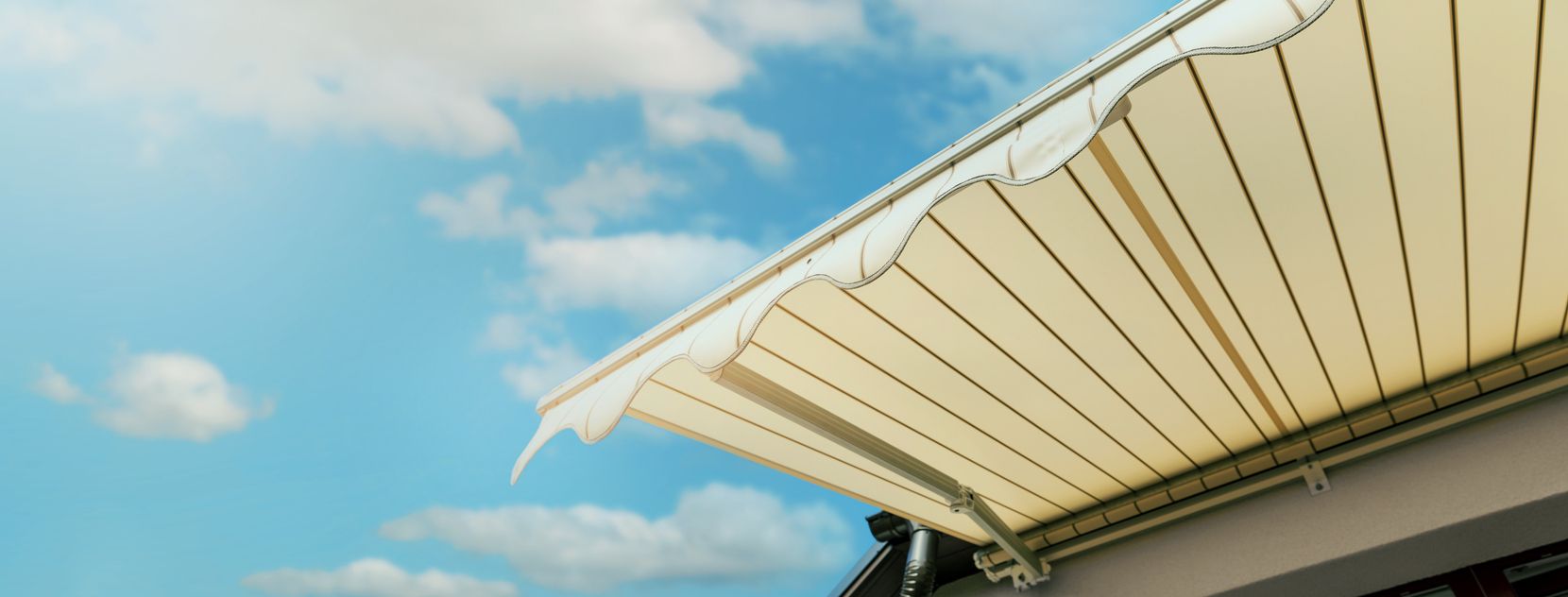
A solid pergola roof cover replaces the open top with a fixed panel. The panel can be aluminum, insulated aluminum, polycarbonate or wood. Once it is installed, it stays exactly as it is every day of the year, and the structure behaves like a permanent patio cover. The open-air character that defines a pergola goes away with the lattice. That change affects how the space feels, how it handles Houston weather and what it takes to get approved, and the sections below take each one in turn.
What a Solid Roof Actually Gets You
A solid roof gives you shade and rain cover all day, with nothing to operate. Nobody checks the forecast, and nobody runs outside to close anything when a storm rolls in.
Rain is the strongest argument in this market. Houston sees measurable rain on roughly 100 days a year, close to one day in three. A roof that is always closed keeps the patio usable on many of those days, and it keeps the furniture underneath dry.
The same cover protects everything that lives under it. Cushions, dining tables and rugs stay out of the weather. A grill or outdoor kitchen, with its cabinets, appliances and counters, stays covered around the clock. That makes a solid roof a sound call for an outdoor kitchen or a carport, where the space needs cover at all hours and nobody wants to think about it.
Direct sun is blocked from sunrise to sunset too, which helps a spot that takes harsh afternoon light on the west side of the house.
What You Give Up With a Solid Roof
A solid roof is on all the time, including the days you want sun. The panel gives the same shade in January as in July, so a cool, bright winter morning is spent under a ceiling.
Heat is the bigger cost in Houston, which sees more than 100 days a year at 90°F or hotter. On those days a solid roof holds heat under the panel, and hot air has no opening to leave through. Open and louvered structures let warm air rise out through the top, which is why they feel different at 4 p.m. in August.
A solid roof is also a bigger, more permanent build than an open pergola, and it is harder to change once it is in place. Cost follows the size of the build, so the budget conversation looks different from the one for an open-top structure.
Permits come into it as well. Shade Doctor's own guidance on modular pergolas is that, depending on the region, a permit is often not necessary, and a local dealer can say more. A fixed roof makes the structure read more like a permanent building. HOA design guidelines often treat open rafters, louvered roofs and solid covers separately, so it helps to understand how HOA approval for a pergola in Houston works before you settle on a roof type.
Why a Louvered Roof Solves the Same Problem
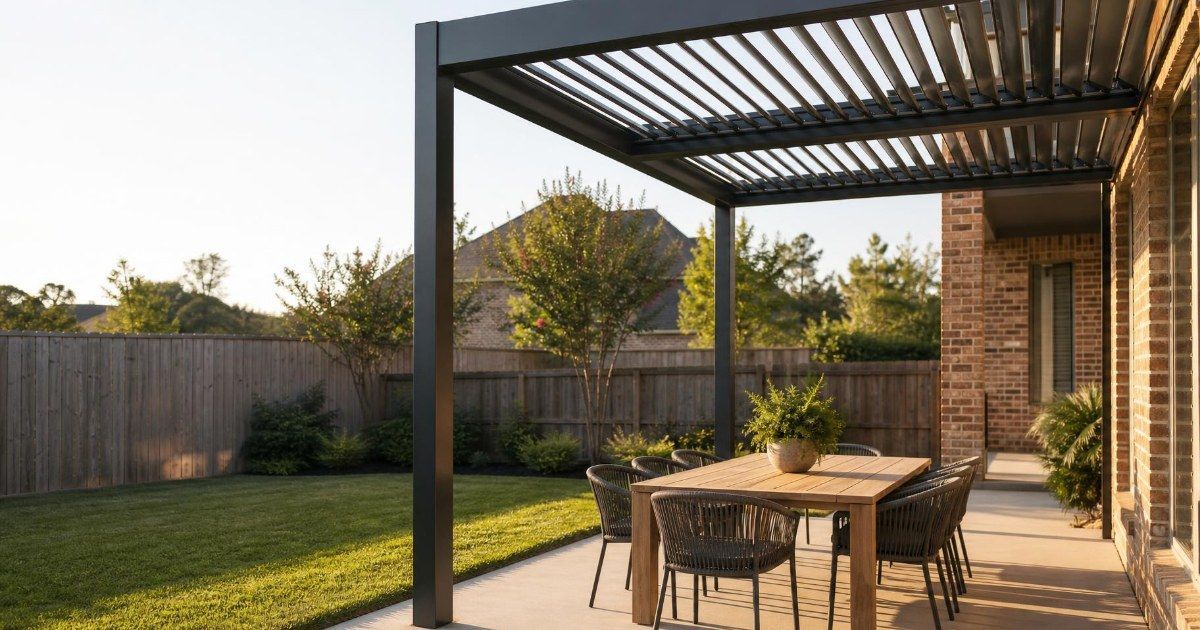
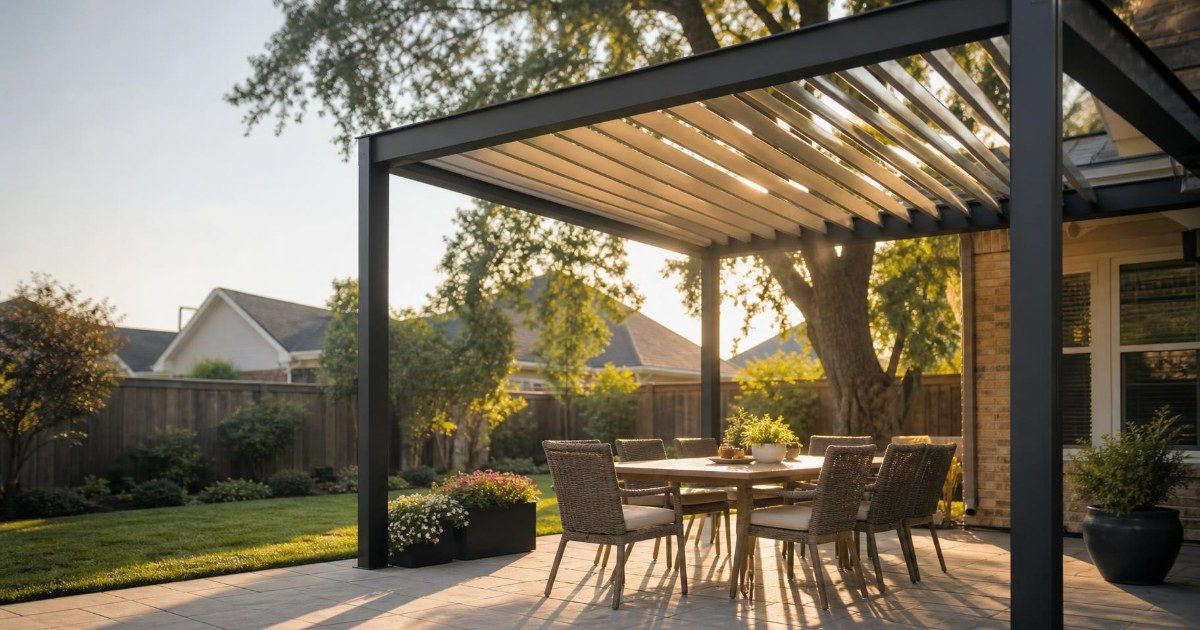
If you are wondering what a louvered pergola is, it is a pergola with a roof made of aluminum slats, called louvers, that rotate. Closed, they form a roof that sheds rain into a gutter built into the frame. Open, they let sun and air through. Tilted partway, they control how much light reaches the patio.
That covers both problems from the last section. When a storm comes in, the roof closes. On a hot afternoon, you open it and the heat has a way out. On a mild morning, it lets the sun in. A solid roof has a single setting.
Shade Doctor offers two louvered lines. The manual modular pergolas rotate their louvers by hand up to 90 degrees, so no power is needed and the structure can sit wherever you want it. They come in 10'x10' and 12'x12' modules that combine for larger coverage, with integrated gutter drainage and optional privacy walls.
The motorized pergolas open, close or tilt the louvers up to 90 degrees from a remote, a wall switch or a smart home system. When the louvers close, they interlock to form a watertight roof, and the integrated gutter and drainage system sends the water away from the structure. LED lighting is an optional addition for evenings.
Durability backs that closed-roof protection. Shade Doctor guarantees its hardware up to 105 mph and covers it with a lifetime warranty. Fabric and mesh carry up to 15 years, and motors and controls carry 10 years.
Solid Roof vs. Louvered Roof at a Glance
Here is how the two roofs line up on the points homeowners weigh most.
- Rain protection: A solid roof blocks rain at all times, and a louvered roof blocks it whenever the louvers are closed. Both keep furniture and outdoor kitchens dry through a Houston downpour.
- Sun and airflow: A solid roof blocks the sun all day, every day. A louvered roof opens on demand, so you choose between full shade, filtered light and open sky.
- Heat buildup on hot days: A solid roof holds heat under the panel. A louvered roof lets it vent through the open louvers.
- Adjustability: A solid roof is fixed once it is built. A louvered roof adjusts in seconds, by hand on the modular line or by remote on the motorized line.
- What it becomes: A solid roof reads as a patio cover. A louvered roof keeps the open-air character of a pergola whenever the louvers are open.
Getting the Right Roof for Your Space
A solid roof suits a space that needs cover around the clock, such as an outdoor kitchen or a carport. A patio where you want full protection on stormy days and sunshine on pleasant ones calls for a roof that does both jobs in one structure. Shade Doctor's modular pergolas with manual louvers and motorized louvered pergolas were built for that. To talk through your own space, schedule a free consultation and the team will walk the property with you.