Are Motorized Shades Worth It? Weighing Cost Against Everyday Comfort
A Different Question for an Outdoor Patio
Searches for "are motorized blinds worth it" mostly lead to pages about indoor products, with automation schedules and smart-home hubs at the center. A motorized patio shade works on a different set of problems: direct sun, mosquitoes at dusk and wind that gusts through an open patio all afternoon. So are motorized shades worth it on a patio? The answer depends on what the shade solves, what it costs and who gets the most from it. Shade Doctor is based in Houston, TX and installs motorized patio shades nationwide, and the rest of this page uses how those shades are built to answer the question.
What a Motorized Patio Shade Actually Solves
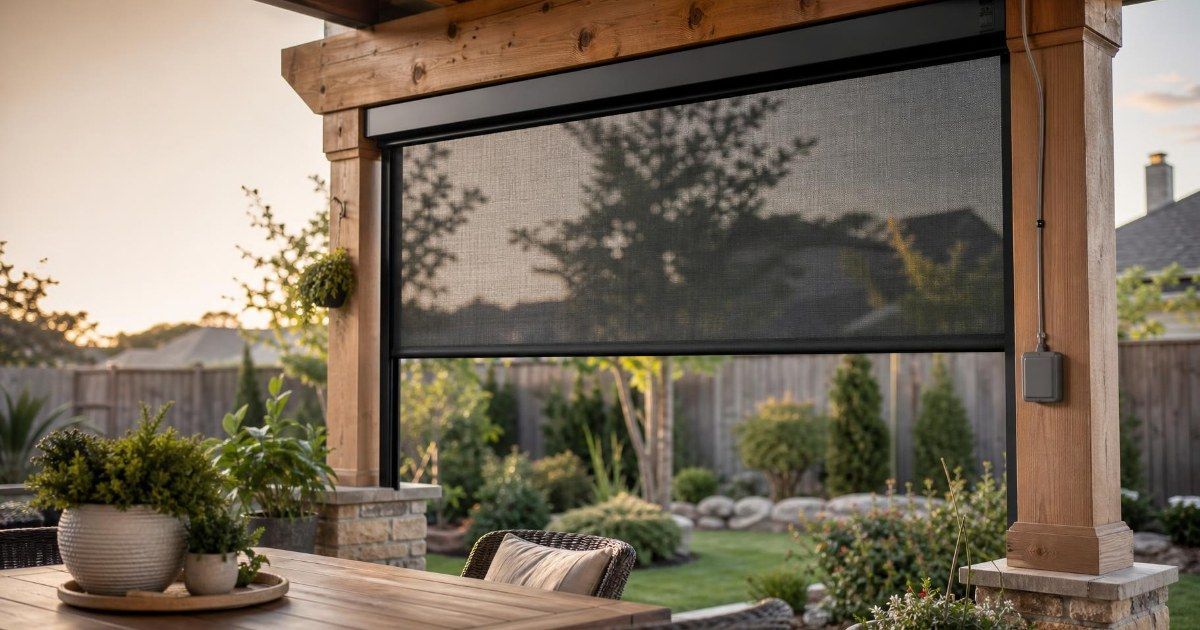
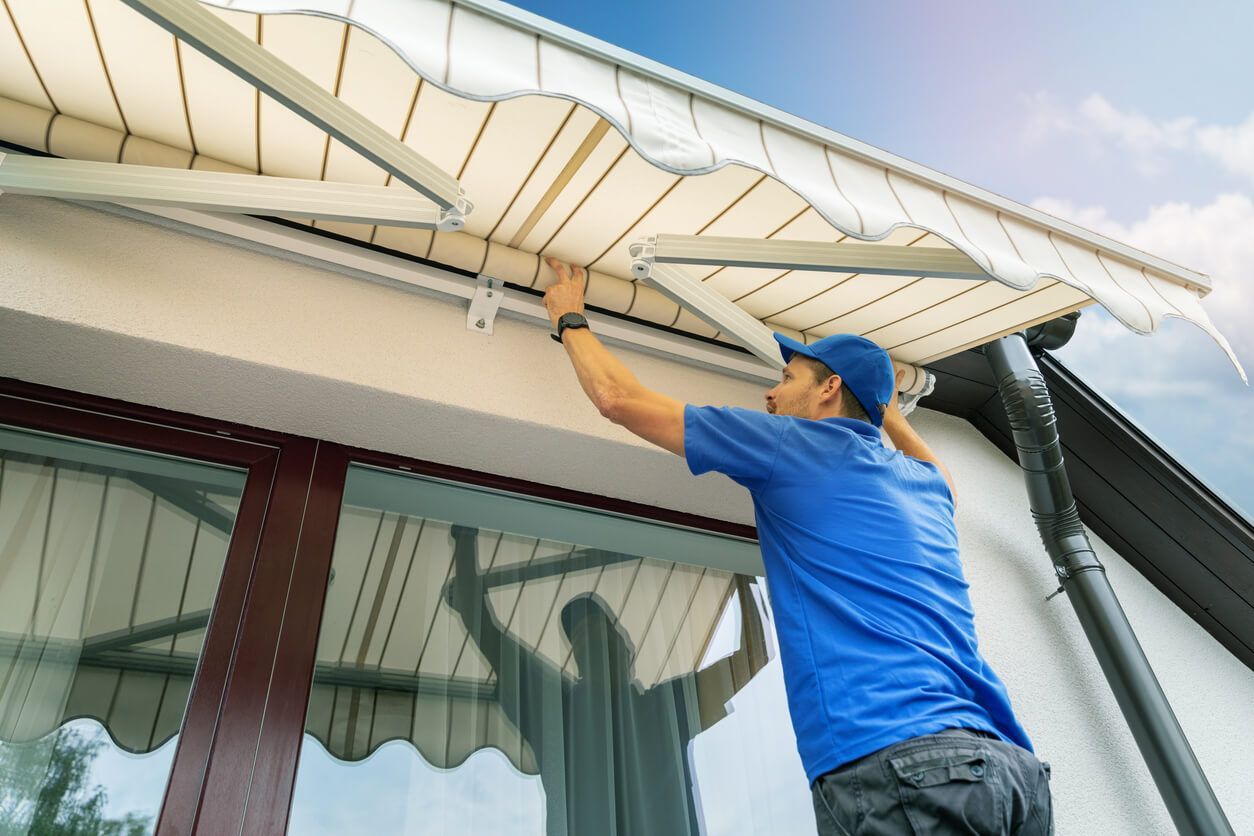
A motorized patio shade is a fabric or solar mesh screen wound on a roller tube. At the touch of a button it drops into side tracks on both sides of the opening, and a weighted bottom bar holds it taut. Most owners buy for one reason and find the other four afterward.
- Privacy on demand. The shade closes the space off from view, then rolls away when you want the view back. The openness of the fabric sets how much view and breeze you keep.
- Full perimeter insect seal. Side tracks and a weighted bottom bar close the gaps along the edges and floor, which is where insects get past a loose hanging shade or a poorly fitted screen. Mosquito activity peaks at dusk, right when most people head outside.
- Sun, heat and UV protection. Solar mesh blocks up to 90% of UV rays while the view and the airflow stay.
- Remote, app and smart-home control. Remotes, apps and compatible smart-home systems let the shade run on a schedule or close when the afternoon sun hits.
- Wind resistance. The same tracks and bottom bar hold the shade steady through Gulf Coast storm season.
How Much Heat It Actually Blocks
Heat is where the money question gets a real answer. In a simulation of a home without air conditioning during the 2021 Portland heat wave, researchers found that shading placed outside the home cut the hours spent in "danger" or "extreme danger" heat-index categories by about 55%. Shade outside the home earns that result because it stops the sun before the heat reaches the space, so there is nothing to remove afterward.
Whole-home numbers point the same direction. DOE field studies found that optimized use of high-efficiency shading can lower whole-home summertime cooling energy by 15% to 25%. In Houston, where a west-facing slab can hold afternoon heat well past sunset, a shade that blocks sun early has a lot of work to do.
Both figures are findings about shading as a category. Results at any one home depend on orientation, fabric and how often the shade is lowered. On the product side, Shade Doctor's solar mesh blocks up to 90% of UV rays and still lets air move through the opening.
What It Costs, and What Drives the Price
People who ask how much motorized shades cost usually want one number, and an outdoor shade rarely has just one. Price follows the width and drop of the opening, the fabric and mesh, the control system and whether the structure needs a beam or angled wall buildout to mount to. A wide patio opening with wind-rated hardware costs more than a small screen, and the motor adds to the total. Shade Doctor's guide to what motorized patio shades cost in Houston lays out planning ranges, with typical residential projects landing between about $4,500 and $18,000. Every shade is custom built to the opening, so measuring comes first. Every estimate is free, and the firm number arrives after an on-site measure.
Where the Payback Shows Up Beyond the Utility Bill
Some of the payback never appears on a bill. Sun fades outdoor cushions, rugs and flooring, and solar mesh that blocks up to 90% of UV rays slows that damage. Insect sealing makes the patio usable at dusk, when most evening meals and gatherings happen.
The motor matters most on large openings. Shade Doctor builds shades up to 30 feet wide and 20 feet tall, and a shade that size gets used every day only when one button moves it. Schedules, app control and smart-home links add convenience for owners who like automation, though they rank below heat and insects for most patios.
If your family avoids the patio every afternoon from June through September, that lost time is the cost a shade recovers.
When It's Not Worth It
Some patios do not return the investment. A patio used a handful of times a year gives a shade very little to do. An opening that a roof already shades most of the day has little direct sun left to block, and the deciding fact is how much sun reaches the space in the afternoon, since a covered patio can still run hot when the sun comes in low from the west.
Owners who want zero upkeep may prefer a fixed overhead cover, because a motorized system has a motor, tracks and fabric to look after over the years. The motor also needs power, and Shade Doctor's shades cannot be raised or lowered during a power outage. Anyone who wants a shade that moves without electricity should know that before buying.
What Separates a Shade Built for Houston From One That Isn't
A Houston shade has to handle sun, heavy rain and Gulf Coast wind, and the specs show what the price covers. Shade Doctor guarantees its hardware up to 105 mph and backs it with a lifetime warranty. Fabric and mesh carry 15 years of coverage, and motors and controls carry 10.
Side tracks and a weighted bottom bar deliver the wind rating. Because each shade is built to the opening, the tracks land on the posts, columns or walls already there, and most installations finish within a day or two once the shades arrive.
Coverage that long gives the cost years of daily use to pay back through. To see the full specs and request a free on-site estimate for a motorized patio shade, visit the motorized shades page.