How Much Wind Can a Retractable Awning Withstand in Houston?
The Short Answer: What Wind a Retractable Awning Can Handle
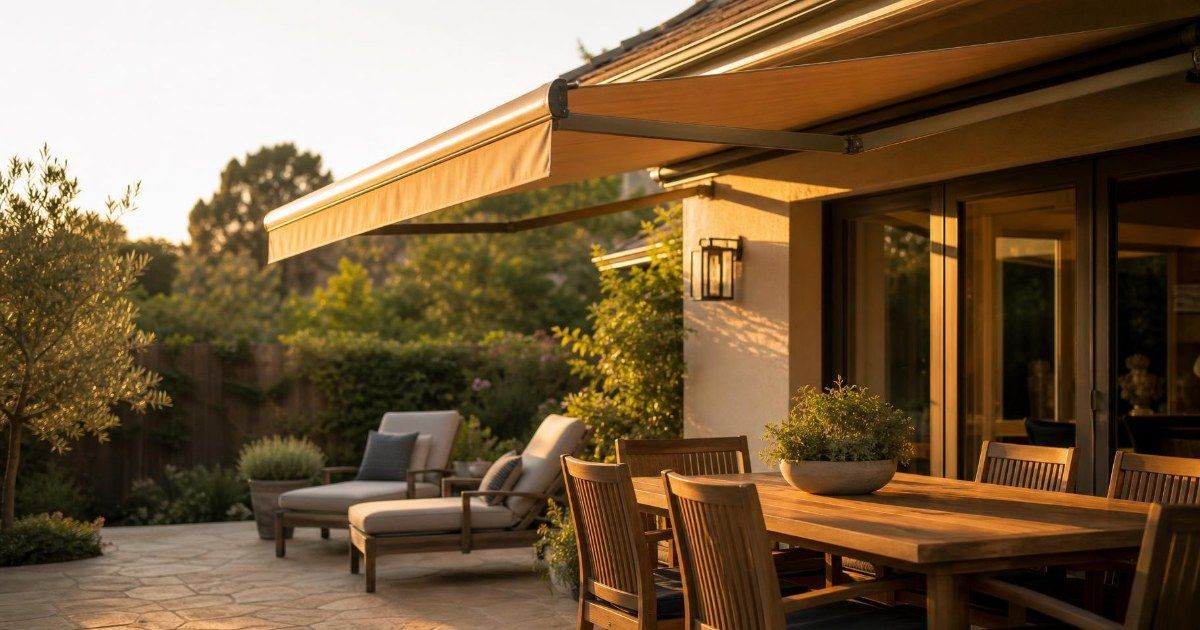
How much wind can a retractable awning withstand? No single number fits every awning, but most quality retractable awnings are built to perform through roughly 20 to 30 mph of steady wind. Lower-priced units sit near the bottom of that range, and sturdier frames reach toward the top.
Manufacturers describe this with a retractable awning wind rating. A rating names the steady wind speed an awning is designed to stay open in without damage, much like a speed limit tells a driver where the road is comfortable. Past that speed, the awning belongs in its housing.
Some spec sheets reference EN 13561, a European classification for awnings. Class 2 covers roughly 18 to 24 mph, and Class 3 covers roughly 24 to 30 mph. Those classes give you a point of comparison when you read a product sheet, and they come from a European standard, so a US manufacturer may state wind tolerance in its own terms.
In Houston, the wind picture gets specific. Gulf Coast thunderstorms build fast, and a calm patio can turn gusty within minutes. Whether you already own an awning or are choosing one, the goal is the same: know the number, know the gust, and know when to bring the awning in.
Why Gusts Are More Dangerous Than Steady Wind
Wind ratings describe steady, sustained wind. Damage happens in gusts, the short bursts that arrive well above the average speed. A forecast that reads 15 mph can still carry gusts far higher, and a Houston thunderstorm line can deliver them with little warning.
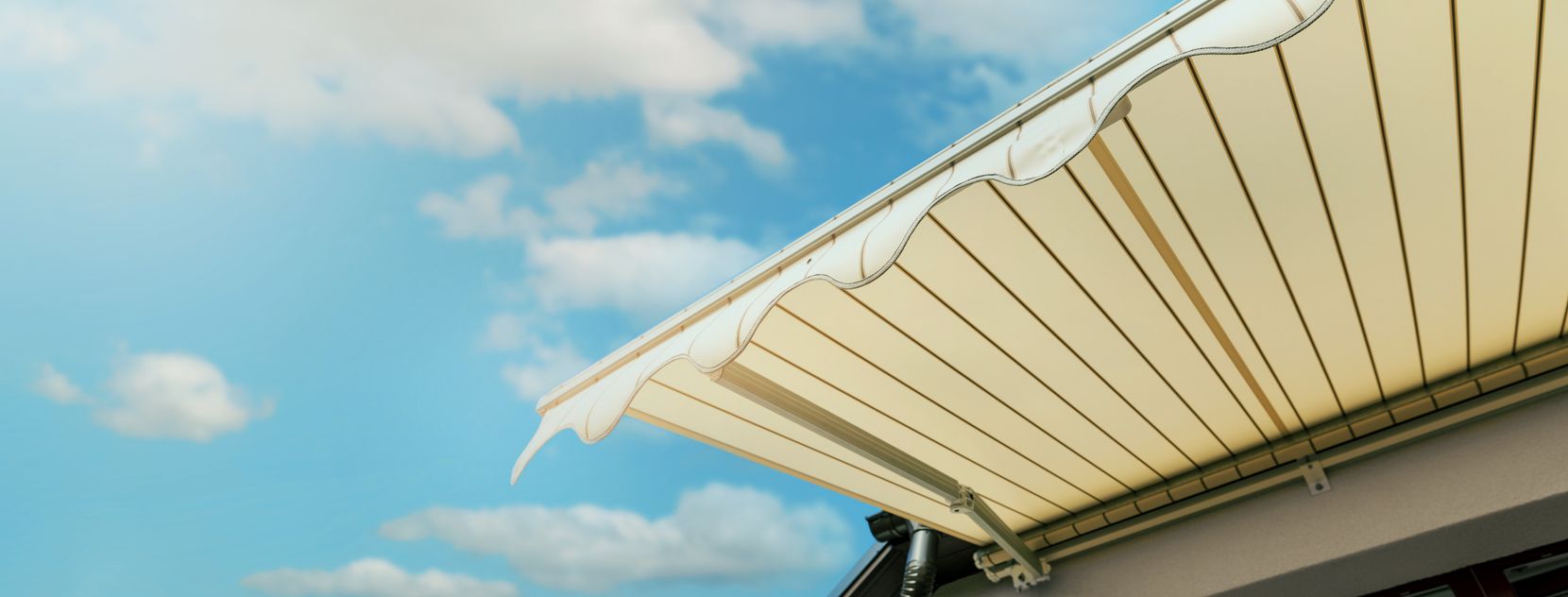
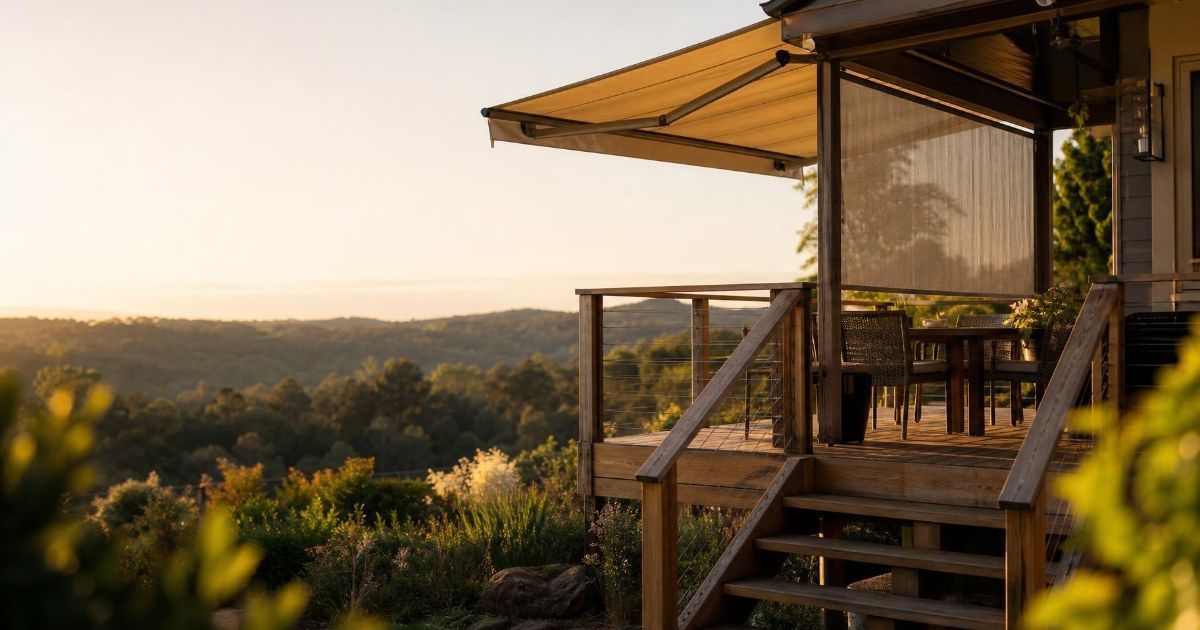
An extended awning acts like a sail attached to the side of your house. The fabric catches the air, and the arms and wall brackets carry the load. A sudden gust well above the safe number can push more force through those parts in one second than hours of calmer wind. Gusts near 50 mph can bend the extension arms, especially when the awning sits at a shallow pitch.
This is where wind resistant awnings earn the name. What makes an awning wind resistant is robust arms, wall brackets that grip the structure securely, and fabric set at a proper pitch so air can slide off it. A wind-class number on a spec sheet speaks to steady wind, and the hardware behind it decides how the awning handles the surprise gust.
Gusts can arrive before a person or a sensor reacts, so the safest habit is to bring the awning in before the wind builds. Some manufacturers also offer wind sensors that retract an awning automatically, which is a category of add-on worth asking about as you shop.
What a "Strong Breeze" Feels Like on a Houston Patio
You do not need a wind gauge to judge the air on your patio. The Beaufort wind scale matches wind speeds to what you can see around you. A fresh breeze, 19 to 24 mph, starts small trees in leaf swaying. A strong breeze, 25 to 31 mph, sets large branches in motion and makes umbrellas hard to hold.
Those two bands sit right where the typical awning range ends. When the small trees in your yard start to sway, a lower-priced awning is already near its limit. When large branches move, or the umbrella on your patio table tugs at its pole, a retractable awning of any quality is ready to come in.
Treat that as your retract-it-now cue. Houston skies change quickly, so a glance at the tree line before you head inside, leave for the day or settle in for the evening takes only a few seconds. A dark cloud bank building on the horizon tells you gusts are on the way before the trees ever move, and that is a good moment to retract.
Houston's Wind Codes vs. Your Awning's Wind Rating
Houston-area homes are built under the 2021 International Building Code, which adopts the ASCE 7-16 wind standard. For the Houston metro, Texas wind load requirements call for design wind speeds in roughly the 120 to 150 mph range.
Those numbers exist for the rare, extreme hurricane-force event. They tell engineers how strong a structure must be so a house can stand through a major storm.
An awning's 20 to 30 mph range is a different measurement made for a different purpose. It describes the wind an open awning can work in comfortably, day after day. The two numbers sit far apart, and it is easy to blend them together in your mind.
The point to hold onto is simple. A house engineered to survive a major storm tells you how strong the house is. The awning on its wall follows the lower number, and it comes in long before the wind gets near what the house is built for. A homeowner who hears that the house can take 120 mph and leaves the awning open is comparing two different scales.
Mounting and wind load shape how any outdoor shade performs in a storm. Our guide to how motorized patio shades handle Houston storm season goes deeper on that side of the question.
What Happens If You Leave It Out Too Long
An awning left out in rising wind tends to fail in three places. Gusts push on the arms with leverage, so the arms can bend or twist. Fabric catches the air like a sail, so it can tear or stretch. The load travels back to the wall, so brackets can pull loose from their mounting points.
Most of this damage is preventable. Retracting before the wind picks up takes a few seconds, while waiting to see how bad it gets gives a gust the chance to do the work.
A little routine care keeps small issues small. Brush the fabric gently once it is dry, and let it dry fully before you roll it in. Look over the wall brackets and fasteners from time to time for loose bolts or small gaps. A quick check catches a loosening fastener long before a gust finds it.
What Shade Doctor Awnings Are Built to Handle
Shade Doctor's motorized retractable awnings come with hardware guaranteed up to 105 mph and backed by a lifetime hardware warranty. The same warranty covers fabric and mesh for 15 years and motors and controls for 10 years. The 105 mph figure speaks to the hardware and its mounting, which is why the awning still comes in ahead of a storm, like any exterior shade.
Storm weather and power outages often arrive together in Houston. Every Shade Doctor awning includes a wireless remote and a manual override. The remote retracts the awning from your back door in seconds, and when the power is out, the manual override lets you bring it in by hand.
Pitch matters because a shallow slope is where gusts load the arms the most. Shade Doctor's Easy Pitch Adjustment works by crank from ground level with no ladder, so you can correct the slope quickly without waiting on a technician.
Shade Doctor installs awnings and shades across Greater Houston, and every project begins with a consultation about how you use your patio. You can look over the motorized retractable awnings built for Houston patios, or schedule a free consultation to talk through your own space.