How Do You Keep a Pergola Dry When It Rains in Houston?
A pergola rain cover has one job: stop the water before it reaches your chairs, your table and your floor. In Houston that job comes up all year long. A pergola can stay open and airy on dry days and still close up tight when a storm rolls in. This post walks through why standard roofs leak, what quick fixes can and cannot do, and how an adjustable roof with built-in drainage keeps a patio usable in the wet months.
Why a Standard Pergola Won't Keep You Dry
Houston averages 51.84 inches of rain a year, and that rain arrives on about 104 days. More than one day in four brings some rain, so a pergola that cannot handle it sits unused for a large share of the calendar.
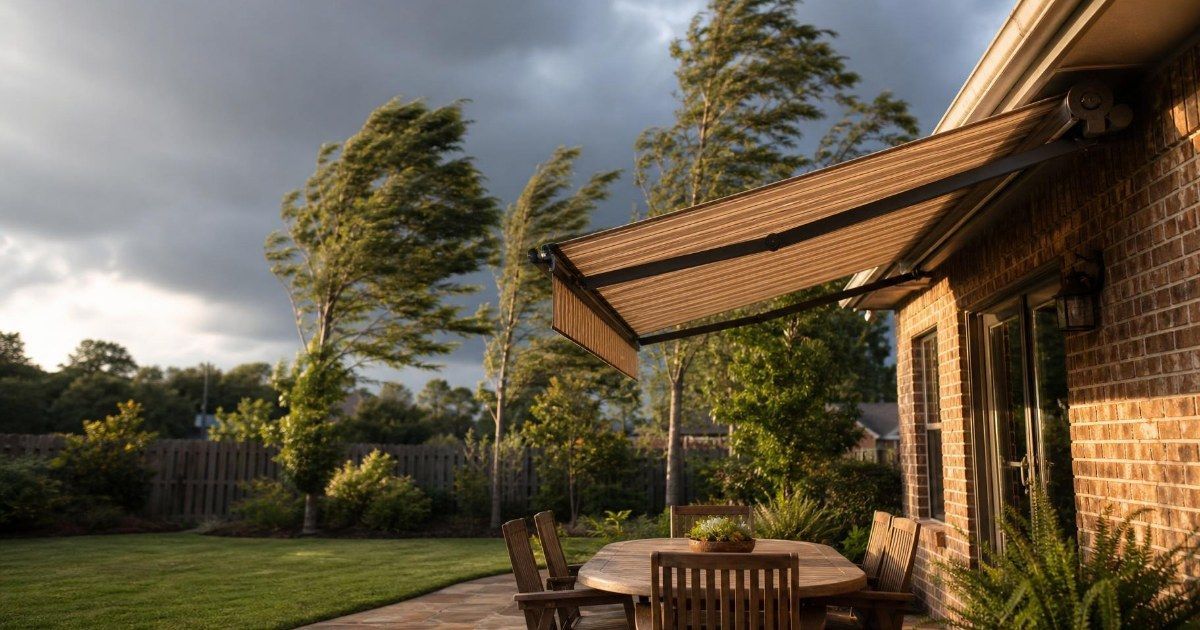
Most pergolas ship with a fixed roof of slats or open beams. Those slats are built to filter the sun and throw patterned shade across the patio, and they do that job well. The gaps that make the shade pleasant are the same gaps rain falls through, and tighter spacing only slows the water down. A light shower leaves the table damp. A Gulf Coast downpour soaks cushions, rugs and everything else under the frame.
Wind adds to the problem. Rain that blows in at an angle reaches furniture along the edges even when the middle of the roof is sheltered. A fixed roof cannot respond to any of this, since it looks the same on a sunny Saturday and in the middle of a storm.
That is why shade and rain protection tend to get treated as two separate needs. Slats handle the first, and the second usually gets solved with something added later, which is where the quick fixes come in.
Quick Fixes vs. Long-Term Solutions
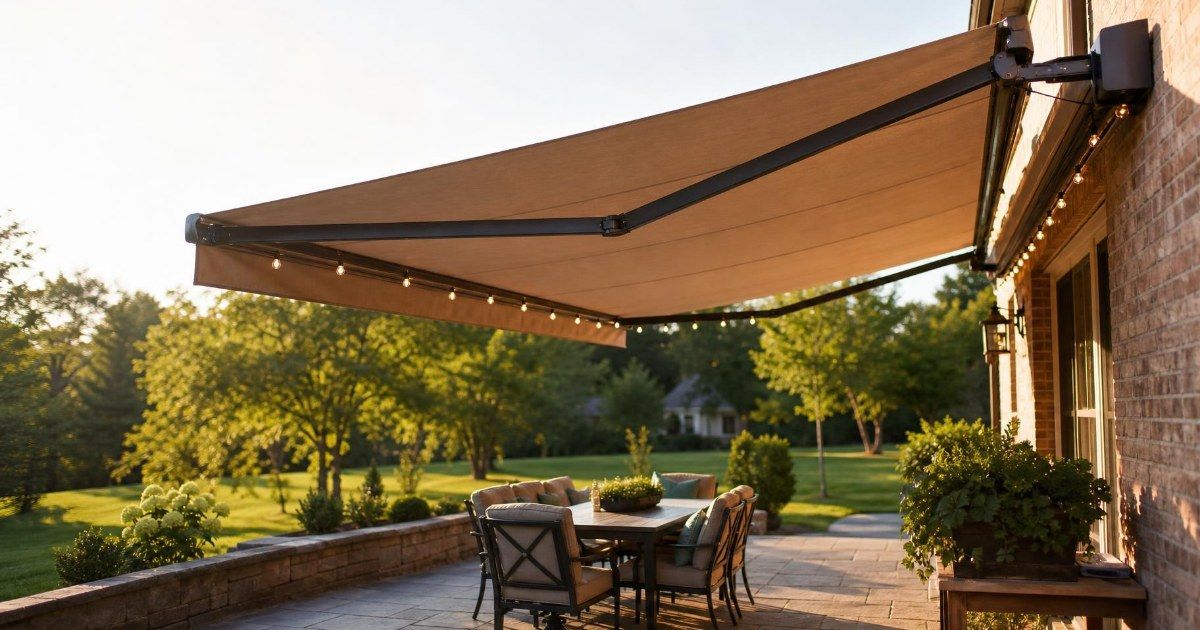
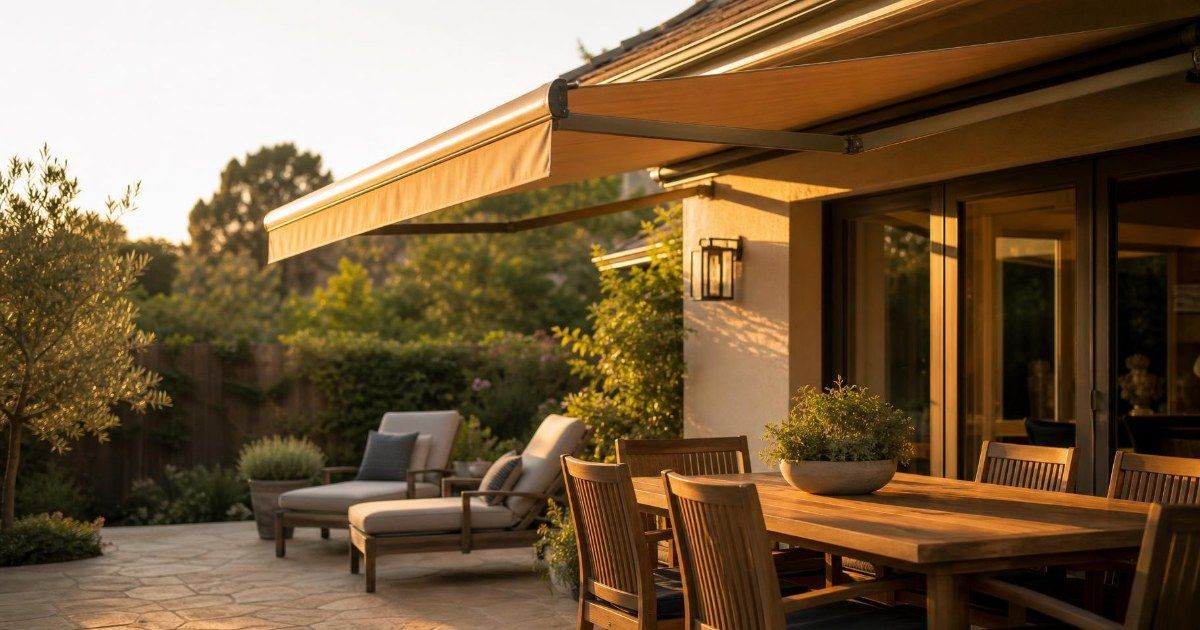
Homeowners who search for how to cover a pergola usually land on tarps, vinyl curtains and clip-on canopies. Sold as a waterproof pergola cover or a pergola cover for rain, these products cost little and go up in an afternoon. Someone has to be home to put them up and take them down, though, and wind catches them like a sail. A tarp stretched over the slats also looks like an add-on, and it blocks the light and airflow that made the pergola worth building.
Solid-roof patio covers sit at the other end of the range. They shed water completely. Because the roof never opens, they also deliver shade on every day, sunny ones included, and the open, breezy feel a pergola is chosen for goes away.
Both options ask you to give something up. A temporary cover gives up convenience and appearance, and a solid roof gives up the open sky. Neither one is the only way to get a dry patio, because a third approach builds the choice into the roof itself and lets you make it fresh each day.
Adjustable Louvers: One Roof for Both Shade and Rain
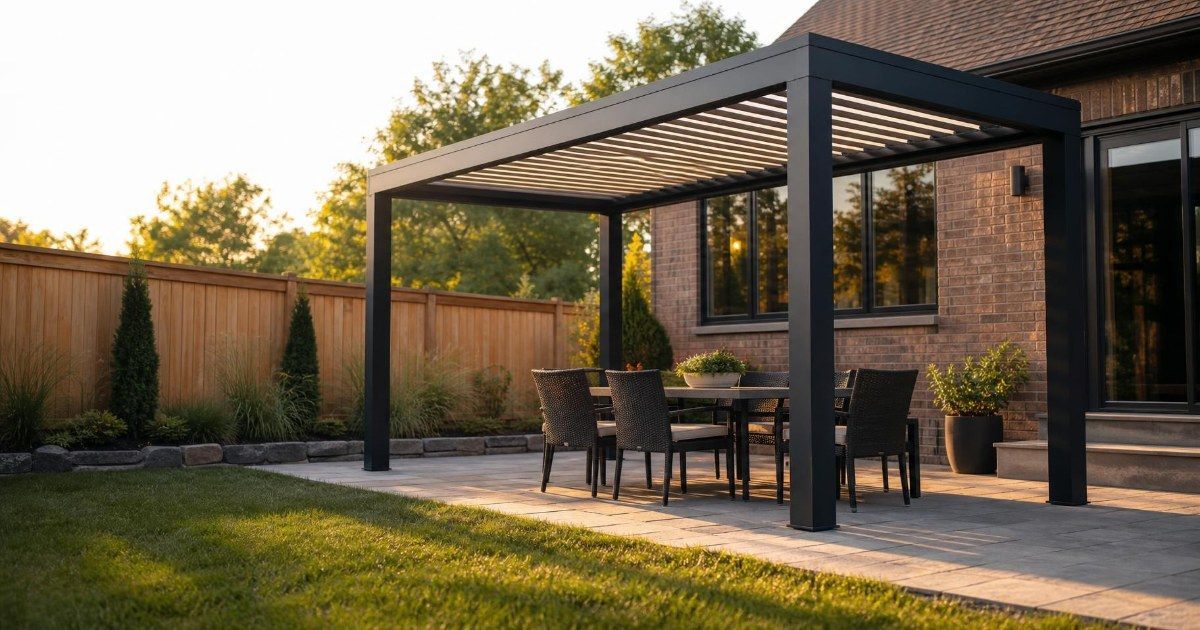
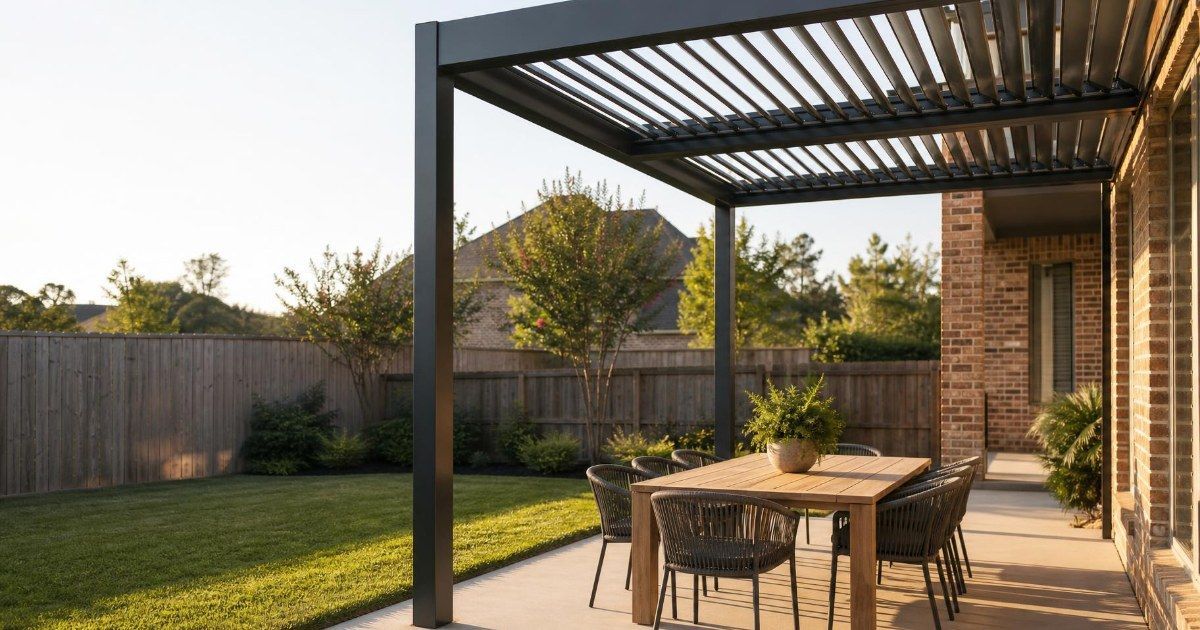
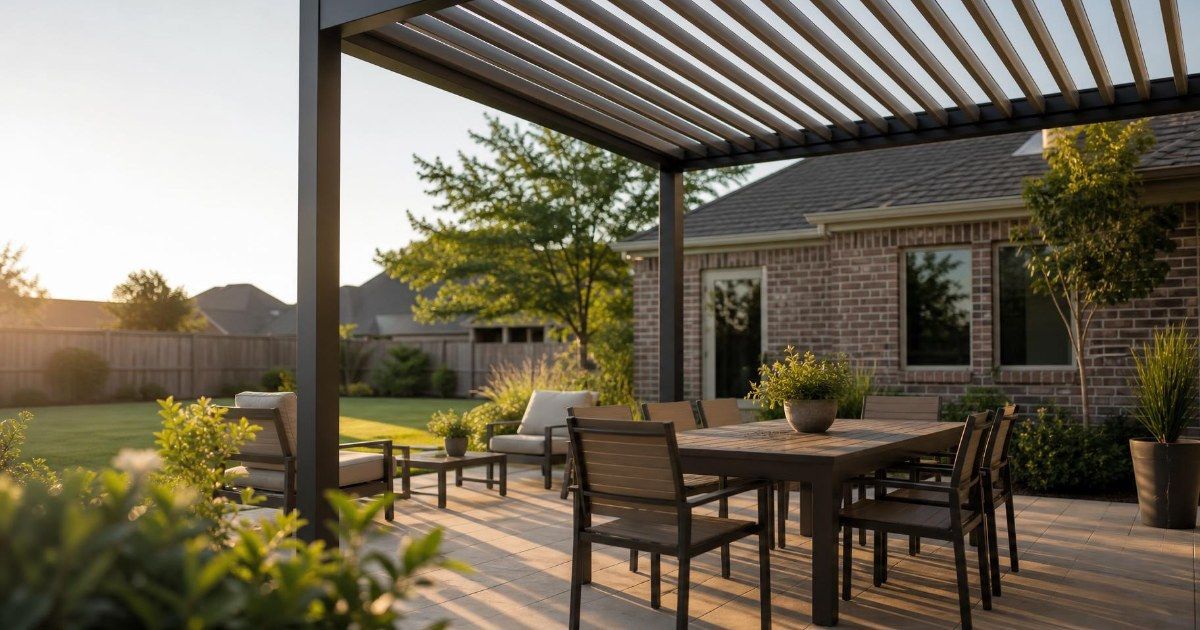
A louvered pergola roof is made of panels that rotate up to 90 degrees. Turned flat, they open the roof for full sun and airflow. Turned the other way, they close edge to edge and shed rain. The structure stays the same and the roof changes with the weather.
This is the real answer to the pergola rain cover question. The roof is the cover, and it closes itself into one whenever you need it. There is nothing to haul out of storage and nothing to tie down.
Louvered roofs come in two operating styles, and each solves the same problem a little differently. Shade Doctor's modular pergolas use a manual louver system that needs no power, so you adjust the louvers by hand to open the roof for sunlight or close it for shade and rain protection. With no outlet to plan around, the pergola can go anywhere in the yard.
The motorized version runs on power and gives you more ways to operate it. Shade Doctor's motorized louvers respond to a remote, a wall switch or smart home integration, and when they are fully closed they interlock to form a watertight roof. Closing the roof takes a few seconds and a button, which suits a fast-moving storm.
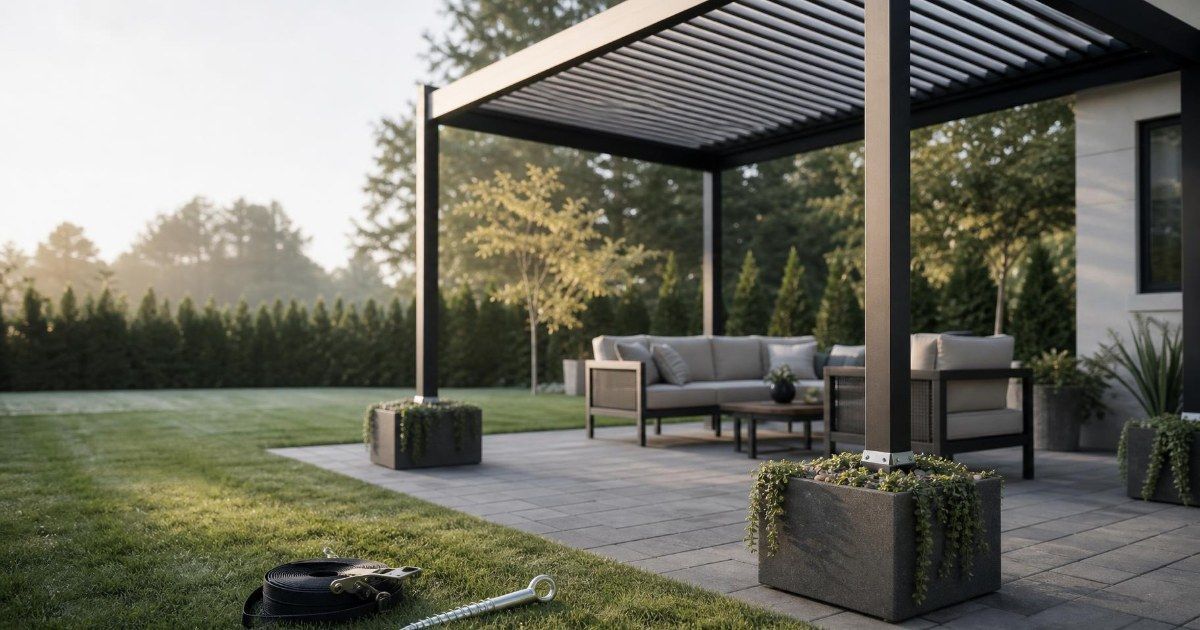
Size is a practical detail worth knowing early. The modular pergolas come in two standard sizes, 10'x10' and 12'x12', and sections combine for larger coverage. A single section can cover a dining table, and several joined together can cover a full patio. The frame is powder-coated aluminum, and optional privacy walls add seclusion on the sides that face a neighbor.
Where the Water Actually Goes: Integrated Drainage Systems
Closing the louvers solves half the problem. The rain that lands on a closed roof still needs somewhere to go, and where it goes decides whether the patio stays dry.
On a basic slatted structure with a cover added on top, water usually runs to the nearest edge and sheets off onto whatever sits below. Chairs get splashed, the floor along the perimeter stays wet, and puddles collect at the base of the posts. A heavy Houston downpour sends a lot of water off a roof in a short time, so a small drip line becomes a steady stream.
A well-built louvered pergola handles this with a gutter that is part of the frame. As the closed louvers shed water, the integrated gutter gathers it and channels it away from the structure. Both of Shade Doctor's pergola lines include this: the modular pergolas have an integrated gutter system that carries rainwater away, and the motorized pergolas have built-in channels that direct water safely away to keep the space dry.
Drainage also depends on the ground around the pergola. Slope, the surface of the patio and the spot where the water exits all play a part. During a Shade Doctor consultation, the team walks through the property to understand the space, which gives a natural moment to talk through where the runoff should land.
Rain Sensors and Automated Response
Some louvered pergola systems on the market offer an add-on rain sensor that closes the roof automatically when it detects rain. The idea is simple. If a storm arrives while you are at work or away for the weekend, the roof closes without anyone at the switch, and the furniture and flooring stay protected.
Availability varies by manufacturer and by model, so a sensor is a feature to ask about when you compare systems. Questions worth raising include whether a sensor is offered, whether it is added at the time of purchase or later, and how it works alongside the remote and wall switch controls. A motorized roof is the natural fit for this kind of automation, because the motor is already doing the opening and closing.
Even without a sensor, a motorized roof closes in moments from a remote or wall switch, so you can shut it from the couch when the sky turns dark.
Keeping a Houston Patio Usable Through Storm Season
Rain in Houston does not wait for one wet season. Those roughly 104 rainy days a year are spread across the calendar, so a pergola that has to be covered by hand, or closed off for good, loses a lot of usable days either way. Someone has to remember the tarp, or the patio stays dark and enclosed even when the sun is out.
An adjustable louvered roof removes that trade. The same structure handles a sunny afternoon and a fast-moving storm without any change of plans. You open the louvers for breeze and light, tilt them to control how much sun comes through, and close them when the clouds build. The gutter does its work in the background and the patio stays dry underneath.
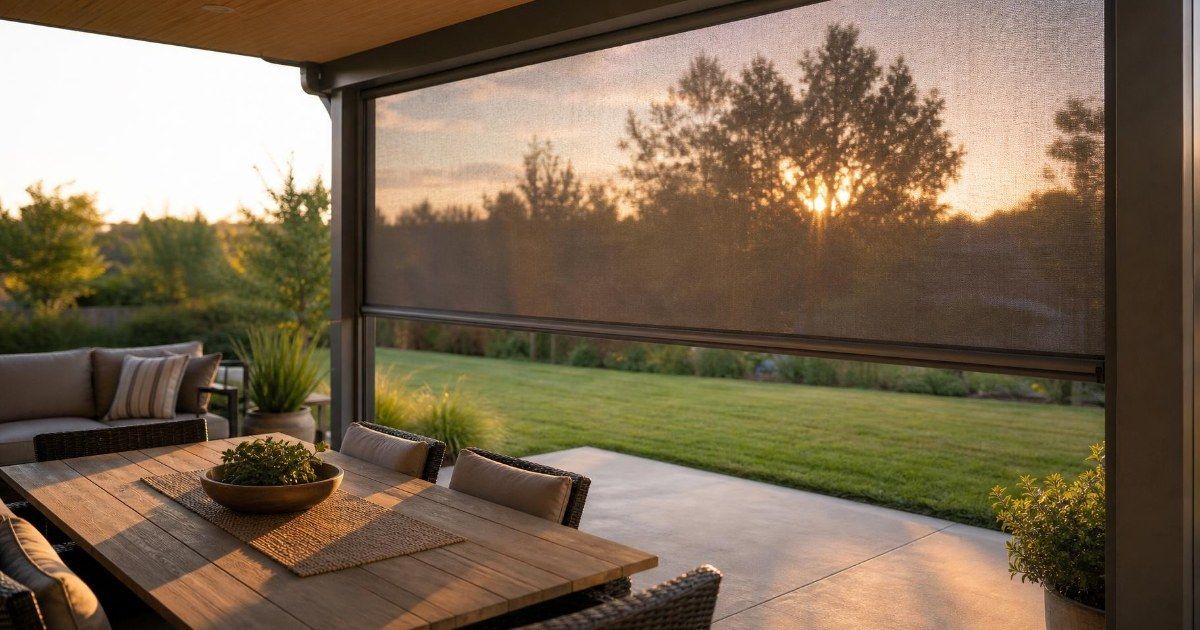
Houston patios also take low afternoon sun from the side, which an overhead roof of any kind does little about. Motorized patio shades fitted along the open sides take care of that angle, and they pair well with a louvered roof overhead.
Shade Doctor builds both a manual modular louvered pergola and a motorized one, each with 90-degree rotating louvers and integrated gutter drainage as described above. The crews install across Greater Houston, from Katy and Sugar Land to Spring and Kingwood. To see which style fits your patio, schedule a consultation and get a free estimate.