How Does a Retractable Awning Actually Work?
What's Actually Happening Inside the System
A retractable awning works by pairing a roller tube with a set of folding arms. The tube unwinds the fabric, the spring-loaded arms swing outward to hold it under tension, and reversing the motion rolls the fabric back up and folds the arms flat against the house.
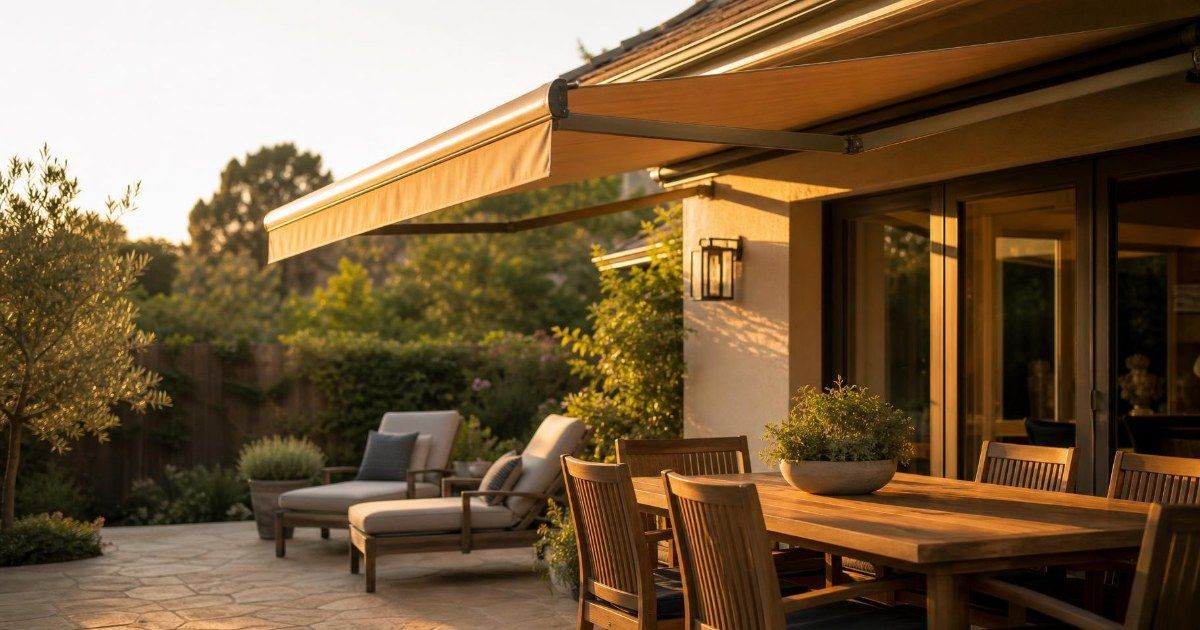
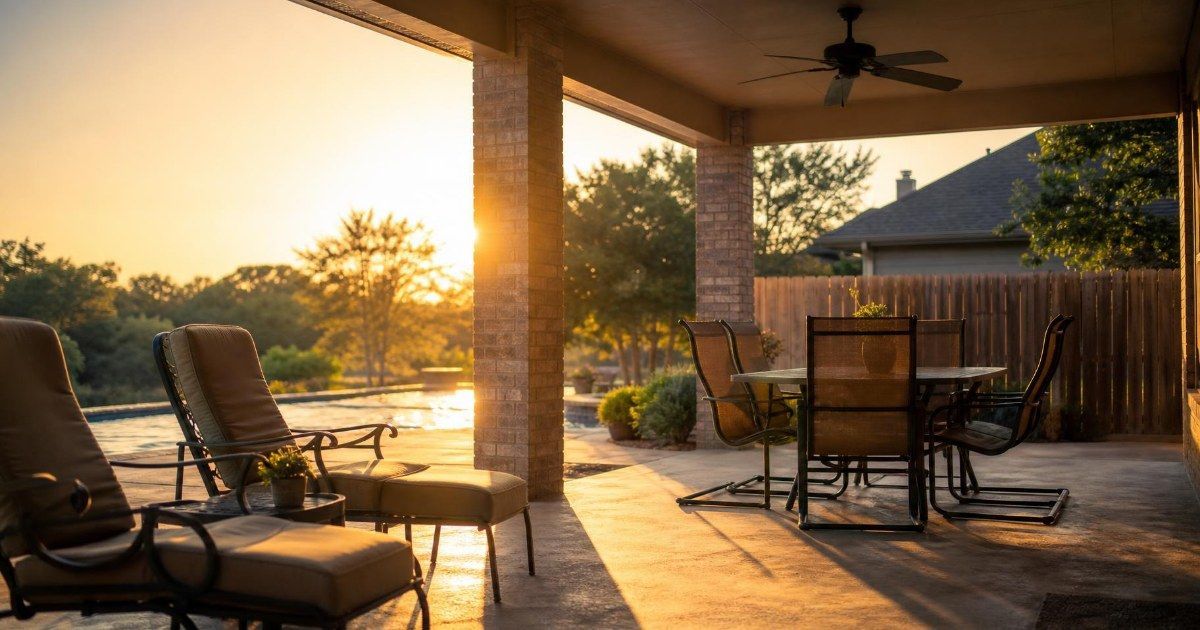
If you are wondering what an awning on a house is, it is a shade structure mounted to an exterior wall or roofline that reaches out over a patio or deck. A fixed patio cover stays put all year. An awning can retract fully, so the same space gets cool shade on a hot afternoon and open sky on a mild morning.
Every retractable awning does three jobs. The roller tube stores the fabric and lets it out. The arms pull that fabric flat and keep it from sagging or fluttering. A drive, either a hand crank or an electric motor, supplies the turning force. Brackets fasten the whole assembly to the wall, and they carry the load each time the awning is extended.
Tension is the quiet hero of the design. Fabric held taut keeps a clean line and sheds light rain, while slack fabric catches the breeze and wears faster.
The rest of this post follows that order. It starts with the choice between a crank and a motor, because that choice shapes how the awning feels to use day after day. Next come the parts and what each one contributes. Then comes the weather, where the mechanics matter most, and the post closes with how these ideas appear in a Shade Doctor installation.
Manual vs. Motorized: Two Ways to Move the Same Awning
Both versions use the same roller tube and the same arms. The difference is what turns the tube.
A manual awning uses a crank and a gear. The handle hooks into a gearbox at the end of the roller tube, and each turn of the handle rotates the tube a small amount. The gear gives you leverage, so a wide awning moves with modest effort. As the tube unrolls, the fabric draws the front bar outward and the spring-loaded arms open to keep it taut. Winding the crank the other way pulls the fabric back onto the tube and the arms fold. With few moving parts and no wiring, a manual awning is simple to understand and has nothing that depends on electricity.
So how do retractable awnings work once a motor joins the system? A tubular motor sits inside the roller tube, or beside it, and turns the tube when it receives a command from a remote, a wall switch or an app. Limit settings stored in the motor tell it where fully open and fully closed are, so the awning stops by itself at either end. One press replaces the cranking.
That ease is why many homeowners choose a motor for daily use. An awning that takes seconds to extend gets extended, and a hand-cranked awning on a busy day often stays rolled up. Motors are built for plenty of use, too. Tubular awning motors are typically rated for roughly 8,000 to 10,000 open-close cycles before service is needed, which works out to about two decades at one cycle a day.
Each option suits a different owner. A crank suits people who like fewer parts and a hands-on feel. A motor suits people who want shade at the touch of a button and plan to use it often.
Power outages are where a manual override earns its place. A quality motorized awning lets you turn the tube by hand when the electricity is out, so the awning can still be closed ahead of weather. Many buyers value this more than they expect, usually on the day an outage arrives with a storm warning.
The Parts Working Together
Five parts do the work, and each one affects how the awning looks, feels and holds up over the years.
Roller Tube
The roller tube is the rotating shaft that stores the fabric and releases it. A stiff tube lets the fabric roll evenly. A flexible one bows under the weight of a wide span, and that bow shows up as sagging along the front edge.
Many awnings keep the rolled fabric inside a cassette, a housing that comes in three styles. A full cassette closes around the fabric and arms when the awning is retracted, a semi cassette covers the top and back, and an open design leaves them exposed.
Arms
The arms fold at an elbow joint and extend as the fabric unrolls. They hold the fabric under tension so it stays flat, whether a crank or a motor is doing the turning.
Arms are also where integrated features live. Shade Doctor builds dimmable LED lighting directly into the arms, which keeps the profile clean and adds usable light after dark.
Fabric
The fabric is a UV- and water-resistant material stretched between the roller tube and the front bar. It faces the sun and rain every day, so the fabric sets how long the shade side of the system holds up.
Mounting Brackets, Motor and Gearbox
The brackets are the structural attachment to the wall or roofline, and the motor or gearbox is the drive that turns the tube. Brackets take the full load of an extended awning, which makes a solid mount as important as the moving parts.
Pitch is the slope of the awning, and quality systems let you adjust it. A steeper pitch lowers the front edge to block low sun and helps rain run off. A flatter pitch keeps the front edge higher for a more open feel. Shade Doctor's crank-based Easy Pitch Adjustment lets a homeowner change the slope from ground level without a ladder, which saves a climb each time the sun angle shifts with the seasons.
Wind, Rain, and Knowing When to Retract
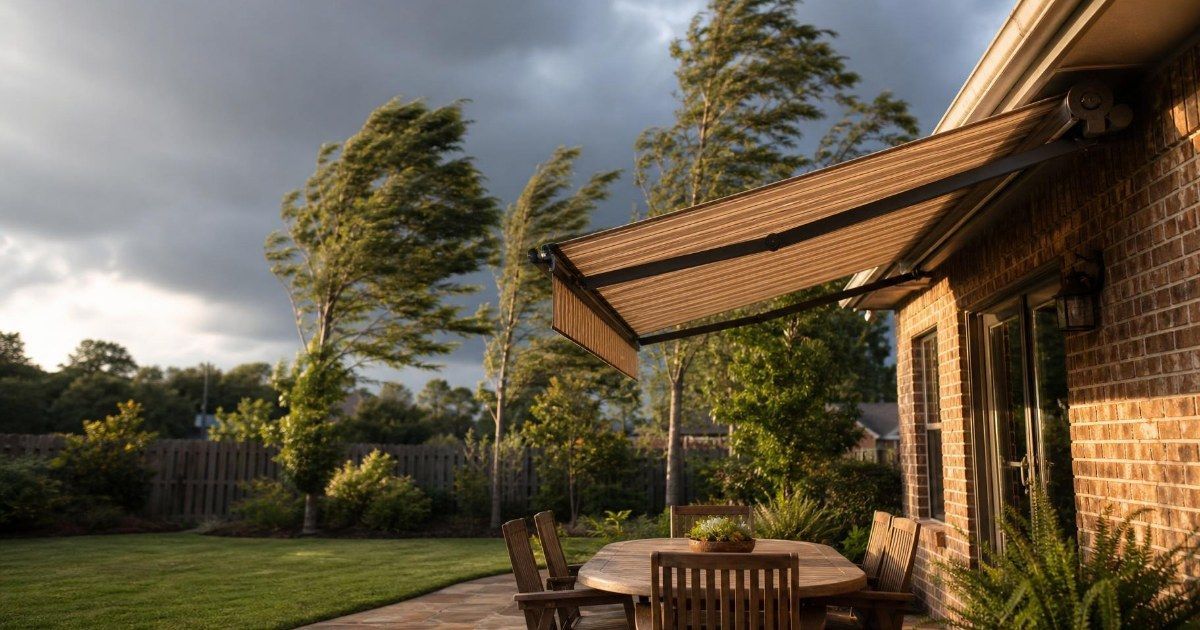
Awnings are built for sun and light rain. Sustained storms are a different matter, and the reason is leverage. An extended awning catches wind under the fabric like a sail, and that force pulls on the arms and brackets at the points where the awning meets the house. Those joints, more than the fabric, are where wind damage tends to start.
Industry sources give two useful numbers. A quality retractable awning can generally withstand wind speeds of about 20 to 30 mph without damage, and the risk climbs sharply above that range. Automated wind sensors are set lower. They typically trigger a retract at roughly 15 to 25 mph, which gives the awning time to close before the wind reaches a damaging strength.
Rain follows a similar logic. Water-resistant fabric sheds a passing shower, and a pitch with some slope lets the water run off the front edge. Heavy or long rain pools in the fabric, and that extra weight pulls on the arms and mounts. Retracting before a downpour keeps the load off the hardware.
Hardware quality shifts how much margin an awning has. Shade Doctor's hardware is guaranteed up to 105 mph, a far higher bar than the 20 to 30 mph range that describes most awnings. That number gives a shopper a clear way to tell a system built for occasional light use from one engineered for real wind exposure. Retracting ahead of a storm remains the habit that protects any awning, and a wireless remote makes it a matter of seconds.
What This Looks Like in a Shade Doctor Installation
To recap the mechanism in a sentence: a roller tube stores the fabric, arms hold it flat, and a drive turns the tube. Shade Doctor's motorized awnings apply each of those ideas, with a few extras that make daily use easier.
A wireless remote runs the awning, so extending or retracting takes one press. Every awning also includes a manual override, which keeps the shade working during a power outage or whenever an owner prefers to use a hand.
The arms carry the lighting. Dimmable LED lights are built into the arms with no visible fasteners, and the same remote controls both the lights and the awning. Pitch adjusts by crank from ground level, with no ladder required, so the slope follows the sun through the year.
The hardware backs that design with a 105 mph guarantee, and the warranty reflects the same confidence: lifetime on hardware, 15 years on fabric and mesh, and 10 years on motors and controls. Those terms make a handy checklist for any awning you are considering. Ask about the arms, the motor's cycle rating, the pitch adjustment, the manual override and the wind rating.
For anyone deciding between manual and motorized operation for their own space, see Shade Doctor's motorized awnings with remote control, built-in lights and crank pitch adjustment. In Houston, the same local crews quote and install awnings, and you can schedule a consultation to have the team walk your patio with you and talk through the options.